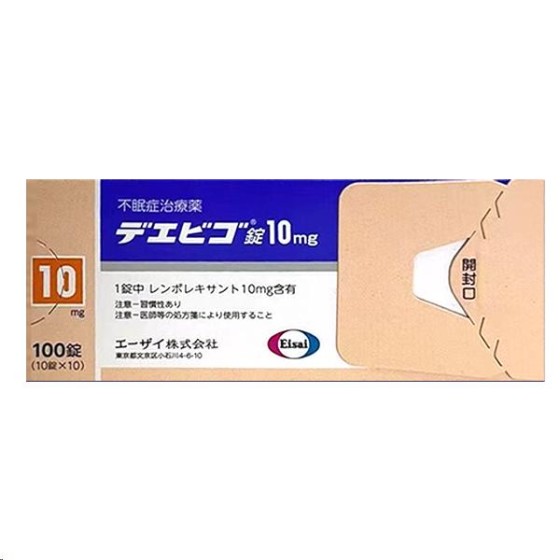
.jpeg)
Lemborexant for Insomnia: Dual Orexin 5/10mg, 7-Hour Bedtime, 7–10-Day Review and Safety
1.Profile and Mechanism
Lemborexant competitively blocks orexin A/B binding to OX1R and OX2R,reducing central wake-promoting signaling to help initiate and maintain sleep.It is used for adult insomnia with difficulty falling asleep and/or staying asleep.It treats symptoms;it does not correct underlying stress,psychiatric,circadian,pain,or respiratory causes by itself.
2.Dosing
Adults:5mg once nightly,immediately before bed,with at least 7 hours remaining until planned awakening.
Increase to 10mg once nightly if effective control is incomplete and 5mg is tolerated;10mg is the maximum.
Take on an empty stomach or before meals when possible;taking with or soon after a meal may delay sleep onset.
Missed dose:skip for that night,resume the usual time next night;do not double or take during the day.
7–10-day review:record sleep-onset latency,number and length of night awakenings,return-to-sleep time,total sleep sense,and next-day alertness.If no improvement after 7–10 days or initial improvement followed by clear worsening,do not self-escalate;reassess cause and concomitant drugs.
3.How to Judge Response
Do not use“never insomniac again”as the goal.Use four observable items:
Faster sleep onset after lights off;
Fewer awakenings,especially mid/late-night wakefulness;
Quicker return to sleep after waking for urination,pain,or anxiety;
Better next-day function—less morning grogginess,steadier attention,mood,and safer driving/working performance.
Chronic insomnia should combine medication with sleep hygiene,stimulus control,and CBT-I rather than escalating pills alone.
4.Evaluate Underlying Causes
Persistent or recurrent insomnia needs cause work-up:
Psychosocial:stress,anxiety,depression,grief,shift-work changes;
Circadian:late-screen use,jet lag,advanced-phase elderly pattern;
Medical:pain,GERD,hyperthyroidism,restless legs,nocturia,menopausal flashes;
Respiratory:snoring,apnea,daytime sleepiness,obesity,thick neck;
Substances:caffeine,nicotine,alcohol,some antidepressants,bronchodilators,steroids,weight-loss stimulants;
Behavioral:phone in bed,excessive napping,weekend sleep shift.
If 7–10 days fails,or with low mood/suicidal ideation/severe anxiety/apnea/leg movements,refer to sleep,psychiatry,pulmonary,or neurology rather than increasing dose.
5.Safety Warnings
Common:somnolence,fatigue,headache,nightmares/abnormal dreams;somnolence rates vary by definition,roughly 7%–9%at 5mg and around 10%at 10mg in some datasets.
Next-day impairment:more likely at 10mg,with less than 7 hours in bed,or with other CNS depressants;caution driving and precision tasks.
Sleep paralysis:brief inability to move/speak at sleep transition;hypnagogic/hypnopompic hallucinations:vivid,sometimes frightening;cataplexy-like leg weakness is uncommon.
Complex sleep behaviors:sleepwalking,sleep-driving,cooking,eating,calling,sexual activity while not fully awake and no memory afterward—discontinue immediately and seek care.
Mood/behavior:new or worsening anxiety,agitation,depression,confusion,or suicidal thinking requires prompt medical contact.
Falls:higher in older adults,night-rising patients,and with sedatives/alcohol.
Respiratory:mild-moderate OSA/COPD data show limited added respiratory depression in selected studies,but moderate-severe disease,obesity hypoventilation,or prominent daytime sleepiness still needs specialist assessment.
6.Special Populations and Interactions
Contraindication:narcolepsy.
Hepatic:mild usually no change;moderate Child-Pugh B max 5mg;severe not recommended.
Renal:mild/moderate/severe usually no renal-only dose change,but elderly and polypharmacy need overall review.
Elderly≥65:titrate cautiously;>5mg increases fall and next-day sedation risk,not automatic 10mg.
Pregnancy,lactation,under 18:insufficient safety data;avoid routine use.
CYP3A:avoid strong/moderate inhibitors;with weak inhibitors max 5mg;avoid strong/moderate inducers because efficacy may fall.
CNS depressants/alcohol:benzodiazepines,opioids,tricyclics,some sedating antidepressants,and alcohol increase sedation,respiratory depression,and complex behaviors;do not combine with other hypnotics routinely,and avoid alcohol.
[ 免责声明 ] 本页面内容来自公开渠道(如FDA官网、Drugs官网、原研药厂官网等),仅供持有医疗专业资质的人员用于医学药学研究参考,不构成任何治疗建议或药品推荐。所涉药品可能未在中国大陆获批上市,不适用于中国境内销售和使用。如需治疗,请咨询正规医疗机构。本站不提供药品销售或代购服务。