
.jpeg)
Analysis of the difference in effects between dacomitinib/Dozerun and osimertinib
In recent years, the precision treatment of EGFR mutant non-small cell lung cancer (NSCLC) has entered a stage where multi-target and multi-generation drugs coexist. Among them, dacomitinib/Dacomitinib and Osimertinib are both representative drugs that are highly discussed in clinical practice. Both are EGFR tyrosine kinase inhibitors (TKIs), but there are certain differences in molecular mechanisms, clinical application strategies, side effects spectrum, and long-term efficacy. These differences directly affect doctors' choices at different treatment stages.
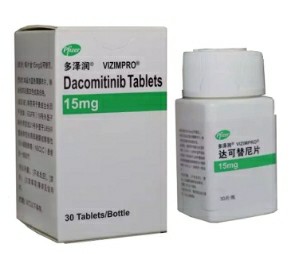
Dacomitinib belongs to the second generationEGFR-TKI, which can achieve irreversible inhibition of EGFR family members (including HER1/EGFR, HER2, and HER4). Due to its broader coverage, dacomitinib shows certain advantages in patients with partially resistant mutations. Overseas studies have pointed out that dacomitinib has a longer progression-free survival than the first-generation drug gefitinib, making it an alternative that can be considered in the first-line treatment of patients with EGFR-sensitive mutations. However, due to the additive effects of broad-spectrum inhibition, dacomitinib is often accompanied by more adverse reactions such as rash, diarrhea, and paronychia, and is poorly tolerated by patients. This is also a concern during its clinical promotion.
Osimertinib is a representative of the third generationEGFR-TKI. It was originally designed to target the T790M mutation, a key mechanism of drug resistance. Osimertinib can selectively inhibit EGFR-sensitive mutations and T790M mutations, while its inhibition of wild-type EGFR is weak, so adverse reactions are relatively mild. In clinical practice, osimertinib is not only widely used in the second-line treatment of T790M-positive patients, but also has gradually become a priority regimen recommended by multiple guidelines around the world because of its significant survival benefit when used in the first-line setting. It is worth mentioning that osimertinib has strong penetration into central nervous system metastases, which makes it particularly important in patients who are at risk of brain metastases or have already developed brain metastases.
The comparison of the efficacy of the two is not simply about superiority or inferiority, but is closely related to the characteristics of the clinical population. If long-term survival and tolerability are the main considerations, the overall advantages of osimertinib are more prominent, especially for patients who require long-term oral therapy and have brain metastases. The value of dacomitinib lies in its comprehensive inhibition of the EGFR family. Some studies have shown that it may have certain potential in delaying the emergence of certain drug-resistant mutations. However, in reality, the discontinuation rate due to side effects is high, so its use requires more rigorous patient screening and management.
From the perspective of price and accessibility, the price of osimertinib is relatively high because it is a world-renowned original drug. However, as generic drugs gradually enter the market, its economic burden is gradually improving. The market positioning of dacomitinib in some regions is relatively flexible, and it is often used as an option when resistance to first-generation drugs occurs and osimertinib is inaccessible or intolerable. As the medical insurance negotiation process in different countries advances, the actual clinical application models of these two drugs are also constantly adjusted.
In the future, the differentiated choice between the two will still be driven by precise molecular testing. New technologies such as liquid biopsy and gene sequencing can help doctors more clearly determine the patient's mutation type and resistance mechanism, thereby deciding whether to give priority to osimertinib or to try dacomitinib in certain groups.
Reference materials:https://www.pfizer.com/products/product-detail/vizimpro
[ 免责声明 ] 本页面内容来自公开渠道(如FDA官网、Drugs官网、原研药厂官网等),仅供持有医疗专业资质的人员用于医学药学研究参考,不构成任何治疗建议或药品推荐。所涉药品可能未在中国大陆获批上市,不适用于中国境内销售和使用。如需治疗,请咨询正规医疗机构。本站不提供药品销售或代购服务。


