
.jpeg)
What is the main difference between Enzalutamide/Enzalutamide (Anchortan) and Bicalutamide
Enzalutamide/Enzalutamide ( Enzalutamide) and bicalutamide (Bicalutamide) are both classic anti-androgens used clinically to treat prostate cancer. However, they are representative drugs of different generations and have significant differences in their mechanisms of action, pharmacological structures, efficacy performance, and resistance mechanisms.
Bicalutamide is the first-generation non-steroidal anti-androgen drug, which mainly blocks the stimulating effect of androgens on prostate cancer cells by competitively binding to the androgen receptor (AR). However, its antagonism to androgen receptors is not complete, and in some cases it even exhibits mild agonistic effects, so drug resistance is prone to occur during long-term use. Enzalutamide is a second-generation new androgen receptor inhibitor that can completely block the androgen signaling pathway at multiple links, representing the evolutionary direction of anti-androgen therapy.
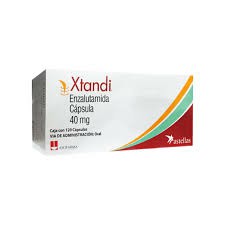
The main advantages of enzalutamide are its high affinity for the androgen receptor and its comprehensive inhibition of receptor activation. Unlike bicalutamide, which only prevents androgens from binding to receptors, enzalutamide can simultaneously inhibit the nuclear translocation and DNA binding process of receptors, thereby comprehensively blocking androgen-driven gene transcription activities. This mechanism allows enzalutamide to show stronger efficacy in castration-resistant prostate cancer (CRPC), delaying tumor progression and prolonging patient survival. At the same time, enzalutamide does not have partial agonistic activity, which means that while it inhibits the growth of cancer cells, it has almost no side effects of activating receptors, thus improving the safety and sustainability of treatment.
From a molecular structure point of view, the structure of enzalutamide has been optimized to bind more firmly to the active site of the receptor and is not easily recognized as a "pseudo hormone" by mutant androgen receptors in tumor cells. This is particularly important in bicalutamide-resistant patients, as enzalutamide often re-suppresses tumor recurrence caused by receptor mutations. Foreign research and practical experience show that enzalutamide can significantly improve the disease control rate in the castration-resistant stage, while bicalutamide is usually more effective in the early hormone-sensitive stage. Therefore, on the clinical path, enzalutamide is more often used as second-line or third-line treatment after bicalutamide fails, and has also been gradually included in one of the standard regimens recommended by international guidelines.
In terms of pharmacokinetics, enzalutamide has a longer half-life and stable plasma concentration, which is conducive to maintaining long-lasting drug effects. It is well absorbed and widely distributed after oral administration. Although bicalutamide is convenient to take orally, its metabolism depends on the liver enzyme system, and individual differences are large. In terms of safety, the common adverse reactions of bicalutamide are mainly breast pain, hot flashes and abnormal liver function; enzalutamide may cause fatigue, dizziness and hypertensive reactions in a few patients, but it is generally well tolerated. It is worth noting that enzalutamide has strong penetration into the central nervous system, so doctors will take into account the patient's underlying disease and tolerance when prescribing.
In general, enzalutamide has made significant progress compared to bicalutamide in terms of molecular design, receptor inhibition mechanism and breadth of clinical application. Its emergence has moved prostate cancer treatment from single androgen blockade to a new stage of precise signal regulation. Bicalutamide still has a cost-effective advantage in early-stage prostate cancer, while enzalutamide has become a key drug choice in the castration-resistant stage, especially for patients who have poor response to traditional anti-androgenic therapy or who experience recurrence.
Reference materials:https://www.xtandi.com/
[ 免责声明 ] 本页面内容来自公开渠道(如FDA官网、Drugs官网、原研药厂官网等),仅供持有医疗专业资质的人员用于医学药学研究参考,不构成任何治疗建议或药品推荐。所涉药品可能未在中国大陆获批上市,不适用于中国境内销售和使用。如需治疗,请咨询正规医疗机构。本站不提供药品销售或代购服务。


