
.jpeg)
How effective is Canafenib/Encofenib (Betavir) and its real efficacy evaluation analysis
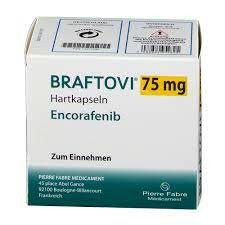
Canafenib (Encorafenib) is an oral small molecule BRAF inhibitor, targeting patients with BRAF V600 (commonly known as V600E or V600K) mutated solid tumor cells. It selectively inhibits mutant BRAF kinase and blocks the downstream MAPK signaling pathway, thereby inhibiting tumor cell proliferation and survival. FDA Approved indications include combination with MEK inhibitor binimetinib for unresectable or metastatic BRAF V600E/K mutant melanoma; and with anti- EGFR Antibody (cetuximab ) alone or in combination with mFOLFOX6 for BRAF V600E Mutated metastatic colorectal cancer (mCRC). These indications have been written into the drug package insert and approved by regulatory authorities.
When it comes to efficacy, the most representative high-quality evidence comes from large trials such as COLUMBUS (melanoma) and the BEACON/ follow-up study (colorectal cancer). COLUMBUS Phase III shows: encorafenib and binimetinib combination group in BRAF V600 Significantly prolonged progression-free survival in mutated advanced melanoma (COMBO450 Median PFS up to 14.9 months), and has shown long-term benefit in overall survival, and the safety spectrum is generally controllable, making it one of the important first-line / second-line options for melanoma.
In colorectal cancer, encorafenib and cetuximab combination (BEACON study and its extensions) for BRAF V600E mCRC after failure of prior standard treatments Patients have brought clear clinical benefits: compared with the control group, the combination increased the objective response rate and improved overall survival (OS) and progression-free survival (PFS). Therefore, it became the standard second-line regimen for this molecular subtype and was further expanded to be combined with mFOLFOX6 First-line indications for combination (FDA accelerated approval and subsequent first-line data promotion). This series of studies demonstrates that the "suppression + combination" strategy targeting BRAF V600E has a replicable efficacy signal in different tumor settings.
Real-world (RWE) evidence has complementary value to clinical applications. Multi-country real-world cohorts and the Expanded Access Project (EAP) show that in routine clinical practice, encorafenib combined with cetuximab or binimetinib The efficacy is similar to clinical trials, but the patient baseline is more complex (more past lines and more comorbidities), so the median OS/PFS is often shorter than that of the trial population; at the same time, the management of adverse events is particularly critical in the real world, and attention must be paid to reactions such as rash, abnormal liver function, serological changes, and photosensitivity, and the continuity of medication must be maintained through dose adjustment or symptomatic treatment. Quality of life (QoL) analysis also suggests that in many patients, the symptom relief brought about by the efficacy can partially offset the impact of drug side effects on quality of life.
How to evaluate its "real efficacy" in clinical practice? It is recommended to review from three aspects: first, patient selection - BRAF V600 mutation must be confirmed (tested by NGS/), and liver and kidney function and concomitant medication should be assessed to avoid drug interactions; second, efficacy indicators - focus on objective response rate (ORR), median PFS and OS , while combining imaging and symptoms to evaluate the sustainability of the efficacy; the third is safety and follow-up management - establishing routine monitoring (liver function, skin, heart function, etc.) and rapid intervention mechanisms to maintain dose compliance. For patients with colorectal cancer, the combination of encorafenib + cetuximab provided a significant survival benefit after multiple previous lines of failure, and recent evidence of expansion to the first line (encorafenib + cetuximab + mFOLFOX6) also suggests that more aggressive strategies may be considered in specific patient groups, but this needs to be combined with multidisciplinary discussion (MDT) and patient wishes.
In summary, canafenib (Encorafenib) has established a solid evidence base in BRAF V600 -positive tumors: for melanoma, encorafenib + binimetinib provides long-term PFS/OS Advantages; for BRAF V600E mCRC, encorafenib + cetuximab has changed the prognosis of previously ineffective patients and is being extended to first-line strategies. Real-world efficacy is generally consistent with trial data, but the complexity of real-world patients requires more detailed toxicity management and individualized regimen selection. For clinicians and patients, the key is to maximize the potential benefits of such targeted programs based on accurate molecular testing, standardized follow-up, and timely treatment of adverse reactions.
Reference materials:https://www.drugs.com/
[ 免责声明 ] 本页面内容来自公开渠道(如FDA官网、Drugs官网、原研药厂官网等),仅供持有医疗专业资质的人员用于医学药学研究参考,不构成任何治疗建议或药品推荐。所涉药品可能未在中国大陆获批上市,不适用于中国境内销售和使用。如需治疗,请咨询正规医疗机构。本站不提供药品销售或代购服务。


