
.jpeg)
Bumetanide Nasal Spray (Bumetanide)-Enbumyst instructions in Chinese
1. Name:Enbumyst, Bumetanide
2. Indications:
Bumetanide Nasal Spray (Bumetanide) -Enbumyst is indicated for the treatment of edema associated with congestive heart failure, liver and kidney disease, including adult nephrotic syndrome.
3. Usage and dosage:
1. Recommended dosage: Each unit dose of nasal spray contains 0.5 mg of Bumetanide. The usual total daily dose of Enbumyst is 0.5 mg to 2 mg once daily. The number of nasal spray devices required for a single dose depends on the dose prescribed. Individualize dosage based on patient response, up to a maximum dosage of 2 mg/day.
Enbumyst is not suitable for long-term use and should be replaced with an oral diuretic as soon as possible. The ratio of Enbumyst to oral furosemide is approximately 1:40 and to intravenous furosemide is approximately 1:20.
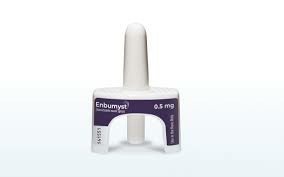
2. Medication management: Enbumyst is for nasal use only. Each device is for single use only and delivers 0.5mg of Bumetanide upon activation. Do not administer or attempt to reuse this medication for more than one administration. Enbumyst is injected directly into the nose, rather than against the nasal wall. If the prescribed dose requires more than one nasal spray, alternate application between the left and right nostrils.
4. Adverse reactions:
In clinical studies of Enbumyst, the most common clinical adverse reactions that may be related to oral bumetanide include muscle cramps, dizziness, hypotension, headache, nausea, and encephalopathy (in patients with previous liver disease).
5. Supply and storage:
Enbumyst is a clear, colorless solution available in packs of 6 or 12 containing a unit-dose nasal spray. Each unit dose of nasal spray provides 0.5 mg of Bumetanide. Store at room temperature 59°F to 77°F (15°C to 25°C). Short-term excursions between 39°F to 104°F (4°C to 40°C) are allowed. Do not freeze. Pack into original sealed cartons.
6. Special groups:
AcceptBreastfeeding women treated with Enbumyst monitor their infants for excessive urine output, dehydration, and lethargy.
7. Mechanism of action:
Bumetanide primarily inhibits sodium and chloride reabsorption in the proximal and distal tubules and the loop of Henle. The high degree of diuresis is largely due to its unique site of action. The effects on the distal tubule are independent of any inhibition of carbonic anhydrase and aldosterone.
8. Medication contraindications:
Enbumyst is disabled for:
1. Patients with anuria;
2. Patients with hepatic coma;
3. Patients with a history of allergic reaction toBumetanide. Reactions include anaphylaxis and anaphylactoid reactions.
Reference materials:https://www.drugs.com/enbumyst.html
[ 免责声明 ] 本页面内容来自公开渠道(如FDA官网、Drugs官网、原研药厂官网等),仅供持有医疗专业资质的人员用于医学药学研究参考,不构成任何治疗建议或药品推荐。所涉药品可能未在中国大陆获批上市,不适用于中国境内销售和使用。如需治疗,请咨询正规医疗机构。本站不提供药品销售或代购服务。


