
.jpeg)
Is it necessary to insist on taking the full course of Epclusa medication and analysis of the risks of discontinuation of medication?
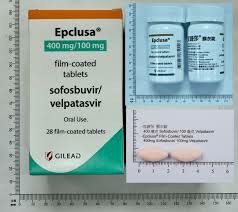
Epclusa (Epclusa) is a compound preparation of Sofosbuvir (Sofosbuvir) and Velpatasvir (Velpatasvir). It is currently the most commonly used all-genotype antiviral drug for the treatment of hepatitis C. The standard treatment course is usually 12 weeks, but some patients with liver cirrhosis or special conditions may need to extend it to 24 weeks. Adhering to a sufficient course of treatment is the key to ensuring a sustained virological response (SVR), that is, the body remains negative for HCV for a long time after treatment ends. If you stop taking the medicine midway or do not take the full course of treatment, the virus may not be completely eliminated.
If a patient stops taking medication without permission during treatment, there is still a high risk of relapse even if the virus test turns negative within a short period of time. The virus can easily replicate again in its residual state, leading to treatment failure. What's more serious is that early discontinuation of drugs may also increase the incidence of drug-resistant mutations, significantly increase the difficulty of subsequent treatment, and even limit the choice of using similar drugs again. Therefore, patients must not interrupt medication at will just because symptoms improve.
Hepatitis C is a chronic progressive disease. If the virus is not completely eliminated, patients are still at risk of developing liver fibrosis, cirrhosis and even liver cancer. For patients who complete a standardized course of treatment, the cure rate can exceed 95%; while for those who discontinue medication or shorten the course of treatment, the recurrence rate increases significantly, leading to long-term recurrence of the disease and increasing economic burden and health risks. Therefore, from the perspective of long-term prognosis, adhering to a full course of treatment is the only way to reduce the risk of complications and improve the cure rate.
In order to ensure the curative effect, patients should strictly follow the doctor's instructions, adhere to regular medication, and do not skip doses or stop medication at will. If you consider discontinuing medication due to side effects, comorbidities, or financial reasons, you should communicate with your doctor promptly to find alternatives or adjust treatment instead of making your own decision. Patients after stopping the drug also need to have their viral load and liver function checked regularly to assess whether there is recurrence. Generally speaking, the course of treatment for hepatitis C treated by Jisanda is not long. Only by completing the entire course can you maximize the chance of cure and avoid unnecessary risks.
Reference materials:https://www.drugs.com/
[ 免责声明 ] 本页面内容来自公开渠道(如FDA官网、Drugs官网、原研药厂官网等),仅供持有医疗专业资质的人员用于医学药学研究参考,不构成任何治疗建议或药品推荐。所涉药品可能未在中国大陆获批上市,不适用于中国境内销售和使用。如需治疗,请咨询正规医疗机构。本站不提供药品销售或代购服务。


