
.jpeg)
The standard dosage and individualized adjustment plan of pirfenidone (Acere)
Pirfenidone (Pirfenidone) is an oral anti-fibrotic drug mainly used to treat idiopathic pulmonary fibrosis (IPF). Its mechanisms include inhibiting fibroblast proliferation, reducing collagen deposition, and inhibiting the expression of pro-inflammatory cytokines, thereby delaying the decline of lung function. Clinical studies have shown that pirfenidone can significantly reduce the rate of deterioration of lung function and improve patients' quality of life. However, its efficacy and safety are closely related to dose management, so reasonable dose design and individualized adjustment are particularly important.
1. Standard dosage
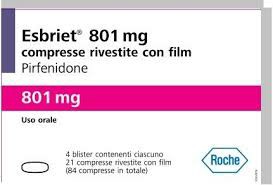
Based on clinical trials and drug instructions, the recommended standard dose of pirfenidone is 2403 mg orally administered daily in three divided doses. Generally, a gradually increasing dosage strategy is adopted: the total daily dose in the first week of treatment is 267 mg three times, and in the second week of treatment is 534 mgThree times, the 3 week is 801 mg three times, and the 4 week reaches 801 mg three times, that is, 2403 mg/day maintenance dose. A step-up regimen can help reduce drug-related adverse reactions, such as gastrointestinal discomfort, rash, or photosensitivity reactions. Each dose should be taken with a meal to reduce gastrointestinal irritation.
2. Principles of individualized dose adjustment
Although standard doses are suitable for most patients, individual adjustments should be made in clinical practice based on patient tolerance and liver and kidney function. For patients who experience moderate or severe adverse reactions, the dose may be temporarily reduced or the dose escalation period may be extended. For example, for patients with obvious gastrointestinal discomfort or light weight, the total daily dose can be reduced to 1200–1800 mg/ day, taken in three divided doses, supplemented by dietary adjustments and symptomatic treatment. Patients with abnormal liver function need to be extra cautious: when ALT or AST rises more than 3 times above the upper limit of normal, the drug should be stopped and liver function monitored. After symptoms are relieved, low-dose medication can be resumed under the guidance of a doctor.
3. Medication precautions for special groups
Elderly patients or those with renal insufficiency require stricter dose management when taking pirfenidone. Renal insufficiency may result in elevated drug plasma concentrations, increasing the risk of side effects. In such patients, the dose should be adjusted according to renal function classification, and blood indicators and adverse reactions should be closely monitored. Photosensitivity reaction is one of the common side effects of pirfenidone, especially at high doses or in seasons with strong sunlight. Patients should be reminded to take sun protection measures and consider temporarily discontinuing the drug or reducing the dose when erythema or itching occurs on the skin.
4. Efficacy monitoring and dose optimization
During the treatment process, lung function (such as FVC, DLCO), imaging changes and symptom improvement need to be regularly evaluated to determine whether the dose is reasonable. If the patient still experiences rapid decline in lung function under the maintenance dose, other supportive treatments may be considered, but the dose should not be increased arbitrarily. On the contrary, for patients who tolerate it well and have stable efficacy in the long term, standard dosage can be maintained. Individualized dose adjustment can not only optimize efficacy, but also reduce the incidence of side effects and improve patient compliance.
5. Patient education and medication compliance
Patients should understand the importance of standard dosage and the need for individualized adjustments when taking pirfenidone. Remind patients to take medications on time with meals to avoid missing doses or adjust the dosage by themselves. If you encounter adverse reactions, you should communicate with your doctor in time and do not stop taking the medicine or increase the dosage on your own. At the same time, patients should regularly review liver function and lung function, and cooperate with medical staff to optimize dosage. Through scientific management, the vast majority of patients can obtain the best treatment results while ensuring safety.
In general, the standard dose of pirfenidone is 2403 mg per dayorally divided into three times. The gradual increase plan can help reduce adverse reactions. Individualized adjustments are mainly based on patient tolerance, liver and kidney function, and side effects. The dose can be appropriately reduced or the escalation cycle can be extended. The elderly, patients with renal insufficiency and people prone to photosensitivity need to pay special attention to dose management. Through regular pulmonary function monitoring, imaging evaluation and patient education, pirfenidone can delay the progression of idiopathic pulmonary fibrosis and improve patients' quality of life while ensuring safety.
Reference materials:https://www.drugs.com/
[ 免责声明 ] 本页面内容来自公开渠道(如FDA官网、Drugs官网、原研药厂官网等),仅供持有医疗专业资质的人员用于医学药学研究参考,不构成任何治疗建议或药品推荐。所涉药品可能未在中国大陆获批上市,不适用于中国境内销售和使用。如需治疗,请咨询正规医疗机构。本站不提供药品销售或代购服务。


