
.jpeg)
Contraindications for the use of pirfenidone (Asri) and which groups should take it with caution
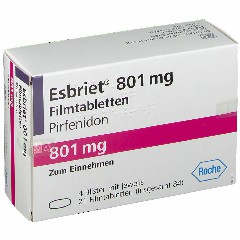
Pirfenidone (Pirfenidone) is an oral anti-fibrotic and anti-inflammatory drug, mainly suitable for the treatment of idiopathic pulmonary fibrosis (IPF). The drug reduces the inflammatory response and collagen deposition by inhibiting the signaling pathways of transforming growth factor -β (TGF-β) and tumor necrosis factor -α (TNF-α), thereby delaying the progression of pulmonary fibrosis. Although pirfenidone has a significant effect in improving the rate of lung function decline and improving quality of life, not all patients are suitable for long-term use. This drug has certain contraindications, and some people need to use it with caution.
1. Contraindications of pirfenidone
1.Contraindicated for those allergic to pirfenidone or any ingredients in the preparation
Drug allergy is the most direct contraindication. If the patient has experienced allergic reactions in the past medication history, such as rash, difficulty breathing, facial edema, etc., he should be prohibited from using pirfenidone again to avoid the risk of severe anaphylactic shock.
2.Contraindicated in patients with severe liver damage
Pirfenidone is mainly metabolized in the liver and cleared through the CYP1A2 enzyme pathway. If the patient has obvious liver cirrhosis or liver failure, the drug metabolism ability is reduced, which can easily lead to the accumulation of drugs in the body, causing serious adverse reactions such as jaundice, elevated transaminases and even liver failure. Therefore, it is contraindicated in patients with severe liver function impairment.
3.Contraindicated for patients with severe renal impairment or those undergoing dialysis treatment
Some metabolites of pirfenidone are excreted by the kidneys. For patients with a significant decrease in glomerular filtration rate (eGFR) or end-stage renal disease, the drug clearance rate decreases significantly, which may increase blood drug concentration and cause drug poisoning. Therefore, it is not recommended for patients with severe renal insufficiency.
4.Contraindicated for pregnant and lactating women
Animal experiments suggest that pirfenidone may have potential adverse effects on fetal development. Due to the lack of sufficient clinical safety data, pregnant women should avoid using it to avoid harming fetal health. In addition, it is not clear whether the drug is secreted through breast milk. To avoid risks to nursing infants, breastfeeding women should not take it.
2. People who need to use it with caution
1.Patients with mild to moderate liver function abnormalities
Although it is not absolutely contraindicated in patients with mild or moderate hepatic dysfunction, hepatic function parameters need to be monitored closely when using pirfenidone. If significant elevation of transaminases or jaundice occurs, the dose should be reduced or discontinued immediately to prevent the development of severe liver damage.
2.Patients with mild to moderate renal insufficiency
For patients with mild to moderate impairment of renal function, pirfenidone can be used with caution, but the dose needs to be adjusted according to creatinine clearance, and changes in blood concentration and renal function should be monitored to prevent drug accumulation.
3.Those who take multiple medications together
Pirfenidone is metabolized by the CYP1A2 enzyme. If strong CYP1A2 inhibitors (such as fluoride) are used concurrently, Voxamine, ciprofloxacin) will significantly increase the blood concentration and increase the risk of adverse reactions; if combined with strong CYP1A2 inducers (such as smoking, carbamazepine, rifampicin), the drug efficacy may be reduced. Therefore, these patients need to carefully select concomitant drugs when taking medications, and adjust the dosage or replace other treatments when necessary.
4.Elderly patients
Elderly patients are usually accompanied by a variety of underlying diseases and reduced organ function. Their ability to metabolize and excrete drugs is reduced, and they are more prone to drug-related adverse reactions. Clinical application should start with a small dose and gradually adjust, and adverse events should be closely monitored.
3. Clinical Monitoring and Risk Management
1.Liver and kidney function monitoring: It is recommended to check liver and kidney function before treatment, in the early stage of treatment (first3 months) and regularly thereafter.
2.Skin photosensitivity monitoring: Pirfenidone may cause photosensitivity rash. Patients need to avoid exposure to the sun and take sun protection measures when going out.
3. Observation of gastrointestinal reactions: such as nausea, vomiting, diarrhea, etc. The dose should be adjusted according to the situation or symptomatic treatment should be given.
4.Patient education: Drug contraindications and precautions need to be fully explained to patients, and they should be instructed to report to their doctor in a timely manner when they discover adverse reactions.
Pirfenidone has important clinical value in slowing the progression of idiopathic pulmonary fibrosis, but not all patients are suitable for its use. It is clearly contraindicated for those with allergies, those with severe liver and kidney damage, pregnant women, and lactating women. However, it should be used with caution in patients with mild to moderate liver and kidney dysfunction, elderly patients, and those undergoing multi-drug therapy. In clinical practice, it is necessary to conduct assessments based on individual patient differences, and through regular monitoring and adverse reaction management, drug efficacy should be maximized while reducing risks.
Reference materials:https://www.drugs.com/
[ 免责声明 ] 本页面内容来自公开渠道(如FDA官网、Drugs官网、原研药厂官网等),仅供持有医疗专业资质的人员用于医学药学研究参考,不构成任何治疗建议或药品推荐。所涉药品可能未在中国大陆获批上市,不适用于中国境内销售和使用。如需治疗,请咨询正规医疗机构。本站不提供药品销售或代购服务。


