
.jpeg)
Analysis of the mechanism of action and pharmacological principles of canafenib/encofenib (bitavir)
1. Overview of drug background
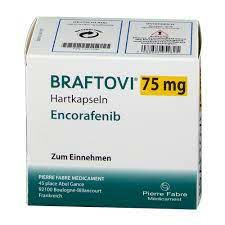
Canafenib (Encorafenib) is an oral small molecule targeted drug, which is a BRAF inhibitor and is often combined with MEK< span>The inhibitor trametinib (Trametinib) or binimetinib (Binimetinib) is used in combination to treat patients with BRAF V600mutated melanoma, colorectal cancer and some other tumors. BRAF mutations are widely present in various cancers, among which V600E/K mutations are the most common. This mutation can lead to sustained activation of cell proliferation signals, which can trigger tumor formation. Canafenib exerts anti-tumor effects by specifically acting on mutant BRAF protein and blocking abnormal signaling pathways.
2. Analysis of the mechanism of action
1.BRAFMutation and MAPKPathway Activation
BRAFbelongs to the mitogen-activated protein kinase kinase kinase (MAP3K) family and plays a key role in the MAPK/ERK signaling pathway. This pathway conducts step by step from RAS → RAF → MEK → ERK to regulate cell proliferation, differentiation and survival. When the BRAF gene undergoes the V600E/K mutation, its kinase activity is significantly enhanced, even in the absence of the upstream RAS When is activated, it can also continuously activate downstream MEK and ERK signals, causing tumor cells to proliferate indefinitely and escape apoptosis.
2.The target effect of canafenib
Canafenib is a ATP competitive inhibitor that can bind to the ATP binding site of mutant BRAF kinase and prevent it from transmitting signals to downstream MEK. and earlyBRAFCompared with inhibitors (such as vemurafenib and dabrafenib), canafenib has a longer half-life, stronger target binding capacity and higher selectivity, thereby reducing non-specific inhibition of wild-type BRAF.
3.Mechanism advantages of combination therapy
Single inhibitionBRAFAlthough it can inhibit tumor growth in the short term, it can easily lead to drug resistance due to feedback activation. For example, BRAF inhibitors can reversely activate RAS upstream, indirectly leading to the reactivation of the MEK and ERK pathways. Therefore, canafenib is often used in combination with MEK inhibitors (such as binimetinib) to double block the MAPK pathway, which can not only improve the anti-tumor effect, but also delay the occurrence of drug resistance. Clinical trials have proven that the combination treatment of canafenib+binimetinib significantly improves progression-free survival (PFS) and overall survival (OS) in melanoma and colorectal cancer.
3. Pharmacological characteristics
1.Pharmacokinetics
Canafenib is well absorbed after oral administration, has a high plasma protein binding rate, and is mainly metabolized by CYP3A4. Its half-life is about 6 hours, but the drug exhibits non-linear metabolism characteristics in the body, which means that changes in blood concentration at different doses are not completely proportional to the dose. This feature suggests that clinical medication must strictly follow the recommended dosage to avoid overdose leading to increased toxicity.
2.Selectivity and affinity
Canafenib's inhibitory effect on mutant BRAFkinase is significantly stronger than its inhibitory effect on wild-type BRAF. Therefore, it can maintain anti-tumor efficacy while reducing side effects caused by "abnormal activation" (such as rash, squamous cell carcinoma, etc.). This is also one of the main advantages of canafenib compared with early BRAF inhibitors.
3.Pharmacological effects
At the molecular level, canafenib blocks BRAFKinase activity reduces the phosphorylation level of downstream ERK, causing the tumor cell cycle to stop in the G1 phase, inducing apoptosis. At the histological level, it can be observed that the tumor proliferation index (such as Ki-67expression) is reduced and the release of inflammatory factors is reduced, thereby inhibiting the deterioration of the tumor microenvironment.
4. Resistance mechanisms and coping strategies
1.The emergence of drug resistance
Long-term use of canafenib may lead to multiple resistance mechanisms, including:
UpstreamRAS gene mutation or amplification, bypassing BRAF inhibition and reactivation MAPK pathway;
Secondary mutations in MEK or ERK genes render the drug action site ineffective;
The bypass activation of the PI3K/AKT pathway gives tumor cells a "backup channel" for growth.
2.Coping strategies
Combination medication: Canafenib combined with MEK inhibitors is currently the main way to delay drug resistance;
Multiple pathway combination: In the future, it may be combined with PI3K/AKT/mTOR pathway inhibitors to block multiple signal sources;
Precision medicine: dynamically monitor patients’ mutation status through gene sequencing, guide individualized medication, and detect resistance signals in advance.
5. Clinical significance and future prospects
The emergence of canafenib has given patients with BRAF mutant tumors new treatment options, especially in the fields of melanoma and colorectal cancer. Its pharmacological advantage is not only reflected in the improvement of efficacy, but also in the reduction of some early BRAF inhibitor-related toxicity. However, drug resistance remains a major challenge limiting long-term efficacy. In the future, canafenib is expected to be combined with immune checkpoint inhibitors (such as PD-1 antibodies) or other targeted drugs to further improve patient survival outcomes.
Canafenib (Encorafenib) is a new type of BRAF inhibitor. Its core mechanism of action is to specifically inhibit mutant BRAF and block MAPK/ERKThe pathway is abnormally activated, thereby inhibiting tumor cell proliferation and inducing apoptosis. With higher selectivity, better pharmacokinetic properties, and the advantages of combined use with MEK inhibitors, canafenib has demonstrated significant efficacy in the clinical treatment of BRAF mutation-related tumors. However, the problem of drug resistance still exists, and it is necessary to further optimize the efficacy through combined medication and individualized treatment. Overall, canafenib is not only an important member of targeted therapy, but also a key component in future multi-pathway and multi-strategy anti-cancer treatments.
Reference materials:https://www.drugs.com/
[ 免责声明 ] 本页面内容来自公开渠道(如FDA官网、Drugs官网、原研药厂官网等),仅供持有医疗专业资质的人员用于医学药学研究参考,不构成任何治疗建议或药品推荐。所涉药品可能未在中国大陆获批上市,不适用于中国境内销售和使用。如需治疗,请咨询正规医疗机构。本站不提供药品销售或代购服务。


