
.jpeg)
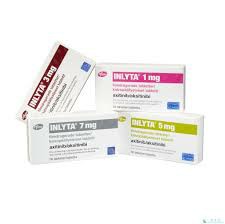
Survival data and clinical study conclusions of patients taking axitinib (Inlida)
In early phase II clinical studies, axitinib was used as first-line treatment for patients with mRCC and showed high objective response rate (ORR) and progression-free survival (PFS). Research data shows that the ORR of the axitinib treatment group reaches approximately 66%, and the median PFS can be extended to 27.6 months, which shows that axitinib can effectively delay disease progression. In the Japanese patient population, after a median follow-up of 33 months, the 1-, 2-, and 3-year survival rates were 86.4%, 75.0%, and 68.2%, respectively; the corresponding survival rates for non-Japanese patients were 75.1%, 62.1%, and 47.2%. These data suggest that axitinib shows good efficacy and tolerability in different populations, providing a reliable basis for clinical use.
In recent years, research on the combined use of axitinib and immune checkpoint inhibitors has also made certain progress. For example, clinical trials of axitinib combined with avelumab showed that the median PFS was 13.8 months, while the sunitinib monotherapy group was 8.4 months, suggesting that the combination can further delay disease progression. However, the median overall survival was not significantly different between the two groups, indicating that the potential of combination therapy to improve survival prognosis still needs more data to support. In addition, the types and frequency of adverse reactions have increased with combination treatment regimens, requiring individualized assessment and close monitoring in clinical application.
Overall, axitinib has shown good clinical efficacy in patients with metastatic renal cell carcinoma, especially in delaying disease progression and improving progression-free survival. Monotherapy is suitable for some patients who have failed previous first- or second-line treatments, and combined immunotherapy may further optimize the efficacy. While using axitinib, patients should strictly follow medical instructions for dose management, combined with regular imaging evaluation and laboratory monitoring, to ensure efficacy while reducing the risk of adverse reactions. In the future, with the release of more clinical trial results, the role of axitinib in different treatment stages and combination regimens will be further clarified, providing patients with more precise and personalized treatment options.
Reference: https://www.drugs.com/
[ 免责声明 ] 本页面内容来自公开渠道(如FDA官网、Drugs官网、原研药厂官网等),仅供持有医疗专业资质的人员用于医学药学研究参考,不构成任何治疗建议或药品推荐。所涉药品可能未在中国大陆获批上市,不适用于中国境内销售和使用。如需治疗,请咨询正规医疗机构。本站不提供药品销售或代购服务。


