
.jpeg)
Clinical efficacy of giritinib (segatan) in the treatment of acute myeloid leukemia
Gilitinib is an oral small molecule targeted drug, a second-generation FLT3 tyrosine kinase inhibitor, mainly used to treat patients with acute myeloid leukemia (AML) with FLT3 mutations. FLT3 mutation is one of the most common gene mutations in AML, accounting for about 25% span>–30% of adult AML patients, often associated with poor prognosis, easy relapse and treatment resistance. Giritinib exerts anti-leukemia effects by selectively inhibiting the activities of FLT3-ITD (internal tandem repeat mutations) and FLT3-TKD (tyrosine kinase domain mutations), blocking downstream signaling pathways, inhibiting leukemia cell proliferation and inducing apoptosis.
In clinical studies, giritinib has shown significant efficacy in patients with relapsed or refractory (R/R) FLT3mutated AML. In the keyADMIRAL In phase III clinical trials, the overall response rate of the gilitinib group (including complete remissionCR and complete remission with incomplete recovery of blood cytologyCRi) reached about 34%, while the overall response rate in the control chemotherapy group was only about 15%. The median overall survival (OS) in the gilitinib group can reach 9.3 months, which is significantly longer than 5.6 months with traditional chemotherapy. In addition, some patients who achieve remission with giritinib can continue to receive hematopoietic stem cell transplantation, thereby further improving long-term prognosis.
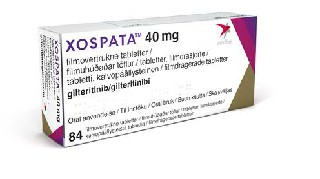
The efficacy of giritinib is not only reflected in patients with relapsed or refractory AML, but also in patients with newly diagnosed AML with FLT3 mutations. Some clinical trials have shown that combining gilitinib with standard induction chemotherapy (such as "7+3"Regimen") can significantly improve the remission rate and sustainable remission rate. Combination therapy can not only reduce the leukemia burden, but also maintain hematological stability before transplantation, creating conditions for long-term survival. This type of combination regimen is becoming a hot spot in current clinical research, aiming to optimize the treatment strategy for newly treated AML patients.
However, giritinib treatment also has certain limitations and risks. Drug resistance is the main challenge in its clinical application, including mechanisms such as FLT3 secondary mutations or activation of downstream signaling pathways. Common adverse reactions include bone marrow suppression, fever, thrombocytopenia, abnormal liver function and prolongation of QT interval, etc., which require close monitoring during treatment. Doctors usually adjust the dose or take symptomatic treatment measures based on the individual patient's condition. In addition, the efficacy of giritinib is affected by factors such as patient age, previous treatment history, leukemia burden, and comorbid diseases. Therefore, individualized evaluation is required in clinical use to optimize efficacy and safety.
Overall, giritinib, as an oral inhibitor targeting FLT3, provides an important treatment option for patients with FLT3 mutationsAML. Its clinical efficacy in relapsed/refractory AML is significant, and it can prolong survival and improve remission rate compared with traditional chemotherapy. In the future, with the advancement of research on combination chemotherapy or other targeted drugs, the application prospects of geritinib in newly diagnosed patients will also be further expanded. Through individualized dose adjustment, treatment course management and safety monitoring, giritinib can provide more effective and safer treatment options for AML patients, thereby improving overall prognosis and quality of life.
Reference materials:https://www.drugs.com/
[ 免责声明 ] 本页面内容来自公开渠道(如FDA官网、Drugs官网、原研药厂官网等),仅供持有医疗专业资质的人员用于医学药学研究参考,不构成任何治疗建议或药品推荐。所涉药品可能未在中国大陆获批上市,不适用于中国境内销售和使用。如需治疗,请咨询正规医疗机构。本站不提供药品销售或代购服务。


