
.jpeg)
Interpretation of clinical data of sotoracib (AMG 510) in the first-line treatment of KRAS mutated lung cancer
Sotorasib (Sotorasib, AMG 510) is a drug that targets KRAS Small molecule irreversible inhibitors of G12C mutations have attracted widespread attention in the treatment of non-small cell lung cancer (NSCLC) in recent years. KRASMutation is one of the most common driver mutations in lung adenocarcinoma. In the past, there was a lack of effective targeted drugs, and patient treatment options mainly relied on chemotherapy or immunotherapy. The development of sotoracib provides a new treatment option for this patient population.
In first-line treatment studies, sotoraxib showed some anti-tumor activity. Based on clinical trial results,KRAS The objective response rate (ORR) of patients with G12Cmutation-positive NSCLC after using sotoraxib reached approximately 35%-40%, and the disease control rate (DCR) can exceed 80%. The median progression-free survival (PFS) is about 6-7 months, and the median overall survival (OS) is about 12 months. These data indicate that sotorasiib can bring more durable effects to some patients in first-line treatment, especially those who have not received targeted therapy before.
Sotorasiib is generally well tolerated in clinical applications. Common adverse reactions include mild to moderate diarrhea, nausea, fatigue and abnormal liver function indicators. The incidence of serious adverse reactions (≥3 grade) is relatively low, but hematological and liver function indicators still need to be monitored regularly. Clinically, it is recommended to adjust the dose or temporarily discontinue the drug according to the patient's specific situation to ensure the safety of treatment. At the same time, attention should be paid to potential drug interactions and cumulative toxicity when using immunotherapy or chemotherapy in combination.
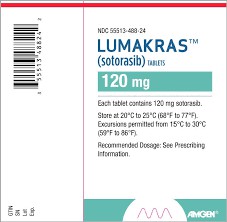
The first-line use of sotoracib is mainly for KRAS G12C mutation-positive NSCLC patients who cannot tolerate or are not suitable for standard chemotherapy. In actual clinical practice, individualized treatment plans should be formulated based on the patient's age, constitution, comorbidities, and previous treatments. Some patients can significantly prolong progression-free survival and improve their quality of life after first-line use of sotoraxib. However, for patients with large tumor burden or extensive metastasis, the efficacy may be limited and require combination with other treatments.
As a first-line treatment option for KRAS G12C targeted drugs, sotoracib is still being studied. Future research will focus on treatment strategies that combine immune checkpoint inhibitors, anti-angiogenic drugs, or other targeted drugs to improve response rates and prolong survival. At the same time, the exploration of resistance mechanisms and the screening of biomarkers will also help to accurately select suitable patient groups. Overall, sotoracib provides new hope for patients with KRAS mutated lung cancer and is expected to form a more complete first-line treatment plan in the future.
Reference materials:https://www.drugs.com/
[ 免责声明 ] 本页面内容来自公开渠道(如FDA官网、Drugs官网、原研药厂官网等),仅供持有医疗专业资质的人员用于医学药学研究参考,不构成任何治疗建议或药品推荐。所涉药品可能未在中国大陆获批上市,不适用于中国境内销售和使用。如需治疗,请咨询正规医疗机构。本站不提供药品销售或代购服务。


