
.jpeg)
Which is more effective, Trientine or Penicillamine?
Trientine and penicillamine are the two most commonly used copper chelators in the treatment of Wilson’s Disease. Both drugs prevent copper from being deposited in the liver, brain, and other tissues by binding to excess copper ions in the body and promoting their elimination in the urine. However, there are significant differences between the two in terms of pharmacological properties, side effect spectrum, patient tolerance and clinical adaptability. Therefore, it cannot be simply judged by "which one is better", but should be comprehensively selected based on the patient's individual situation.
Penicillamine is the earliest drug used to treat Wilson's disease. It has strong copper chelating activity and can significantly reduce the copper load in the body. It is widely used in patients with early stage disease or significant liver damage. However, due to the many potential side effects of penicillamine on the immune system, skin, and kidneys, some patients may experience adverse reactions such as rash, proteinuria, leukopenia, joint pain, and even systemic lupus erythematosus-like reactions during long-term use, leading to poor tolerance. Some studies have shown that approximately 10% to 30% of patients with Wilson's disease are forced to discontinue the drug due to serious adverse reactions after taking penicillamine. Therefore, how to reduce side effects while ensuring efficacy has become the key to adjusting treatment strategies.
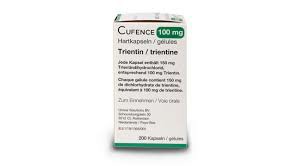
In contrast, trientine is a chelating agent with a simpler structure and higher selectivity, and it belongs to the tetraamine ethylene compounds. It is excreted from the body by forming a stable complex with copper and has less impact on other metal ions, so the toxic reaction is less severe. Trientine was originally developed as an alternative treatment for patients with penicillamine intolerance. However, in recent years, as more clinical practice and long-term safety data have been accumulated, its status has gradually risen, and it is recommended by some guidelines as one of the first-line treatment options. Especially in patients with severe neurological symptoms, abnormal liver function, or during pregnancy, trientine is more favored by doctors because of its milder side effects and fewer drug interactions.
In terms of efficacy, many foreign observational studies believe that trientine has similar overall effects to penicillamine in reducing urinary copper excretion, improving liver function, and controlling neurological symptoms, but has better tolerability. Penicillamine has a faster onset of action, but some patients may experience "symptom aggravation" during initial treatment, that is, short-term neurological symptoms worsen due to rapid mobilization of copper ions, while trientine's copper clearance is relatively mild and is more suitable for long-term maintenance treatment of patients with neurological Wilson's disease. It should be noted that the stability of trientine's efficacy depends on the patient's long-term standardized medication and monitoring. Once the medication is discontinued or compliance is poor, there may still be a risk of recurrence.
From a safety perspective, the side effects of trientine are generally mild, and common adverse reactions are mostly mild gastrointestinal discomfort, anemia or transient iron deficiency. Penicillamine may induce immune complications and have a more obvious impact on the blood system. Therefore, in clinical practice, doctors often decide on drug selection based on the patient's age, liver function status, previous medication history, and side effect tolerance. For example, if a child or adolescent patient responds poorly to penicillamine, physicians may be more likely to switch to trientine to ensure long-term compliance.
Reference materials:https://www.cufence.com/
[ 免责声明 ] 本页面内容来自公开渠道(如FDA官网、Drugs官网、原研药厂官网等),仅供持有医疗专业资质的人员用于医学药学研究参考,不构成任何治疗建议或药品推荐。所涉药品可能未在中国大陆获批上市,不适用于中国境内销售和使用。如需治疗,请咨询正规医疗机构。本站不提供药品销售或代购服务。


