
.jpeg)
Can Platinib (Pujihua) be used in conjunction with the immunotherapy regimen?
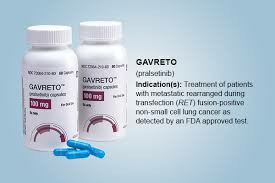
Pralsetinib (Pralsetinib) is a highly selective RET inhibitor, mainly used to treat patients with RET gene fusion or mutation-positive non-small cell lung cancer (NSCLC) and thyroid cancer. In clinical application, its targeting effect is clear and it can block the RET signaling pathway and inhibit the proliferation and metastasis of tumor cells. In recent years, with the widespread use of immune checkpoint inhibitors (such as PD-1/PD-L1 inhibitors), some patients and doctors have begun to pay attention to whether platinib can be used in combination with immunotherapy in order to improve the therapeutic effect.
From a theoretical mechanism perspective, there is no direct pharmacological conflict between platinib and immunotherapy. Targeted therapies mainly act on driver gene pathways, while immunotherapy activates the patient's own immune system to identify and eliminate tumor cells. The two mechanisms are complementary, so in some special cases, combined treatment may have potential synergistic effects. However, RETpositive tumors have relatively low immunogenicity and do not respond satisfactorily to immunotherapy alone. Therefore, whether to use combination therapy needs to be comprehensively considered based on the specific condition and the patient's immune status.
Current clinical studies and real-world data provide relatively limited evidence for the combination of platinib and immunotherapy. Some retrospective analyzes have shown that patients who received immunotherapy before taking platinib may be at a slightly increased risk of immune-related adverse events (eg, hepatitis, pneumonia). Especially when platinib is administered within a short period of time after the end of immunotherapy, the incidence of hepatotoxicity is higher. Therefore, when used in combination or sequentially, doctors usually extend the time interval and closely monitor liver function and immune-related reactions.
In clinical practice, for RET positive patients, platinib is usually used as first-line or second-line monotherapy, with significant effects and good safety. Immunotherapy is generally not the first choice, but when the disease progresses or targets resistance, combined or sequential immunotherapy can be considered. Patients should not superimpose medications on their own. They need to develop an individualized plan based on stage, previous medication history, and physical condition under the guidance of an oncologist to avoid unnecessary side effects and maximize treatment benefits.
Reference materials:https://www.drugs.com/
[ 免责声明 ] 本页面内容来自公开渠道(如FDA官网、Drugs官网、原研药厂官网等),仅供持有医疗专业资质的人员用于医学药学研究参考,不构成任何治疗建议或药品推荐。所涉药品可能未在中国大陆获批上市,不适用于中国境内销售和使用。如需治疗,请咨询正规医疗机构。本站不提供药品销售或代购服务。


