
.jpeg)
Analysis of the main functions, efficacy and clinical indications of furmonertinib
1. Overview of Drugs
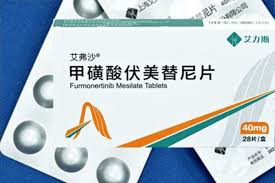
Furmonertinib (Furmonertinib) is a third-generation epidermal growth factor receptor (EGFR) Tyrosine kinase inhibitors (TKI) are mainly used to treat patients with non-small cell lung cancer (NSCLC). Compared with first- and second-generation EGFR inhibitors, fumetinib can effectively target sensitive mutations of EGFR (such as 19del and ). /span>L858R) and T790M resistance mutations, which show significant therapeutic advantages in patients with advanced or metastatic NSCLC. The drug is administered orally and has high bioavailability. It can function stably in the body while reducing interference with normal cells and improving tolerance.
2. Mechanism of action
Fometinib irreversibly binds to the ATP binding site of EGFR, inhibits the activation of the EGFR signaling pathway, and blocks cancer cell proliferation and division signals. EGFRExcessive activation in non-small cell lung cancer cells is an important driver of tumor growth, and T790M mutation is the main cause of resistance to first- or second-generation EGFR inhibitors. Fumetinib can target these sensitive mutations and drug-resistant mutations at the same time, by inhibiting downstream signaling pathways such as PI3K/AKT and RAS/RAF/MEK/ERK, thereby reducing tumor cell proliferation and promoting apoptosis, thereby achieving the purpose of controlling tumor progression.
3. Clinical efficacy
Multiple clinical studies have shown that fumetinib has significant efficacy in patients with EGFR mutationsNSCLC. In FURLONG and related domestic multi-center clinical trials, the objective response rate (ORR) of fumetinib in T790M positive patients reached approximatelyAbout 70%, the median progression-free survival (PFS) exceeds 12 months, which is better than the second-generation EGFR inhibitors. In addition, fumetinib also shows good efficacy in patients with brain metastases. Its ability to pass through the blood-brain barrier improves the control rate of brain metastases, which is especially important for patients with advanced NSCLC. Real-world studies also show that fumetinib performs well in terms of tolerability and safety. Most adverse events are grade 1-2, such as mild rash, diarrhea and mild liver function abnormalities, and the incidence of serious adverse events is low.
4. Clinical indications
Foumetinib is suitable for adult patients with locally advanced or metastatic non-small cell lung cancer who have EGFR sensitive mutations (19del, L858R) or EGFR T790M resistant mutations confirmed by molecular testing. In first-line treatment, fumetinib can be used as the first choice for patients with initially discovered EGFR sensitive mutations; in second- or third-line treatment, for patients who develop resistance after using first- or second-generation EGFR inhibitors, fumetinib can effectively delay disease progression. In addition, for patients with brain metastases, fumetinib has become an effective choice for controlling central nervous system lesions due to its blood-brain barrier penetrability.
5. Medication advantages and clinical value
The advantage of fumetinib is not only its remarkable efficacy, but also its good safety and high tolerability. Compared with traditional EGFR inhibitors, fumetinib has less impact on the cardiovascular system, liver and kidney function, and bone marrow suppression, and its long-term use risks are lower. In addition, the oral administration method of fumetinib is simple, which helps patient compliance and improves the overall treatment effect. In clinical practice, it significantly prolongs progression-free survival and improves quality of life, making it an important treatment option for patients with EGFR mutationsNSCLC.
6. Medication precautions
During the use of fumetinib, patients should regularly monitor blood routine, liver function, renal function and electrocardiogram, and pay attention to drug interactions. Some patients may develop mild rash, diarrhea or mild liver function abnormalities, which can be relieved through symptomatic treatment or dose adjustment in most cases. For patients with brain metastases, imaging should be used to evaluate the efficacy to ensure that the drug can effectively control central nervous system lesions. Doctors will adjust the dosage and medication regimen based on individual patient conditions to achieve the best efficacy and lowest side effects.
In general, fumetinib, as a third-generation EGFR inhibitor, carries EGFRIt provides an efficient, safe, and well-tolerated treatment option for patients with non-small cell lung cancer with sensitive mutations and drug-resistant mutations. Clinical studies and real-world data have shown that it has clear advantages in extending progression-free survival, controlling brain metastases, and improving quality of life. With the development of more clinical practices and research, fumetinib is expected to have more extensive application value in the treatment of NSCLC and bring tangible benefits to patients.
Reference materials:https://www.drugs.com/
[ 免责声明 ] 本页面内容来自公开渠道(如FDA官网、Drugs官网、原研药厂官网等),仅供持有医疗专业资质的人员用于医学药学研究参考,不构成任何治疗建议或药品推荐。所涉药品可能未在中国大陆获批上市,不适用于中国境内销售和使用。如需治疗,请咨询正规医疗机构。本站不提供药品销售或代购服务。


