
.jpeg)
The correct way to take Sotorasibu (AMG 510) and the best treatment planning suggestions
1. Overview of Drugs
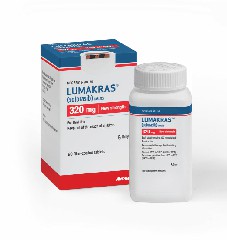
Sotorasib is an oral small molecule KRAS G12C mutation inhibitor, mainly used to treat patients with KRAS G12C-positive advanced or metastatic non-small cell lung cancer (NSCLC). KRAS is a key protein in cell signaling. Its G12C mutation accounts for about 13% of NSCLC and is closely related to tumor progression and drug resistance. Sotoracib forms a covalent binding to the KRAS G12C mutated protein to keep it in an inactive state, thereby inhibiting tumor cell proliferation and survival signals. It is the first approved KRAS G12C inhibitor in targeted therapy.
Sotoracib has shown good clinical efficacy, including high objective response rate and disease control rate, and is easy to administer orally, making it suitable for long-term maintenance treatment. Compared with traditional chemotherapy, its side effects are controllable, with mild to moderate liver enzyme elevations, diarrhea, fatigue and musculoskeletal symptoms being common, and the incidence of serious adverse events is lower.
2. Correct use method
1.Dosage and administration
The recommended standard dose of sotoraxib is 960mg Take it orally once a day, with food or on an empty stomach. However, it is recommended to take the drug at a fixed time every day to maintain stable blood concentration. Tablets should be swallowed whole and should not be chewed, crushed or taken separately to avoid affecting drug absorption.
2.Check before taking medicine
Before starting sotorasiib treatment, patients should be confirmed to be positive for the KRAS G12C mutation, and their liver and kidney function, blood routine, and cardiopulmonary status should be assessed. At the same time, conduct a drug interaction assessment on the drugs you are using, and avoid combining them with strong CYP3A4 inhibitors or inducers to avoid affecting drug metabolism.
3.Adverse reaction management
During treatment, patients should regularly monitor liver function, blood routine and clinical symptoms. If mild to moderate liver enzyme elevation occurs (AST/ALT 2–5 times the upper limit), the drug can be temporarily stopped or the dose can be reduced to 480mg/day; if severe liver damage (AST/ALT >5times the upper limit), the drug needs to be discontinued and followed up closely. Mild to moderate diarrhea, fatigue or muscle pain can be treated symptomatically, while severe cases require suspension or dose adjustment.
3. Treatment planning and evaluation
1.Initial treatment course
Sotoracib is usually used for patients with advanced or metastatic KRAS G12C NSCLC. It can be considered for patients who have no previous resistance to targeted drugs or who have failed chemotherapy. The initial course of treatment generally starts with the standard dose of 960 mg/day, and is followed up every 4 weeks. Tumor volume and clinical symptoms are assessed through imaging to confirm efficacy and tolerability.
2.Treatment length and maintenance treatment
Sotoracib belongs to long-term maintenance treatment drugs. The treatment goals are disease control and maintenance of quality of life, rather than short-term "shock" therapy. Treatment usually continues until disease progression or unacceptable toxicity occurs, which can take months or even years. Studies have shown that continued medication can maintain tumor stability and symptom remission, while prolonging progression-free survival (PFS).
3.Principles of treatment course adjustment
If the efficacy is good and the drug is well tolerated, it can be continued at the standard dose.
If mild to moderate toxicity occurs, the drug can be discontinued for a short period of time or the dose can be reduced to 480–720mg/ days until the toxicity is relieved, and then returned to the original dose.
If disease progression or serious adverse events occur, it is necessary to evaluate whether to switch to other targeted drugs or chemotherapy regimens, and to consider combination treatment strategies.
4.Combined and subsequent treatment
In some studies, sotoraxib can be combined with immune checkpoint inhibitors or chemotherapy to explore subsequent treatment options for drug resistance. However, combined use of drugs requires strict monitoring of toxicity to avoid superimposition of adverse events. For relapsed patients with KRAS G12C mutations, clinical trials or new combination regimens can be considered to improve efficacy and prolong survival.
4. Patient management and follow-up recommendations
1.Follow-up frequency
Recommended every4–8Conduct imaging examination (CT or MRI) and laboratory monitoring once a week, including liver and kidney function, blood routine, blood lipids and blood sugar. For patients on long-term treatment, the follow-up interval can be extended according to the condition, but potential side effects and signs of resistance should not be ignored.
2.Lifestyle and supportive care
Patients should maintain a regular schedule, eat a reasonable diet, and exercise moderately during medication to avoid increased burden on the liver (such as alcohol intake). If side effects occur, they can be relieved by symptomatic treatment (such as antidiarrheals, antacids, or fluid replacement).
3. Medication compliance
The efficacy of sotoracib depends on Continuously stable blood concentration. Patients must take it orally at a fixed time every day in strict accordance with the doctor's instructions. They are not allowed to stop taking the drug on their own or miss a dose. If you forget to take a dose, take it as soon as possible on the same day, but avoid a double dose at one time.
4.Educational and psychological support
During long-term targeted therapy, patients need to understand the drug's mechanism of action, side effects and drug resistance risks, promptly communicate with doctors about symptom changes, and receive psychological and social support to improve quality of life and treatment compliance.
Sotorasib (Sotorasib), as an innovative drug for KRAS G12C targeted therapy, provides a new treatment option for patients with advanced or metastatic NSCLC. The correct way to take it includes taking 960mg daily, swallowing the whole tablet, taking it at a fixed time, and taking into account liver and kidney function and drug interaction management. Treatment planning emphasizes long-term maintenance, individualized dose adjustment and regular imaging evaluation, with the goal of achieving disease control, extending progression-free survival and ensuring quality of life. Through scientific management and regular follow-up, sotoraxib can achieve optimal clinical efficacy while reducing the risk of adverse reactions, bringing significant benefits to KRAS G12C positive patients.
Reference materials:https://www.drugs.com/
[ 免责声明 ] 本页面内容来自公开渠道(如FDA官网、Drugs官网、原研药厂官网等),仅供持有医疗专业资质的人员用于医学药学研究参考,不构成任何治疗建议或药品推荐。所涉药品可能未在中国大陆获批上市,不适用于中国境内销售和使用。如需治疗,请咨询正规医疗机构。本站不提供药品销售或代购服务。


