
.jpeg)
What information does the instructions for Upatinib/Refu contain?
Upadacitinib (Upadacitinib), trade nameRinvoq, is a Janus kinase inhibitor (JAK inhibitor), mainly used to treat a variety of immune-mediated diseases. By acting on the JAK enzyme in cells, upadatinib can inhibit specific cytokine signaling pathways and slow down or inhibit inflammatory responses. Therefore, it is widely used to treat rheumatoid arthritis (RA), psoriatic arthritis (PsA), ulcerative colitis (UC), Crohn's disease (CD) and other diseases. As an immunomodulatory drug, upadatinib has a significant therapeutic effect on these diseases, but patients need to follow a strict treatment plan when using it to ensure safety and effectiveness.
1. Indications
Upapatinib is a prescription drug that has been approved for the treatment of 9 immune diseases, suitable for adult and pediatric patients of different ages:
1. Rheumatoid arthritis (RA): For adults with moderate to severe rheumatoid arthritis who are ineffective or intolerable when using tumor necrosis factor (TNF) blockers, upadatinib is an alternative treatment of choice that can help reduce joint inflammation, relieve pain and improve mobility.
2. Psoriatic arthritis (PsA): For adults with active psoriatic arthritis, especially when the patient is ineffective or intolerant to one or more TNF blocker treatments, upadatinib can effectively control inflammation and improve joint function.
3. Ankylosing spondylitis (AS) and non-radiographic axial spondyloarthritis (nr-axSpA): For those patients whose symptoms cannot be effectively controlled even after using TNF blockers, upadatinib can slow down the progression of the disease and reduce inflammation of the spine and joints.
4. Giant cell arteritis (GCA): This is an immune disease that affects large blood vessels. Upadatinib can effectively treat active giant cell arteritis and reduce vascular inflammation.
5. Ulcerative colitis (UC) and Crohn's disease (CD): For patients with these inflammatory bowel diseases, especially those who are ineffective or intolerant to TNF blockers, upadatinib can reduce intestinal inflammation and improve clinical symptoms.
6. Pediatric Indications: Upadatinib is also approved for the treatment of active polyarticular juvenile idiopathic arthritis (pJIA) and psoriatic arthritis (PsA) in pediatric patients 2 years of age and older. It is especially suitable for pediatric patients who do not respond well to TNF blocker treatment.
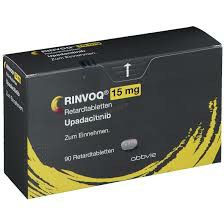
2. Usage and dosage
The specific usage and dosage of upadatinib vary according to different diseases. The following are medication regimens for common indications:
1. Rheumatoid arthritis (RA): The recommended dose for adult patients is 15 mg per day, taken orally once. For patients who do not respond adequately to treatment, the dose may be adjusted based on physician recommendations.
2. Ankylosing spondylitis and axial spondyloarthritis: The recommended dose is 15 mg orally once a day.
3. Atopic dermatitis (AD): The starting dose for adult patients is 15 mg, once a day. If the patient responds inadequately to treatment, the dose can be increased to 30 mg, with adults over 65 years using 15 mg once daily.
4. Ulcerative colitis (UC): The recommended dose during the induction period is 45 mg, once a day for 8 weeks. The maintenance dose is 15 mg once daily, which can be increased to 30 mg in severe cases.
5. Psoriatic arthritis (PsA): For children over 2 years old, the dose is adjusted according to body weight. The recommended dose for adults is 15 mg once a day.
6. Crohn's disease (CD): The recommended dose is 45 mg once a day in the induction phase, 15 mg once a day in the maintenance phase, and can be increased to 30 mg in severe cases.
3. Adverse reactions
Although Upadatinib can effectively relieve the symptoms of a variety of immune diseases, it also has some common adverse reactions. The most common side effects include upper respiratory tract infections (such as the common cold and sinusitis), shingles, nausea, headache, abdominal pain, and fatigue. For some patients, symptoms such as elevated creatine phosphokinase (CPK), rash, and weight gain may occur. Long-term use may increase the risk of a low number of certain types of white blood cells, liver dysfunction, or kidney function problems. Individual patients may experience more serious side effects, such as severe infection, pneumonia, anemia, etc., so regular medical examinations are required during use.
4. Storage
Upapatinib should be stored in a cool, dry environment, usually between 2°C and 25°C (36°F and 77°F), away from direct sunlight. Medications should be stored in their original bottles, protected from moisture, and follow the storage instructions on the medication packaging.
5. Contraindications
The use of upadatinib is contraindicated in patients with severe allergic reactions (such as allergic edema or other allergic symptoms). If a severe allergic reaction occurs during treatment, the drug should be discontinued immediately and medical help should be sought.
6. Mechanism of action
Upapatinib is a selectiveJAK inhibitor. JAK (Janus kinase) is an important intracellular enzyme involved in receptor signaling of cytokines or growth factors. By inhibiting JAK, upadatinib blocks these signals, prevents overactivation of the immune response, and reduces the immune system's attack on body tissues. Specifically, upadatinib mainly acts on JAK1 and JAK2, inhibiting their activation of cytokine signals, thereby regulating the function of the immune system, thereby alleviating disease symptoms caused by immune system disorders.
7. Use restrictions
Upadatinib is not recommended to be used in combination with otherJAK inhibitors, biologic DMARDs, or powerful immunosuppressants such as azathioprine and cyclosporine. Such combination therapy may increase the risk of adverse effects, particularly infections and immunosuppression.
Reference materials:https://www.rinvoq.com/
[ 免责声明 ] 本页面内容来自公开渠道(如FDA官网、Drugs官网、原研药厂官网等),仅供持有医疗专业资质的人员用于医学药学研究参考,不构成任何治疗建议或药品推荐。所涉药品可能未在中国大陆获批上市,不适用于中国境内销售和使用。如需治疗,请咨询正规医疗机构。本站不提供药品销售或代购服务。


