
.jpeg)
The efficacy of durvalumab/Infinifer combination chemotherapy in advanced pleural mesothelioma is uncertain
Based on results from the phase 3 DREAM3R trial (NCT04334759) published in 2025, durvalumab/infinifer (Durvalumab) combination chemotherapy produced results consistent with previous studies in patients with advanced pleural mesothelioma, showing favorable overall survival (OS), progression-free survival (PFS) and objective response rate (ORR) trends. However, challenges with patient accrual and evolving standards of nursing practice limit the conclusiveness of the results.
The median OS with durvalumab and chemotherapy was 21 months (95% CI, 18-27) compared with 18 months (95% CI, 14-30) with chemotherapy alone, and the HR was 0.92 (95% CI, 0.63-1.36; stratified log-rank P = 0.9). Median progression-free survival was 8 months (95% CI, 8-10) with combination chemotherapy compared with 7 months (95% CI, 6-8) with chemotherapy alone (HR, 0.70; 95% CI, 0.5-0.98; P=0.20). The ORRs were 58% and 35% respectively (P=0.005). The safety profile of chemotherapy with or without durvalumab was consistent with the known drug profile. Fatigue, nausea, and anemia were the most common adverse events (AEs) in both groups.
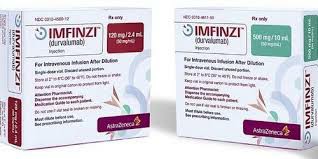
What is the basic principle and design of the DREAM3R test?
Durvalumab was evaluated inPhase 2 DREAM (ACTRN12616001170415) and PrE0505 (NCT02899195). In these studies, durvalumab showed promising activity in combination with pemetrexed and cisplatin or carboplatin chemotherapy.
The phase 3 DREAM3R study randomized patients in a 2:1 ratio into two groups: treatment with 1500 mg of durvalumab every 3 weeks, plus chemotherapy every 3 weeks for 4 to 6 cycles, and then maintenance of 1500 mg of durvalumab every 4 weeks until disease progression or unacceptable toxicity, or chemotherapy every 3 weeks for 4 to 6 cycles. Accrual will begin in February 2021.
However, Results from the CheckMate 743 study (NCT02899299) published in 2021 showed that nivolumab (Opdivo) and ipilimumab (Yervoy) significantly improved OS compared with chemotherapy. 2Due to changes in the standard of care for pleural mesothelioma, the study design was changed to include a nivolumab/ipilimumab treatment arm, and randomization was changed to nivolumab/chemotherapy 1:1 or physician's choice of nivolumab/ipilimumabor chemotherapy. At this ESMO conference, only data from the durvalumab and chemotherapy cohorts were presented.
A total of114 patients received chemotherapy and durvalumab, and 60 patients received chemotherapy alone. The primary endpoint of the study is OS. Secondary endpoints include PFS, ORR and AEs.
AlthoughDREAM3R was a well-designed study, due to the early stopping of DREAM3R, the research questions are unlikely to be answered. The key limitation is that the slow accrual that led to the early discontinuation is undoubtedly an artifact caused in part by the global pandemic, but also by changes in clinical practice resulting from the CheckMate 743 study and subsequent regulatory approval and standard clinical care use. These design modifications increase the complexity of interpretation of this clinical trial, and certainly chemotherapy alone will no longer be considered standard of care.
The high target tumor responses and control observed with chemotherapy and durvalumab raise the possibility of future testing in the novel adjuvant setting. In addition, relevant biomarkers collected from DREAM3R are also being analyzed.
References:https://www.onclive.com/view/durvalumab-plus-chemo-yields-inconclusive-results-in-advanced-pleural-mesothelioma
[ 免责声明 ] 本页面内容来自公开渠道(如FDA官网、Drugs官网、原研药厂官网等),仅供持有医疗专业资质的人员用于医学药学研究参考,不构成任何治疗建议或药品推荐。所涉药品可能未在中国大陆获批上市,不适用于中国境内销售和使用。如需治疗,请咨询正规医疗机构。本站不提供药品销售或代购服务。


