
.jpeg)
In stage III NSCLC, durvalumab/Infinifer plus concurrent CRT does not add benefit
Addition of durvalumab/Infinifer to concurrent chemoradiotherapy (CRT) in patients with unresectable stage III non-small cell lung cancer (NSCLC) did not provide additional clinical benefit compared with placebo, according to published results from the PACIFIC-2 Phase 3 trial (NCT03519971). An efficacy analysis comparing concurrent durvalumab with placebo showed no statistically significant improvement in progression-free survival (PFS) between the two regimens (HR, 0.85; 95% CI, 0.65-1.12; P=0.247). Additionally, the median PFS was 13.8 months (95% CI, 9.5-16.9) with durvalumab compared with 9.4 months (95% CI, 7.5-16.6) with placebo.
Kaplan-Meier curves for PFS overlapped during the first 6 months of treatment, with continued stable separation in favor of durvalumab after 9 months of treatment. Furthermore, in prespecified subgroups, HRs for PFS were consistent with the overall analysis. Overall survival (OS) outcomes also did not show a significant improvement with durvalumab compared with placebo (HR, 1.03; 95% CI, 0.78-1.39; P=0.823). Median OS was 36.4 months (95% CI, 26.2-45.6) in the durvalumab group and 29.5 months (95% CI, 23.2-45.1) in the placebo group.
The Kaplan-Meier curve for OS crossed over at 24 months and initially favored placebo before crossing over. Segregation in favor of durvalumab was observed at 27 months and persisted through 54 months. At 24 months, the OS rate in the durvalumab group was 58.4% (95% CI, 51.6%-64.7%), compared with 59.5% (95% CI, 49.6%-68.2%) in the placebo group (HR, 1.04; 95% CI, 0.72-1.50]; P=0.847). The subgroup analysis of OS was basically consistent with the overall OS analysis.
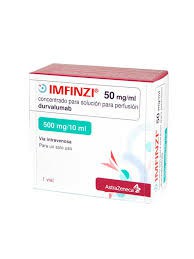
InPACIFIC-2, concurrent use of imrvalumab plus definitive [concurrent] CRT followed by consolidation imrvalumab did not significantly improve PFS or OS [compared with concurrent] CRT plus placebo in patients with unresectable stage III NSCLC. The PACIFI [NCT02125461] regimen, which included 12 months of consolidation durvalumab following definitive CRT in patients who had not progressed after CR, showed promising efficacy at 5 years of follow-up, with replicable safety and efficacy, and remains the [standard of care] in this setting. ”
Regarding the response, it was observed between the two groupsA difference of 0.2% (95% CI, -15.2% to 16.3%; P = 0.976), with a confirmed objective response rate (ORR) of 60.7% for durvalumab and 60.6% for placebo. The median duration of response (DOR) was 30.7 months compared with 18.6 months in the corresponding group.
The phase 3 trial enrolled patients 18 years and older with newly diagnosed, histologically or cytologically confirmed, unresectable stage III non-small cell lung cancer and randomized them 2:1 to receive 1500 mg of durvalumab every 4 weeks starting with concurrent CRT (n = 219) or matching placebo (n = 109). In the absence of disease progression after completion of CRT, patients received 1500 mg of consolidation or matching placebo every 4 weeks until disease progression, withdrawal of consent, or other discontinuation criteria were met.
The primary endpoint of the trial is PFS by blinded independent central review (BICR) according to RECIST v1.1 criteria. Secondary endpoints include ORR by BICR, OS, DOR, disease control rate and safety according to RECIST v1.1.
The incidence of treatment-emergent adverse reactions (TEAE) was 98.6%, compared with 100% in the durvalumab and placebo groups. The incidence rates of treatment-related adverse events (TRAEs) were 94.1% and 91.7%, respectively, of which 59.4% and 44.4% were related to durvalumab or placebo. The proportions of Grade 3 or Grade 4 TEAEs in each group were 53.4% u200bu200band 59.3% respectively; Grade 5 adverse events occurred in 13.7% and 10.2% of patients. The incidence rates of serious adverse events were 47.0% and 51.9% respectively.
The most common any-grade TEAEs in the durvalumab and placebo groups included anemia, pneumonitis or radiation pneumonitis, neutropenia, and nausea. The most common grade 3 or higher TEAEs included neutropenia, pneumonitis, lymphopenia, leukopenia, and anemia.
References:https://www.cancernetwork.com/view/durvalumab-plus-concurrent-crt-does-not-add-benefit-in-stage-iii-nsclc
[ 免责声明 ] 本页面内容来自公开渠道(如FDA官网、Drugs官网、原研药厂官网等),仅供持有医疗专业资质的人员用于医学药学研究参考,不构成任何治疗建议或药品推荐。所涉药品可能未在中国大陆获批上市,不适用于中国境内销售和使用。如需治疗,请咨询正规医疗机构。本站不提供药品销售或代购服务。


