
.jpeg)
Pegcetacoplan - Instruction Guide for Empaveli
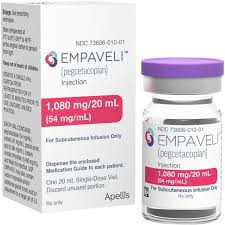
Pegcetacoplan (trade name: Empaveli) is an innovative complement inhibitor mainly used for the treatment of paroxysmal nocturnal hemoglobinuria (PNH) in adults. PNH is a rare blood disease in which patients' red blood cells are susceptible to complement attack, leading to hemolysis, which can lead to anemia, increased risk of thrombosis, and multisystem complications. Empaveli provides a targeted, controllable, long-term treatment option for PNH patients by regulating the activity of complement C3.
1. Indications
PegTac is indicated for adult patients with PNH, especially those with decreased hemoglobin, anemia, or transfusion dependence due to complement-mediated extravascular hemolysis (EVH) and intravascular hemolysis (IVH). By acting on the early stages of the complement cascade, PegTak can simultaneously control EVH and IVH, thereby improving red blood cell longevity, reducing anemia symptoms, and reducing the need for blood transfusions, providing effective hematological management for PNH patients.
2. Recommended dosage and usage
Pegtac is administered by subcutaneous injection twice a week, and the recommended adult dose is 1080 mg each time. For patients who are switching from other C5 inhibitors (such as Eculizumab or Ravulizumab), a gradual transition regimen should be implemented to reduce the risk of hemolysis. Specifically, patients who discontinue eculizumab should continue to take eculizumab at the original dose when starting pegcetacoplan and concurrently take Pegcetacoplan for four weeks, and then discontinue eculizumab and continue monotherapy. Patients who discontinue Ravulizumab should initiate Pegcetacoplan treatment within four weeks of the last dose. Through this transitional regimen, acute hemolytic events caused by sudden interruption of complement inhibition can be effectively reduced and ensure a smooth transition of efficacy.
3. Pharmacological effects
Pegcetacoplan inhibits C3 cleavage and downstream complement effector production by binding to C3 and its activating fragment C3b. In PNH, C3b-mediated opsonization is the primary mechanism of extravascular hemolysis, while the downstream membrane attack complex (MAC) drives intravascular hemolysis. Pegcetacoplan acts at the proximal end of the complement cascade and can simultaneously regulate EVH and IVH to achieve comprehensive control of hemolysis, thereby improving patients' hemoglobin levels and clinical symptoms and providing a scientific basis for long-term management.
4. Adverse reactions
In clinical practice, common adverse reactions of PegTac include injection site reactions, infection, diarrhea, abdominal pain, respiratory tract infection, limb pain, hypokalemia, fatigue, viral infection, cough, joint pain, dizziness, headache and rash. Most of these adverse reactions are mild to moderate and can usually be controlled through monitoring and symptomatic treatment. During use, patients need to undergo regular hematology tests and monitor electrolytes and liver and kidney functions to ensure medication safety. At the same time, doctors should guide patients to identify signs of adverse reactions and adjust doses or take intervention measures if necessary.
5. Storage and precautions
Peg Tucker should be stored refrigerated at 2℃ to 8℃ and avoid light. Do not use medicines that have exceeded their shelf life to avoid affecting their efficacy and safety. Before injecting, ensure that the medicinal solution and injection equipment are clean to reduce the risk of infection. Patients should follow the doctor's guidance when using it at home, keep the injection site clean, and record the time and dosage of each medication to ensure the accuracy of continuous treatment and efficacy evaluation.
Reference materials:https://empaveli.com/
[ 免责声明 ] 本页面内容来自公开渠道(如FDA官网、Drugs官网、原研药厂官网等),仅供持有医疗专业资质的人员用于医学药学研究参考,不构成任何治疗建议或药品推荐。所涉药品可能未在中国大陆获批上市,不适用于中国境内销售和使用。如需治疗,请咨询正规医疗机构。本站不提供药品销售或代购服务。


