
.jpeg)
Efficacy of evantumumab/Carestream in the treatment of lung cancer
Amivantamab is a bispecific monoclonal antibody that can simultaneously inhibit the EGFR and MET receptor signaling pathways, which makes it uniquely effective in patients with EGFR exon 20 insertion mutations non-small cell lung cancer (NSCLC). Traditional targeted drugs have limited efficacy against this mutated type of NSCLC, while evantumumab specifically binds and blocks two key signaling pathways to promote tumor cell apoptosis and inhibit proliferation, thereby providing new treatment opportunities for refractory patients.
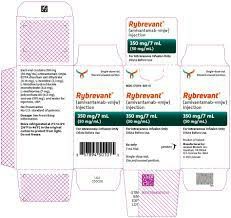
Clinical studies have shown that evantumumab can significantly improve the overall response rate and disease control rate in patients who have previously received chemotherapy. Some patients have achieved tumor shrinkage or stabilization, and hematological and imaging indicators have been improved. Its dual-target mechanism of action not only inhibits tumor proliferation driven by EGFR signaling, but also intervenes in the drug resistance mechanism through the MET signaling pathway, providing an effective strategy for the treatment of relapsed or drug-resistant patients.
In addition, evantumumab is administered as an intravenous infusion and can be completed in an outpatient or inpatient setting, allowing for easier long-term patient management. Studies in combination with other targeted drugs or immunotherapy regimens are also ongoing to evaluate their potential advantages in different molecular subtypes and early treatment stages. Clinical observations suggest that early use of evantumumab improves quality of life, reduces symptom burden, and may extend progression-free survival.
Despite its significant efficacy, evantumumab requires close monitoring of adverse reactions and efficacy indicators to ensure treatment safety. The efficacy is closely related to the individual molecular characteristics of the patient. Therefore, it is recommended to conduct precise molecular testing before starting treatment to clarify the EGFR exon 20 insertion mutation and MET status to achieve precise medication.
Overall, evantumumab brings new hope for targeted therapy to patients with NSCLC with EGFR exon 20 insertion mutations. It can significantly improve disease control rate and quality of life through a bispecific inhibitory mechanism. It is one of the important options for the current management of refractory lung cancer.
Reference materials:https://www.rybrevant.com/
[ 免责声明 ] 本页面内容来自公开渠道(如FDA官网、Drugs官网、原研药厂官网等),仅供持有医疗专业资质的人员用于医学药学研究参考,不构成任何治疗建议或药品推荐。所涉药品可能未在中国大陆获批上市,不适用于中国境内销售和使用。如需治疗,请咨询正规医疗机构。本站不提供药品销售或代购服务。


