
.jpeg)
What is the target mechanism of pemetinib/dabotan?
Pemigatinib (Pemigatinib) is an oral inhibitor that selectively targets the FGFR (fibroblast growth factor receptor) family, especially with higher binding specificity for FGFR2. This target mechanism is the core basis for its treatment of cholangiocarcinoma (CCA) and is also an important reason for its potential efficacy in multiple tumor types. In cholangiocarcinoma, FGFR2 fusion or rearrangement is a clear driver gene, which promotes tumor cell division and angiogenesis through continuous activation of downstream signaling pathways, making tumors highly aggressive. Pemetinib blocks the activity of FGFR2 kinase, cuts off the signaling pathway from the source, inhibits key circuits such as MAPK and PI3K-AKT, thereby weakening the proliferation ability of tumor cells.
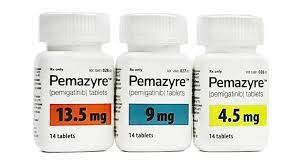
Unlike traditional chemotherapy, pemetinib can precisely target specific genetic abnormalities, so the efficacy is often highly related to the genotype. It is this specificity that makes it an important breakthrough in the precise treatment of cholangiocarcinoma. The FGFR pathway itself is not only involved in cell differentiation and tissue repair, but also plays a "driver" role in tumorigenesis. By inhibiting receptor activity, it can directly interrupt the growth momentum of tumors. Inhibition strategies targeting FGFR2 provide a new treatment path for patients who are unable to undergo surgery, have failed local treatment, or have relapsed.
Structurally, pemetinib can compete with the ATP binding site of the FGFR kinase domain, causing the receptor to lose its activation ability, blocking the phosphorylation process, and thus interrupting signal transmission. This mechanism determines that it is more effective against tumors that are abnormally highly sensitive to FGFR, and also explains why FGFR gene testing has become an important step in screening people for treatment.
Mechanism research in recent years has further shown that FGFR inhibitors have a unique role in inhibiting angiogenesis and can change the tumor microenvironment, reduce nutrient supply, and create more favorable conditions for subsequent treatment. This also provides a theoretical basis for its research on combined immunotherapy.
Reference materials:https://go.drugbank.com/drugs/DB15102
[ 免责声明 ] 本页面内容来自公开渠道(如FDA官网、Drugs官网、原研药厂官网等),仅供持有医疗专业资质的人员用于医学药学研究参考,不构成任何治疗建议或药品推荐。所涉药品可能未在中国大陆获批上市,不适用于中国境内销售和使用。如需治疗,请咨询正规医疗机构。本站不提供药品销售或代购服务。


