
.jpeg)
Comparison of the efficacy of tovorafenib and trametinib, as well as treatment options and clinical references for different patients
Tovorafenib and Trametinib (Trametinib) are both targeted anti-tumor drugs targeting the MAPK pathway and are commonly used to treat patients with BRAF mutations or MAPK A variety of solid tumors and hematological tumors with abnormal pathways. Although the two act on similar signaling pathways, they have certain differences in target selectivity, pharmacological properties and clinical application scenarios, and therefore have different performances in efficacy and patient management.
Tovorafenib is an oral small molecule BRAF inhibitor that can specifically target BRAF V600 mutant kinase, and also shows good penetration ability in patients with brain metastases. Clinical studies have shown that tovorafenib has a high objective response rate (ORR) and a longer progression-free survival (PFS) in BRAF V600E mutation-related tumors (such as melanoma, colorectal cancer and low-grade brain tumors in children). Its advantage is that single drug treatment can achieve a certain effect and can be used in combination with other targeted drugs or immunotherapy. It is especially suitable for patients with brain metastases or multi-system involvement.
Trametinib is an oral MEK inhibitor that blocks MAPK signaling by inhibiting downstream MEK1/2 kinase activity, thereby inhibiting tumor cell proliferation and survival. Trametinib alone has limited efficacy in some tumors, but when used in combination with BRAF inhibitors (such as dabrafenib + trametinib), it can significantly improve the response rate and prolong progression-free survival, while reducing the incidence of skin-related side effects. Clinical data showed that combination therapy achieved a median PFS of 11–12 months in patients with BRAF V600E mutant melanoma, compared with MEK alone The efficacy of inhibitors is usually weak and needs to be combined with other drugs to enhance the effect.
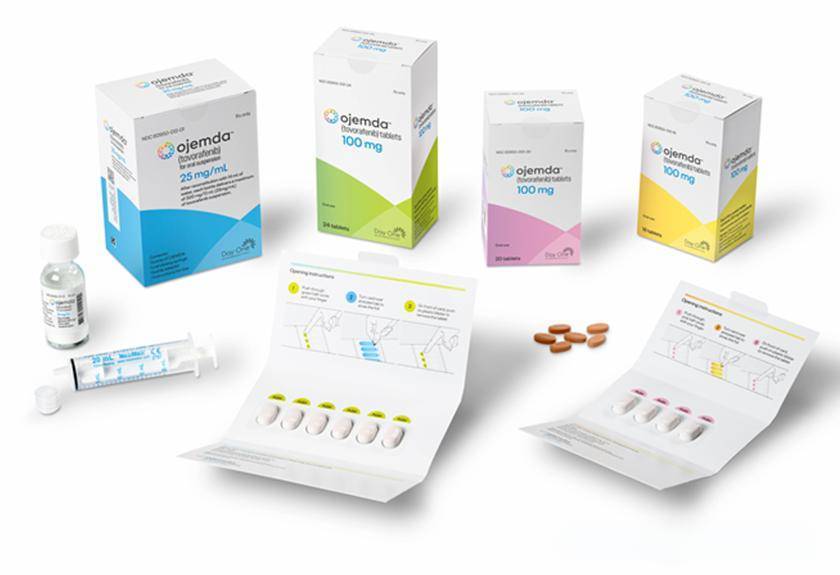
In terms of treatment options for different patients, tovorafenib is suitable for patients who are mutation-positive, have good single-drug tolerance, or have brain metastases. BRAF V600 For treatment-naive patients or patients who have not used BRAF/MEK inhibitors in the past, toborafenib monotherapy or combined immunotherapy can be considered. Trametinib is more suitable for systemic treatment in combination with BRAF inhibitors, especially in patients with previous treatment failure or rapid tumor progression. The combination regimen can improve efficacy and duration of remission. Combination therapy with trametinib also has advantages for patients who are sensitive to skin side effects or who need to reduce the toxicity of a single agent.
In clinical application, the management of adverse reactions of the two also needs to be treated differently. Common side effects of tovorafenib include rash, fatigue, diarrhea and abnormal liver function. Individual patients may develop hypertension or ocular toxicity and require regular monitoring of blood pressure and liver function. The main side effects of trametinib when used alone are skin erythema, diarrhea and mild to moderate effects on cardiac function. When used in combination, attention should be paid to fever syndrome and liver function fluctuations. Based on the patient's age, comorbid diseases, previous treatment history and tolerance, doctors can flexibly adjust the dosage or choose a single-drug/combination regimen to balance efficacy and safety.
In short, although tovorafenib and trametinib belong to the same MAPK pathway targeting drugs, the former is a BRAF inhibitor and has significant efficacy as a single drug in patients with specific mutations and can be used for patients with brain metastases; the latter is a MEK inhibitor and is usually used with BRAF The combined use of inhibitors can enhance efficacy and reduce some toxicity. In clinical practice, treatment options need to be personalized based on the patient's mutation type, disease stage, previous medication and individual tolerance to achieve optimal efficacy and safety. In the future, with the release of more clinical research data, the application of the two in different tumor types and drug resistance strategies will become clearer, providing patients with more precise targeted treatment options.
Reference materials:https://www.drugs.com/
[ 免责声明 ] 本页面内容来自公开渠道(如FDA官网、Drugs官网、原研药厂官网等),仅供持有医疗专业资质的人员用于医学药学研究参考,不构成任何治疗建议或药品推荐。所涉药品可能未在中国大陆获批上市,不适用于中国境内销售和使用。如需治疗,请咨询正规医疗机构。本站不提供药品销售或代购服务。


