
.jpeg)
Whether cabergoline is a hormonal drug and its pharmacological effects
Cabergoline (Cabergoline) is not a "hormone drug" in the traditional sense, but a dopamine receptor agonist (Dopamine agonist). Although its primary use is closely related to hormones—especially the hormone prolactin (PRL), it is not a hormone itself, nor does it directly supplement or replace any hormone in the body. Cabergoline activates dopamine D2 receptors in the body and inhibits the secretion of prolactin by the anterior pituitary gland, thereby affecting hormone levels mechanically. However, the drug classification still belongs to the neuroendocrine regulation category, rather than hormone supplementation or replacement therapy.
From a pharmacological point of view, cabergoline has a highly selective D2 receptor agonism and can effectively inhibit the synthesis and release of prolactin. Therefore, it is often used to treat hyperprolactinemia, such as prolactinoma, functional hyperprolactinemia, menstrual disorders, amenorrhea, infertility, etc. After the level of PRL is reduced, the ovulatory function of female patients can gradually recover, and the gonadal function of male patients may also improve. Its efficacy is long-lasting, and a single oral dose can last about 7 days, so the dosage is usually 1–2 times a week. Compared with traditional bromocriptine, it is more tolerable and has less side effects.
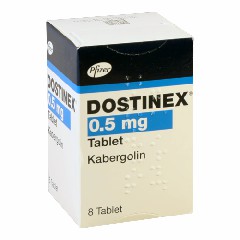
In terms of its effects in the body, cabergoline can not only reduce blood prolactin levels, but may also reduce the size of pituitary adenomas in some patients. It can also improve problems such as galactorrhea, decreased sexual function, and decreased bone density caused by high prolactin. In terms of pharmacokinetics, cabergoline has faster absorption and longer half-life, and can achieve stable dopamine receptor activation. In addition, due to its higher selectivity, it is less likely to cause side effects such as nausea, hypotension, and dizziness than the older generation dopamine agonists, but it is still necessary to monitor adverse reactions in the initial stage.
When using cabergoline, you should gradually start with a low dose as directed by your doctor to reduce the risks of gastrointestinal discomfort, hypotension, fatigue, etc. Use caution in patients with valvular heart disease, severe cardiovascular disease, or mental illness (especially a history of schizophrenia), as dopamine drugs may burden the heart or affect mental status. At the same time, prolactin levels, cardiac ultrasound and pituitary gland MRI (if applicable) should be regularly monitored to ensure efficacy and safety. Generally speaking, although cabergoline is not a hormonal drug, it is an important treatment method for regulating hormone secretion and is widely used in the fields of endocrinology and reproductive medicine.
Reference materials:https://www.drugs.com/
[ 免责声明 ] 本页面内容来自公开渠道(如FDA官网、Drugs官网、原研药厂官网等),仅供持有医疗专业资质的人员用于医学药学研究参考,不构成任何治疗建议或药品推荐。所涉药品可能未在中国大陆获批上市,不适用于中国境内销售和使用。如需治疗,请咨询正规医疗机构。本站不提供药品销售或代购服务。


