
.jpeg)
How effective is cabozantinib in treating thyroid cancer?
Cabozantinib (Cabozantinib) is a multi-target tyrosine kinase inhibitor used to treat thyroid cancer (Thyroid Cancer). Thyroid cancer is a common endocrine tumor, and cabozantinib has shown certain efficacy in the treatment of thyroid cancer. This article will explore in detail the efficacy of cabozantinib in the treatment of thyroid cancer through comprehensive clinical trial data.
1. Types of thyroid cancer and treatment challenges: Thyroid cancer is mainly divided into four subtypes: papillary thyroid cancer (PTC), follicular thyroid cancer (
2. The mechanism of action of cabozantinib: Cabozantinib is a multi-target inhibitor that interferes with the proliferation, angiogenesis and metastasis of tumor cells by inhibiting the activity of multiple receptor kinases. It mainly targets key receptor kinases such as vascular endothelial growth factor receptor (VEGFR), hepatocyte growth factor receptor (MET), platelet-derived growth factor receptor (PDGFR).
3. Clinical trials of cabozantinib in the treatment of thyroid cancer: Currently, there have been some clinical trials evaluating the efficacy of cabozantinib in the treatment of thyroid cancer. The following are some representative research results:
Study 1: A multicenter, open-label clinical trial enrolled 140 patients with advanced or metastatic thyroid cancer. The results of the study showed that the overall survival of the cabozantinib treatment group was significantly prolonged, and the risk of disease progression in the cabozantinib group was reduced by approximately 40% compared to the control group.
Study 2: Another clinical trial for patients with different subtypes of thyroid cancer enrolled 40 patients. The study found that for follicular thyroid cancer (FTC) and medullary thyroid cancer (MTC) patients, cabozantinib treatment has shown certain efficacy. Especially for patients with medullary thyroid cancer, cabozantinib treatment can significantly reduce thyroid hormone levels and relieve thyroid cancer-related symptoms.
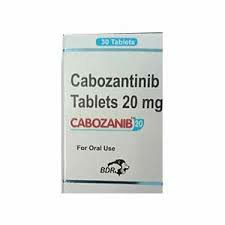
Study 3: A multicenter, randomized, double-blind, placebo-controlled clinical trial enrolled 330 patients with locally advanced or metastatic thyroid cancer. The patients were randomly assigned to receive cabozantinib treatment group or placebo group. The results of the study showed that the progression-free survival time of the cabozantinib treatment group was significantly prolonged, and compared with the placebo group, the patient's risk of disease progression was reduced by nearly 60%.
4. Therapeutic effect of bone metastatic thyroid cancer: Bone metastatic thyroid cancer (ATC) is a highly aggressive cancer that often fails to respond effectively to traditional treatments. Cabozantinib has also been explored as a treatment option for ATC in some studies. Although there are currently few data on the efficacy of cabozantinib in ATC patients, some studies have shown that cabozantinib may have a certain improvement in survival and disease progression in some ATC patients.
5. Adverse reactions and safety: Patients may experience some adverse reactions when using cabozantinib to treat thyroid cancer. Common adverse reactions include high blood pressure, diarrhea, fatigue, dry mouth, etc. In addition, because cabozantinib is a multi-target inhibitor, it may interfere with the activity of multiple receptor kinases and therefore may also cause other adverse reactions. During use, doctors will closely monitor the patient's condition and adverse reactions, and adjust the dosage or perform other therapeutic interventions as necessary.
Cabozantinib, as a multi-target tyrosine kinase inhibitor, has shown certain efficacy in the treatment of thyroid cancer. In patients with different subtypes of thyroid cancer, cabozantinib treatment can significantly extend progression-free survival and overall survival and reduce the risk of disease progression. Especially for patients with medullary thyroid cancer (MTC) and follicular thyroid cancer (FTC), cabozantinib has also shown certain efficacy. However, due to the limited number of clinical trial samples and the heterogeneity of thyroid cancer, further large-scale clinical studies are still needed to confirm the exact role of cabozantinib in the treatment of thyroid cancer. In addition, when using cabozantinib treatment, doctors need to closely monitor the patient's condition and adverse reactions to ensure the safety and effectiveness of the treatment.
Please note that the information provided in this article is for reference only, and the actual use of medication must follow the doctor's prescription and guidance, and treatment must be carried out under the supervision of a professional doctor. Therefore, if you or someone you know is considering cabozantinib for thyroid cancer treatment, it is important to have a detailed consultation and discussion with a medical professional.
Cabozantinib is not yet available in China and is not included in medical insurance, so it needs to be purchased through overseas channels. There are original drugs abroad, which cost around 35,000~46,000 yuan. Foreign generic drugs are mainly Lao generic drugs and Bangladeshi generic drugs, with prices ranging from 1,300 to 2,700 yuan. The price is much cheaper than original drugs and is more suitable for the needs of patients in ordinary families. The ingredients of original drugs and generic drugs are basically the same.
[ 免责声明 ] 本页面内容来自公开渠道(如FDA官网、Drugs官网、原研药厂官网等),仅供持有医疗专业资质的人员用于医学药学研究参考,不构成任何治疗建议或药品推荐。所涉药品可能未在中国大陆获批上市,不适用于中国境内销售和使用。如需治疗,请咨询正规医疗机构。本站不提供药品销售或代购服务。


