
.jpeg)
How effective is Cabotegravir in treating HIV (AIDS)?
Cabotegravir (Cabotegravir) is a new type of antiretroviral drug, used as an integrase inhibitor to treat HIV-1 infection. The clinical efficacy of cabotegravir is mainly evaluated through a series of clinical trials, including Phase II and Phase III clinical trials. The following will introduce the efficacy of cabotegravir in the treatment of HIV infection based on clinical trial data.
1.ATLAS (Antiretroviral Therapy as Long-Acting Suppression)Trial:
The ATLAStrial is an important clinical trial designed to evaluate the effectiveness of cabotegravir in maintaining HIV suppression compared with other standard antiretroviral treatments (cART ). The trial was an open-label, non-inferiority, multicenter, randomized, active-controlled trial.
Study subjects were treatment-stableHIVpatients with the right to discontinue cART with good disease control and were randomly assigned to receive monthly injections of cabotegravir in combination with two antiretroviral drugs (< /span>rilpivirine, RPV) or continue current oral cART therapy. The primary endpoint of the ATLAS trial is to assess the proportion of patients who achieve HIV RNA < 50 copies/mL over the course of treatment.
The results showed that a very high proportion of patients who received cabotegravir and RPV injections met the primary endpoint, with efficacy equivalent to patients who continued cART treatment. At 96 weeks, the treatment success rate was 93.6% in the injection group and 95.5% in the group that continued oral cART. This suggests that monthly injections of cabotegravir combined with RPV can maintain stable HIV suppression comparable to traditional oral treatment.
2.FLAIR (First Long-Acting Injectable Regimen)Test:
The FLAIR trial is also an important clinical trial that evaluates the combination of cabotegravir plus RPV injections versus patients who are stable on standard cART during a period of viral load suppression.
The FLAIR trial is an open-label, randomized, multicenter, non-inferiority trial. Patients with treatment-stable HIV were randomly assigned to receive monthly injections of cabotegravir plus RPV or to continue their current standard of care, cART. The primary endpoint was to assess treatment success in both arms at 48 weeks, defined as the proportion of patients with HIV RNA < 50 copies/mL.
The results of the FLAIR trial showed that at 48 weeks, the treatment success rate of the cabotegravir combined with RPV injection group 92.5%, while the treatment success rate for the group continuing standard cART was 95.5%. Although the treatment success rate in the injection group was slightly lower than that in the cART group, the difference did not reach statistical significance in the non-inferiority trial.
3.HPTN083Test:
The HPTN083trial is a major clinical trial being conducted globally to evaluate the efficacy of cabotegravir long-acting injectable (long-acting prophylactic antiretroviral therapy) in preventingHIV infection. This was a randomized, double-blind, non-inferiority trial.
The HPTN083trial is targeting high-risk groups, primarily gay and bisexual men, transgender and heterosexual men, who did not have HIVHIV at the start of the trialInfection. Study subjects were randomly assigned to receive bimonthly long-acting injections of cabotegravir or oral navir octanoate/lamivudine (TDF/FTC) combined with pharmacological prophylaxis. The primary endpoint was to evaluate the risk ratio for HIV infection in the long-acting cabotegravir injection group and the oral TDF/FTC group.
Results from the HPTN083trial showed that during a follow-up period of approximately 20 months, HIVThe risk of infection was significantly reduced, 66% lower than that of the TDF/FTC oral group. This means that long-acting cabotegravir injections have excellent efficacy in preventing HIV infection in high-risk groups.
4.HPTN084Test:
The HPTN084 trial is another important clinical trial, similar to the HPTN083 trial, designed to evaluate the efficacy of long-acting cabotegravir injection in preventing HIV infection. This was also a randomized, double-blind, non-inferiority trial.
The study subjects are high-risk groups of women, mainly young women in sub-Saharan Africa. They were HIV-free at the start of the trial and were randomly assigned to receive bimonthly long-acting cabotegravir injections or oral combination prophylaxis with TDF/FTC. The primary endpoint was to evaluate the risk ratio for HIV infection in the long-acting cabotegravir injection group and the oral TDF/FTC group.
The results of the HPTN084 trial showed that the risk of HIV infection in the long-acting cabotegravir injection group was reduced by 63% compared with the oral TDF/FTC oral group. This shows that long-acting cabotegravir injection also has significant efficacy in preventing HIV infection in high-risk groups of women.
Based on the data from the above clinical trials, cabotegravir has shown significant efficacy in treatingHIV infection. In ATLAS test andIn the FLAIR trial, the efficacy of cabotegravir combined with RPV injection was comparable to traditional oral antiretroviral therapy and could maintain HIV suppression. In the trials of HPTN083 and HPTN084, long-acting cabotegravir injections showed excellent efficacy in preventing HIV infection in high-risk groups, significantly reducing the risk of infection.
It is worth noting that the efficacy results reported in clinical trials are based on data under specific research conditions, and the condition and treatment response may vary due to individual patient differences, medication compliance, treatment stages and other factors. Therefore, in clinical practice, doctors should develop personalized treatment plans based on the patient's specific conditions and closely monitor treatment effects and the occurrence of adverse reactions.
Overall, cabotegravir, as a new type of antiretroviral drug, has shown good efficacy in treatingHIV infection and provides an innovative option for preventing HIV infection in high-risk groups. With more research and practice, the efficacy and safety of cabotegravir will be further verified and improved, providing more effective treatment and prevention methods for HIV infected patients.
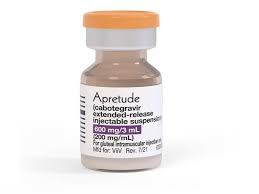
Cabotegravir is not currently on the market in China, so patients cannot purchase it domestically and need to purchase cabotegravir through overseas channels. Foreign cabotegravir only has original drugs, mainly European original drugs, and the price is very high, about 16,000 yuan.
[ 免责声明 ] 本页面内容来自公开渠道(如FDA官网、Drugs官网、原研药厂官网等),仅供持有医疗专业资质的人员用于医学药学研究参考,不构成任何治疗建议或药品推荐。所涉药品可能未在中国大陆获批上市,不适用于中国境内销售和使用。如需治疗,请咨询正规医疗机构。本站不提供药品销售或代购服务。


