
.jpeg)
How to take sirolimus and what is the dosage?
For kidney transplant patients, the recommended dose of sirolimus (sirolimus) is taken by mouth once daily with or without food. Patients who cannot take sirolimus tablets should take sirolimus solution. The initial dose of sirolimus should be given as soon as possible after transplantation. It is recommended that sirolimus be taken 4 hours after taking cyclosporine oral solution (modified version) and/or cyclosporine capsules (modified version). Two milligrams (2 mg) of sirolimus oral solution has been shown to be clinically equivalent to 2 mg of sirolimus tablets; the two preparations are interchangeable at this dose.
Frequent rapamin dose adjustments based on non-steady-state sirolimus concentrations can result in overdosing or underdosing because of the long half-life of sirolimus. Once the sirolimus maintenance dose is adjusted, patients should continue on the new maintenance dose for at least 7-14 days before further dose adjustments through concentration monitoring. In most patients, dose adjustment can be based on a simple ratio: neosirolimus dose = current dose × (target concentration/current concentration). When it is necessary to increase the sirolimus trough concentration, a loading dose should be considered in addition to the new maintenance dose: sirolimus loading dose = 3 × (new maintenance dose – current maintenance dose). The maximum dose of sirolimus taken on any given day should not exceed 40 mg. If the estimated daily dose exceeds 40 mg due to an additional loading dose, the loading dose should be administered within 2 days. Sirolimus trough concentrations should be monitored for at least 3 to 4 days after the loading dose.
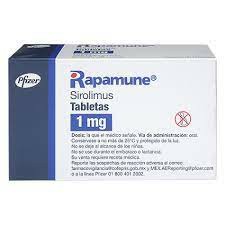
1. Kidney transplant patients with low to moderate immune risk:
For primary renal transplant patients, sirolimus oral solution and tablets are recommended first in a regimen using cyclosporine and corticosteroids. A loading dose of sirolimus equivalent to 3 times the maintenance dose should be given, that is, a loading dose of 6 mg should be given before the daily maintenance dose of 2 mg. Therapeutic drug monitoring should be used to maintain sirolimus drug concentrations within the target range.
After transplantation2 to 4 months after transplantation, cyclosporine should be gradually discontinued within 4 to 8 weeks, and the dose of sirolimus should be adjusted so that the whole blood trough concentration of sirolimus is within the target range. Because cyclosporine inhibits the metabolism and transport of sirolimus, sirolimus concentrations may decrease when cyclosporine is discontinued unless the dose of sirolimus is increased.
2. Kidney transplant patients with high immune risk:
For patients with high immune risk, it is recommended to pre-transplantUse sirolimus in combination with cyclosporine and corticosteroids within 12 months. The safety and effectiveness of this combination in patients at high immune risk have not been studied beyond the first 12 months. Therefore, any adjustments to the immunosuppressive regimen during the first 12 months after transplantation should be considered based on the patient's clinical status.
For patients receiving combination therapy with sirolimus and cyclosporine, sirolimus treatment should be initiated with a loading dose of 15 mg on day 1 after transplantation. Beginning on day 2, an initial maintenance dose of 5 mg/day should be administered. Trough values u200bu200bshould be reached on days 5 to 7, after which time the daily dose of sirolimus should be adjusted. The starting dose of cyclosporine should be 7 mg/kg/day, given in divided doses, and the dose should be adjusted subsequently to achieve target whole blood trough concentrations. The dose of prednisone should be at least 5 mg/day. Antibody induction therapy may be used.
3. Patients with lymphangioleiomyomatosis:
In patients with lymphangioleiomyomatosis, the initial dose of sirolimus should be2 mg/day. Sirolimus whole blood trough concentrations should be measured over 10 to 20 days, and the dose should be adjusted to maintain concentrations between 5 and 15 ng/mL.
4. Underweight patients: The initial dose of sirolimus for patients ≥13 years old weighing less than 40kg should be adjusted to 1mg/m2/day based on body surface area, and the loading dose should be 3mg/m2.
5. Patients with liver function impairment: It is recommended that the maintenance dose of sirolimus be reduced by approximately one-third for patients with mild or moderate liver impairment and by approximately half for patients with severe liver impairment. There is no need to modify the loading dose of sirolimus.
6. Drug monitoring: When used in combination with cyclosporine, sirolimus trough concentration should be maintained within the target range. After discontinuation of cyclosporine in transplant patients at low to moderate immune risk, the target sirolimus trough concentration should be 16-24 ng/mL in the first year after transplantation. Thereafter, the target concentration of sirolimus should be 12-20 ng/mL.
SirolimusThe original drug has been launched in China and has entered the scope of Class B medical insurance. SpecificationsThe price of each box of 1mg*10 tablets is about 400 yuan. The domestic drug is only available to patients with anti-rejection reactions in organ transplantation. Patients who do not meet the conditions may not be able to purchase this drug. The original sirolimus drug has also been launched overseas. The price of the Turkish version of Specifications1mg*100 tablets per box is around RMB 2,000 (the price may fluctuate due to exchange rates). The ingredients of the original drugs marketed in China are basically the same as those of foreign original drugs. Currently, there are no generic sirolimus drugs produced in other countries.
[ 免责声明 ] 本页面内容来自公开渠道(如FDA官网、Drugs官网、原研药厂官网等),仅供持有医疗专业资质的人员用于医学药学研究参考,不构成任何治疗建议或药品推荐。所涉药品可能未在中国大陆获批上市,不适用于中国境内销售和使用。如需治疗,请咨询正规医疗机构。本站不提供药品销售或代购服务。


