
.jpeg)
Instructions for Sotorasib
1. Name: sotorasib, AMG-510, sotorasib, sotorasib, Lumakras, sotorasib
2. Indications:
Based on the FDA-approved trial determination of sotorasib as indicated for the treatment of adult patients with KRAS G12C-mutated locally advanced or metastatic non-small cell lung cancer (NSCLC) who have received at least one prior systemic therapy, continued approval for this indication may be contingent on verification and description of clinical benefit in confirmatory trials.
3. Usage and dosage:
1. Recommended dose: The recommended dose for patients using sotoraxib is 960 mg (can be three 320 mg tablets or eight 120 mg tablets), taken orally once a day until disease progression or unacceptable toxicity occurs.
2. Patients who have difficulty swallowing solids:
Sotoraxib tablets may not dissolve completely and need to be dispersed in120 ml (4 ounces) of non-carbonated room temperature water. Do not crush or use other liquids. Stir or swirl the cup for approximately 3 minutes until the tablets are dispersed. Patients are advised to drink immediately and within 2 hours. The appearance of the mixture may be observed to vary from pale to bright yellow. Swallow the tablet dispersion without chewing the tablets. Rinse the container with an additional 120 ml (4 oz) of water and drink. If the mixture is not consumed immediately, the mixture needs to be stirred again to ensure that the tablets are dispersed.
3. Dosage adjustment:
If the patient experiences adverse reactions during use, the first dose of sotoracib should be reduced to 480 mg each time (four 120 mg tablets), and the second dose should be reduced to 240 mg each time (two 120 mg tablets). A maximum of two dose reductions are allowed. If the lowest dose of 240 mg once daily is not tolerated, sotorasib should be discontinued.
If the patient develops adverse reactions such as hepatotoxicity, interstitial lung disease (ILD)/pneumonitis, it is generally recommended to stop using sotoraxib. If the patient has appropriate supportive treatment for adverse reactions such as nausea, vomiting, and diarrhea, sotorasiib should be withheld until recovery to ≤ Grade 1 or baseline, and sotorasiib should be resumed at the next lower dose level.
4. Combined medication: Avoid the combined use of proton pump inhibitors (PPIs) and H2 sotorracib receptor antagonists. If the patient cannot avoid treatment with acid-reducing agents, it is recommended to take sotorracib 4 hours before or 10 hours after using topical antacids.
5. If the patient misses a dose of sotoraxib for more than 6 hours, it is recommended to skip this dose and take the next dose as prescribed the next day. Do not take 2 doses at the same time. If vomiting occurs, it is recommended to skip this dose and take the next dose as prescribed the next day.
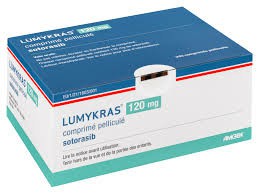
4. Adverse reactions:
The most common adverse reactions with sotorasiib(≥20%) are diarrhea, musculoskeletal pain, nausea, fatigue, hepatotoxicity and cough. Serious adverse reactions include pneumonia (8%) and hepatotoxicity (3.4%). and diarrhea (2%), and fatal adverse reactions occurred in 3.4% of patients, including respiratory failure (0.8%), pneumonia (0.4%), cardiac arrest (0.4%), heart failure (0.4%), gastric ulcer (0.4%), and pneumonia (0.4%). The most common laboratory abnormalities (≥25%) were lymphopenia, decreased hemoglobin, increased aspartate aminotransferase, increased alanine aminotransferase, decreased calcium, increased alkaline phosphatase, increased urinary protein, and decreased sodium.
5. Storage:
Sotoraxib is commonly available in tablet form and is typically storedat a temperature of 20°C to 25°C (68°F to 77°F). Excursions allowed from 15°C to 30°C (59°F to 86°F).
6. Special groups:
Because sotoracib may cause potentially serious adverse reactions in breastfed children, women are advised not to breastfeed during treatment with sotoracib and for 1 week after the last dose
7. Mechanism of action:
Sotoracib is an inhibitor of KRAS G12C, a tumor-limiting mutant oncogenic form of KRAS RAS gtpase. Sotorasiib forms an irreversible covalent bond with the unique cysteine u200bu200bof KRAS G12C, locking the protein in an inactive state and preventing downstream signaling without affecting wild-type KRAS. Sotorasiib only blocks KRAS signaling, inhibits cell growth and promotes apoptosis in the KRAS G12C tumor cell line. Sotoraxib inhibits KRASG12C in vitro and has minimal detectable off-target activity in vivo. In a mouse tumor xenograft model, sotorasiib treatment resulted in tumor regression and prolonged survival and was associated with anti-tumor immunity in the KRAS G12C model.
8. Overdose:
Data on overdose with sotorazeb are not readily available. However, in clinical trials, no evidence of dose-limiting toxicities was found. Adverse effects such as diarrhea, nausea, vomiting, fatigue, and elevated transaminases may occur in patients who overdose, with increased risk and severity.
[ 免责声明 ] 本页面内容来自公开渠道(如FDA官网、Drugs官网、原研药厂官网等),仅供持有医疗专业资质的人员用于医学药学研究参考,不构成任何治疗建议或药品推荐。所涉药品可能未在中国大陆获批上市,不适用于中国境内销售和使用。如需治疗,请咨询正规医疗机构。本站不提供药品销售或代购服务。


