
.jpeg)
Instructions for Ruxolitinib Tablets
1. Generic name: ruxolitinib
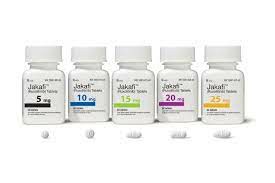
Product name:Jakafi, Jakavi
All names: ruxolitinib, ruxolitinib, ruxolitinib, dextrovir
2. Indications:
1. Myelofibrosis (MF): Ruxolitinib tablets are suitable for the treatment of moderate or high-risk myelofibrosis, including adult primary MF, post-polycythemia vera MF and post-idiopathic thrombocythemia MF.
2. Polycythemia vera (PV): Ruxolitinib tablets are suitable for the treatment of polycythemia vera (PV) in adults who have a poor reaction or intolerance to hydroxyurea.
3. Acute graft-versus-host disease (aGVHD): Ruxolitinib tablets are suitable for the treatment of steroid-refractory acute graft-versus-host disease in adults and children aged 12 years and above.
4. Chronic graft-versus-host disease (cGVHD): Ruxolitinib tablets are suitable for the treatment of chronic graft-versus-host disease in adult and pediatric patients 12 years old and above after failure of one or two systemic treatments.
3. Usage and dosage:
1. Before treatment: Patients need to undergo a complete blood count examination before using ruxolitinib tablets. The doctor will ask about past infections, including tuberculosis, herpes simplex, herpes zoster, and hepatitis B.
2. Recommended dosage:
(1)Myelofibrosis (MF): Patients with platelet counts between 50-100x10^9/L take 5 mg orally twice daily, platelet count Patients with a platelet count above 100-200x10^9/L should take 15 mg orally twice a day, and patients with a platelet count greater than200x10^9/L should take 20 mg twice a day.
(2) Polycythemia vera (PV): The recommended starting dose is 10 mg orally twice daily. If hemoglobin, neutrophil count and platelets are normal, the dose for non-responders can be increased to 25 mg twice daily.
(3) Acute graft-versus-host disease (aGVHD):
The recommended starting dose is 5 mg orally twice dailyif used withIf ANC and platelet count do not decrease by 50% or more compared to the first day of treatment with ruxolitinib tablets, consider increasing the dose to 10 mg twice daily after at least 3 days of treatment. For responding patients who have discontinued therapeutic doses of corticosteroids, consider tapering ruxolitinib tablets after 6 months of treatment. Decrease the dose level of ruxolitinib tablets approximately every 8 weeks (10 mg twice a day, to 5 mg twice a day, to 5 mg once a day). If signs or symptoms of GVHD recur during or after ruxolitinib dose reduction, consider retreatment.
(4) Chronic graft-versus-host disease (cGVHD):
The recommended starting dose is 10 mg taken orally twice daily. For responding patients who have stopped taking corticosteroids, consider tapering the ruxolitinib tablets after 6 months of treatment. The dose level of ruxolitinib tablets should be reduced approximately every 8 weeks (10 mg twice a day, to 5 mg twice a day, to 5 mg once a day). If signs or symptoms of GVHD recur during or after ruxolitinib tapering, consider retreatment.
(5) Physicians will perform a complete blood count every 2-4 weeks until the dose is stable, and then, based on clinical indications, start ruxolitinib tablets and evaluate blood lipid parameters approximately 8-12 weeks after treatment.
3. Dosage adjustment: When treatment with ruxolitinib tablets is stopped due to reasons other than thrombocytopenia, you can consider gradually reducing the dose of ruxolitinib tablets, such as 5 mg twice a day twice a week. Patients with hepatic and renal impairment require dose adjustment based on platelet count. Patients should not interrupt or stop treatment without consulting their doctor.
4. Adverse reactions:
(1) In patients with myelofibrosis, the most common adverse reactions are thrombocytopenia and anemia. Thrombocytopenia, anemia and neutropenia are dose-related effects. The three most common non-hematological adverse reactions are abrasion, dizziness and headache.
(2) In polycythemia vera, the most common side effects of ruxolitinib tablets include thrombocytopenia, anemia, weight gain, headache, dizziness, hypercholesterolemia, and elevated liver enzyme levels.
(3) In acute graft-versus-host disease, common side effects include thrombocytopenia, anemia, neutropenia, cytomegalovirus infection, sepsis (when bacteria and their toxins circulate in the blood causing organ damage), urinary tract (the structure that carries urine) infection, hypercholesterolemia, and elevated liver enzyme levels.
(4) In chronic graft-versus-host disease, common side effects include thrombocytopenia, anemia, neutropenia, hypertension, headache, urinary tract infection, hypercholesterolemia, and elevated liver enzyme levels.
Post-marketing adverse events of herpes simplex virus reactivation and/or transmission.
5. Storage:
Ruxolitinib tablets are normally stored at room temperature between 20°C and 25°C (68°F and 77°F); tolerances are between 15°C and 30°C (59°F and 86°F).
6. Special groups:
Ruxolitinib and/or its metabolites are present in the milk of lactating rats. Because many drugs are present in breast milk, and because ruxolitinib tablets may cause thrombocytopenia and anemia in human studies, discontinue breastfeeding during treatment and for two weeks after the last dose.
7. Mechanism of action:
Ruxolitinib is a kinase inhibitor that inhibits the Janus-associated kinases (JAKs) JAK1 and JAK2, which mediate signaling of many cytokines and growth factors and are important for hematopoiesis and immune function. JAK signaling involves the recruitment of STATs (signal transducers and activators of transcription) to cytokine receptors, activation and subsequent localization of STATs to the nucleus, resulting in the regulation of gene expression.
Ruxolitinib tabletsThe original drug has been launched in China and is included in the scope of Class B medical insurance. It is limited to patients who meet the indications. Specification The price of each box of 5mg*60 tablets may be around RMB 3,000. The Turkish version of ruxolitinib tablets listed overseas, Specifications20mg*56 tablets, may be priced around RMB 8,000 per box (the price may fluctuate due to exchange rates). There are also ruxolitinib tablets produced in other countries. For example, the price of 5mg*50 tablets produced by Bangladesh Yaopin International may be around 1,400 yuan per box (the price may fluctuate due to exchange rates). Its pharmaceutical ingredients are basically the same as those of domestic and foreign original drugs.
[ 免责声明 ] 本页面内容来自公开渠道(如FDA官网、Drugs官网、原研药厂官网等),仅供持有医疗专业资质的人员用于医学药学研究参考,不构成任何治疗建议或药品推荐。所涉药品可能未在中国大陆获批上市,不适用于中国境内销售和使用。如需治疗,请咨询正规医疗机构。本站不提供药品销售或代购服务。


