
.jpeg)
Can Finerenone restore some kidney function?
Finerenone (Finerenone), as a ketosterol receptor antagonist, is widely used to treat cardiovascular disease and diabetes-related kidney disease. Although its main role is to reduce the risk of heart failure recurrence and protect the kidneys, whether it can truly restore some renal function still needs to be explored based on clinical experimental data.
Clinical trials have extensively studied the renal protective effects of fenelidone, focusing primarily on patients with chronic kidney disease (CKD) and Type 2diabetic kidney disease (DKD). The following are some clinical experimental data related to the effects of fenelidone on renal function:
1. FIDELIO-DKD trial: This is a clinical trial in patients with type 2 diabetic nephropathy, designed to evaluate the effect of fenelidone on kidney function. The trial found that fenelidone significantly reduced the risk of worsening kidney function compared with placebo. Although the trial did not provide clear evidence that fenelinone can completely restore kidney function, it showed a significant effect in slowing the decline of kidney function.
2. FIDELITYTrial: This study is also aimed at patients with type 2 diabetic nephropathy and aims to evaluate the effect of fenelidone on urinary protein and kidney function. Trial results show that fenelidone has a significant effect in reducing urinary protein and slowing the deterioration of renal function, but whether it can fully restore renal function still requires further research.
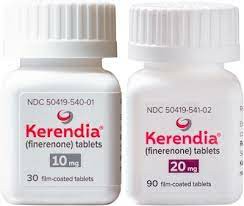
3. FIGARO-DKD trial: This trial is also aimed at patients with type 2 diabetic nephropathy to study the effect of fenelidone on kidney function. Trial results show that fenelinone significantly reduces the risk of worsening kidney function, but whether it can fully restore kidney function still requires further study.
Based on the above clinical trial data, it can be seen that fenelidone has a positive effect in protecting kidney function. It can slow down the decline of kidney function and reduce urine protein levels, thus playing a role in kidney protection to a certain extent. However, whether partial renal function recovery can truly be achieved still requires more long-term studies to further confirm.
It should be noted that the recovery of kidney function is affected by many factors, including individual differences, disease severity, treatment options, etc. Fennelidone, as a drug, is usually used in clinical practice to control the progression of kidney disease and protect kidney function, but whether it can restore partial kidney function requires more in-depth research to determine. When using fenelidone or any drug, it should be done under the guidance of a doctor and should be followed up and monitored regularly.
Fenelidone is currently on the market in China and has been included in medical insurance. Patients can purchase it at domestic hospital pharmacies. For specific prices and prices after medical insurance reimbursement, please consult the local hospital pharmacy. Overseas, the main Japanese original drug is fenelidone, with a specification of 10mg*100 tablets of about more than 2,000 yuan, and it is the same as the domestic original drug.
[ 免责声明 ] 本页面内容来自公开渠道(如FDA官网、Drugs官网、原研药厂官网等),仅供持有医疗专业资质的人员用于医学药学研究参考,不构成任何治疗建议或药品推荐。所涉药品可能未在中国大陆获批上市,不适用于中国境内销售和使用。如需治疗,请咨询正规医疗机构。本站不提供药品销售或代购服务。


