
.jpeg)
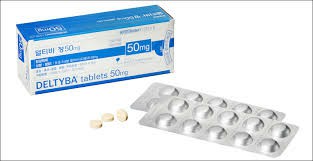
Instructions for Delamanid
1. All names: Delamanid, Delamanid, Delba, Deltyba
2. Indications:
Delamanid is indicated for the treatment of pulmonary multidrug-resistant tuberculosis (MDR-TB) in adults, adolescents, children and infants weighting at least 10kg, for whom an effective treatment regimen cannot be formed due to drug resistance or tolerance. Official guidelines for the appropriate use of antimicrobials should be considered.
3. Usage and dosage:
1. Treatment with delamanid should be initiated and monitored by physicians experienced in treating multidrug-resistant Mycobacterium tuberculosis. Delamanid must always be used as part of an appropriate combination regimen for the treatment of multidrug-resistant tuberculosis (MDR-TB). After the end of 24 weeks, treatment with the appropriate combination regimen should be continued for the delamanid treatment period according to WHO guidelines. It is recommended that delamanid be administered via directly observed therapy (DOT).
2. Recommended dosage:
(1) The recommended dosage for adults is 100 mg twice daily for 24 weeks.
(2) Teens and Children:
Pediatric patients weighing ≥30 to <50kg: The recommended dose is 50mg twice daily for 24 weeks;
≥50 kg: The recommended dose is 100 mg twice daily for 24 weeks;
4. Adverse reactions:
The most commonly observed adverse drug reactions in patients receiving delamanid+optimized therapy included nausea, vomiting, headache, insomnia, dizziness, tinnitus, hypokalemia, gastritis, decreased appetite, and fatigue.
5. Storage:
Dramani is usually stored at room temperature and away from light.
6. Taboo:
1. Patients who are allergic to delamanid and any of its ingredients are prohibited from taking delamanid.
2. It is contraindicated in patients with serum albumin <2.8g/dL.
3. Take drugs that are strong inducers of CYP3A4 (such as carbamazepine) at the same time.
7. Mechanism of action:
Delamaniis a prodrug that requires biotransformation by the mycobacterialF420 coenzyme system, including deazoflavin-dependent nitroreductase (Rv3547), to mediate its antimycobacterial activity against growing and non-growing mycobacteria. Mutations in one of five coenzyme F420 genes (fgd, Rv3547, fbiA, fbiB and fbiC) are thought to be mechanisms of resistance to delamanid. Upon activation, the free radical intermediate formed between deramosamine and denitroimidazole derivatives is thought to mediate the antimycobacterial effect by inhibiting the synthesis of methoxymycolic acids and ketomycolic acids, leading to the depletion of mycobacterial cell wall components and the destruction of mycobacteria. Nitroimidazoxazole derivatives are thought to generate reactive nitrogen species, including nitrogen oxides (NO). However, unlike isoniazid, delamanid does notalpha-mycolic acid.
8. Notes:
1. QT prolongation: During the first 6-10 weeks of treatment, this prolongation slowly increases over time and remains stable thereafter. QTc prolongation is closely related to DM-6705, the main metabolite of delamanid. Plasma albumin and CYP3A4 regulate the formation and metabolism of DM-6705 respectively. It is recommended that electrocardiogram (ECG) testing be performed before starting treatment and monthly during the entire course of treatment with delamanid. If QTcF >500 ms is observed before the first dose of delamanid or during delamanid treatment, delamanid treatment should not be initiated or treatment should be discontinued. If the QTc interval duration exceeds 450/470 ms in male/female patients during delamanid treatment, these patients should undergo more frequent ECG monitoring.
2. Hypoalbuminemia: In a clinical study, the presence of hypoalbuminemia was associated with an increased risk of QTc interval prolongation in patients treated with delamanid. Delamanid is contraindicated in patients with albumin <2.8g/dL. Patients who are initiated on delamanid with serum albumin<3.4 g/dL or whose serum albumin falls to this range during treatment should receive very frequentECG monitoring throughout treatment with delamanid.
3. Liver damage: Delamanid is not recommended for patients with moderate to severe liver damage.
4. Renal Impairment: There are no data on the use of delamanid in patients with severe renal impairment and delamanid is not recommended.
The original drug Delamani has been launched in China and is included in the scope of Class B medical insurance. Reimbursement is limited to patients with multi-drug-resistant tuberculosis. Specifications The price of each box of 50mg*60 tablets may be around RMB 6,000. Specifications of the Russian version of Dramani listed overseasThe price of each box of 50mg*48 tablets may be around RMB 1,000-2,000 (the price may fluctuate due to the exchange rate). Currently, there is no generic drug of Delamani available on the market. For more drug information and specific prices, please consult Yaode Medical Consultant.
[ 免责声明 ] 本页面内容来自公开渠道(如FDA官网、Drugs官网、原研药厂官网等),仅供持有医疗专业资质的人员用于医学药学研究参考,不构成任何治疗建议或药品推荐。所涉药品可能未在中国大陆获批上市,不适用于中国境内销售和使用。如需治疗,请咨询正规医疗机构。本站不提供药品销售或代购服务。


