
.jpeg)
Instructions for Olaparib
1. Common name: Olaparib
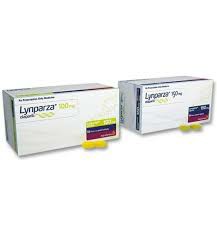
Product name: Lynparza
All names: Lynparza, Olaparib, Lynparza
2. Indications:
1. First-line maintenance treatment for BRCA-mutated advanced ovarian cancer:
Olaparib is indicated for the maintenance treatment of adult patients with deleterious or suspected deleterious germline or somatic cancer, BRCA-mutated advanced epithelial ovarian, fallopian tube, or primary peritoneal cancer who have a complete or partial response to first-line platinum-based chemotherapy.
2. Combined with bevacizumab for first-line maintenance treatment of HRD-positive advanced ovarian cancer:
Olaparib in combination with bevacizumab is indicated for the maintenance treatment of adult patients with advanced epithelial ovarian, fallopian tube, or primary peritoneal cancer who have a complete or partial response to first-line platinum-based chemotherapy and whose cancer is associated with a homologous recombination deficiency (HRD)-positive status, defined by any of the following: deleterious or suspected deleterious BRCA mutations and/or genomic instability.
3. Maintenance treatment of recurrent ovarian cancer:
Lynparza is indicated for the maintenance treatment of adult patients with recurrent epithelial ovarian, fallopian tube, or primary peritoneal cancer who have a complete or partial response to platinum-based chemotherapy.
4. GermlineAdjuvant treatment for BRCA-mutated HER2-negative high-risk early breast cancer:
Olaparib is indicated for the adjuvant treatment of adult patients with harmful or suspected harmfulgBRCAm human epidermal growth factor receptor 2 (HER2)-negative high-risk early-stage breast cancer who have received neoadjuvant or adjuvant chemotherapy.
5. Germline BRCA mutated HER2-negative metastatic breast cancer:
Lynparza is suitable for patients with harmful or suspected harmful symptomsTreatment of adult patients with gBRCAm, HER2-negative metastatic breast cancer who have received chemotherapy in the neoadjuvant, adjuvant, or metastatic setting. Patients with hormone receptor (HR)-positive breast cancer should have received endocrine therapy or be considered unsuitable for endocrine therapy.
6. First-line maintenance therapy for germline BRCA-mutated metastatic pancreatic cancer:
Lynparza is indicated for the maintenance treatment of adult patients with deleterious or suspected deleterious BRCAm metastatic pancreatic cancer who have not progressed on at least 16 weeks of first-line platinum-based chemotherapy.
7. Metastatic castration-resistant prostate cancer with HRR gene mutations:
Olaparib is indicated for the treatment of adult patients with deleterious or suspected deleterious germline or somatic homologous recombination repair (HRR) gene-mutated metastatic castration-resistant prostate cancer (mCRPC) who have progressed following prior treatment with enzalutamide or abiraterone.
8. Combined treatment with abiraterone and prednisone or prednisoloneBRCA-mutated metastatic castration-resistant prostate cancer:
Lynparza is indicated for the treatment of adult patients with deleterious or suspected deleterious BRCA-mutated (BRCAm) metastatic castration-resistant prostate cancer (mCRPC) in combination with abiraterone and prednisone or prednisolone.
3. Usage and dosage:
1. Recommended dosage:
The recommended dose of olaparib is 300 mg taken orally twice daily with or without food. If a patient misses a dose of olaparib, instruct the patient to take the next dose at the scheduled time. Do not chew, crush, dissolve, or split tablets.
(1) First-line maintenance treatment for BRCA-mutated advanced ovarian cancer:
Continue treatment until disease progression, unacceptable toxicity, or completion of 2 years of treatment. Patients with complete response (no radiographic evidence of disease) at 2 years should discontinue treatment. Patients with evidence of disease at 2 years may be treated beyond 2 years if the treating provider believes they will derive further benefit from continued treatment.
(2) First-line maintenance therapy with bevacizumabHRD-positive advanced ovarian cancer:
Continue treatment until disease progression, unacceptable toxicity, or completion of 2 years of treatment. Patients with complete response (no radiographic evidence of disease) at 2 years should discontinue treatment. Patients with evidence of disease at 2 years may be treated beyond 2 years if the treating provider believes they will derive further benefit from continued treatment.
The recommended dose of bevacizumab when administered with olaparib is 15 mg/kg every three weeks. Bevacizumab should be continued for 15 months, including during chemotherapy and maintenance.
(3) GermlineAdjuvant therapy for BRCA-mutated HER2-negative high-risk early breast cancer
Continue treatment for a total of1 year or until disease recurrence or unacceptable toxicity, whichever occurs first. Patients receiving olaparib for hormone receptor-positive HER2-negative breast cancer should continue to receive concomitant endocrine therapy in accordance with current clinical practice guidelines.
(4) Recurrent ovarian cancer,HER2-negative metastatic breast cancer, metastatic pancreatic cancer, and HRR gene-mutated metastatic castration-resistant prostate cancer: Continue treatment until disease progression or unacceptable toxicity occurs.
(5) BRCA-mutated metastatic castration-resistant prostate cancer combined with abiraterone and prednisone or prednisolone:
Continue treatment until disease progression or unacceptable toxicity occurs. When used with olaparib, the recommended dose of abiraterone is 1000 mg taken orally once daily. Abiraterone should be taken orally in combination with prednisone or prednisolone 5 mg twice daily. Patients should also receive concomitant gonadotropin-releasing hormone (GnRH) analog therapy or should undergo bilateral orchiectomy.
2. Dosage adjustment:
To control adverse effects, consider interrupting treatment or reducing the dose. Recommended dose reduction is 250mg twice daily. If further dose reduction is necessary, reduce to 200 mg twice daily.
(1) Avoid the simultaneous use of strong or moderate CYP3A inhibitors with olaparib. If combined use cannot be avoided, use olaparib when used simultaneously with strong CYP3A inhibitors Reduce the dose of olaparib to 100 mg twice daily; reduce the dose of olaparib to 100 mg twice daily; reduce the dose of olaparib to olaparib when used concomitantly with moderate CYP3A inhibitors150 mg twice daily. After 3-5 elimination half-lives of discontinuing the inhibitor, resume the olaparib dose taken before starting the CYP3A inhibitor.
(2)For patients with moderate renal impairment (CLcr31-50mL/min), reduce the oral dose of olaparib to 200mg twice daily.
4. Adverse reactions:
In olaparib clinical studies,the most common adverse reactions reported in ≥10% of patients were nausea, fatigue, anemia, vomiting, diarrhea, decreased appetite, headache, dysgeusia, cough, neutropenia, dyspnea, dizziness, dyspepsia, leukopenia, and thrombocytopenia. After olaparib was put on the market, adverse events such as allergies (including angioedema), erythema nodosum, rash, and dermatitis occurred.
5. Storage:
Lynparza is usually stored20°C to 25°C (68°F to 77°F), with a tolerance of 15°C to 30°C (59°F to 86°F), in its original bottle and protected from moisture.
6. Mechanism of action:
Lynparza is an inhibitor of poly(ADP-ribose) polymerase (PARP), including PARP1, PARP2 and PARP3. PARP enzymes are involved in normal cellular functions such as DNA transcription and DNA repair. Olaparibhas been shown to inhibit the growth of selected tumor cell lines in vitro and to reduce tumor growth in mouse xenograft models of human cancer, both as monotherapy and following platinum-based chemotherapy. Increased cytotoxicity and antitumor activity were observed in BRCA1/2-deficient cell lines and mouse tumor models after treatment with olaparib, asynchronous transport mode, or other genes involved in homologous recombination repair (HRR) of DNA damage and associated with platinum response.
In vitro studies have shown that olaparib-induced cytotoxicity may involve inhibiting PARP enzyme activity and increasing the formation of PARP-DNA complexes, leading to DNA damage and cancer cell death. In prostate cancer models, PARP1 has been shown to contribute to the regulation of androgen receptor (AR) activity; the combination of olaparib and AR inhibition resulted in in vitro cytotoxicity and antitumor activity in mouse xenograft models.
[ 免责声明 ] 本页面内容来自公开渠道(如FDA官网、Drugs官网、原研药厂官网等),仅供持有医疗专业资质的人员用于医学药学研究参考,不构成任何治疗建议或药品推荐。所涉药品可能未在中国大陆获批上市,不适用于中国境内销售和使用。如需治疗,请咨询正规医疗机构。本站不提供药品销售或代购服务。


