
.jpeg)
Instructions for Obinutuzumab
1. Generic name: Otuzumab
Product name: Gazyva
All names: Obinutuzumab Injection, Obinutuzumab, Jialuohua, Aijiwa, Obinutuzumab Injection
2. Indications:
1. Chronic lymphocytic leukemia (CLL): Obinutuzumab is used in combination with chlorambucil to treat patients with previously untreated chronic lymphocytic leukemia.
2. Follicular lymphoma (FL): Otuzumab can be combined with bendamustine, followed by otuzumab monotherapy. It is suitable for the treatment of patients with follicular lymphoma who have relapsed or been refractory after treatment with rituximab-containing regimens. Otuzumab in combination with chemotherapy followed by otuzumab monotherapy in patients who achieved at least a partial response and is indicated for the treatment of adult patients with previously untreated large-volume stage II, stage III or IV follicular lymphoma.
3. Usage and dosage:
1. Recommended dosage:
(1) Chronic lymphocytic leukemia (CLL): Patients with CLL received doses of otuzumab of 1,000 mg administered intravenously during six 28-day treatment cycles, except for the first infusion in Cycle 1, which was administered on Day 1 (100 mg) and Day 2 (900 mg).
(2) Follicular lymphoma (FL): The intravenous dose of otuzumab is 1000 mg per dose. For patients with relapsed or refractory FL, otuzumab and bendamustine are combined for six 28-day cycles of treatment; patients who achieve stable disease, complete remission or partial remission in the first six cycles should continue to receive otuzumab 1000 mg monotherapy for up to two years. For patients with previously untreated FL, combination with bendamustinesix 28-day cycles; or six 21-day cycles plus CHOP followed by two 21-day cycles of otuzumab alone; or eight21-day cycles combined with CVP.
3. Prevention of tumor lysis syndrome: Patients with high tumor burden, high circulating absolute lymphocyte count (greater than 25×109/L) or renal function impairment are considered to be at risk of tumor lysis syndrome and should receive prevention. Premedicate with an antihyperuricemic medication (such as allopurinol or rasburicase) and ensure adequate hydration before starting otuzumab treatment. Continue prophylaxis before each subsequent otuzumab infusion as needed.
4. Antimicrobial prophylaxis: It is strongly recommended that patients with grade 3 to 4 neutropenia lasting for more than one week receive antimicrobial prophylaxis until the neutropenia is relieved to grade 1 or 2. Consider antiviral and antifungal prophylaxis in patients with severe and prolonged (>1 week) neutropenia.
5. Dosage adjustment: If the patient experiences adverse reactions when using otuzumab, adjust the drug dose, interrupt or stop treatment under the guidance of a doctor.
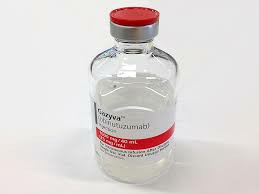
4. Adverse reactions:
Common adverse reactions of otuzumab include infusion-related reactions, fever, cough, musculoskeletal disorders, neutropenia, lymphopenia, leukopenia, thrombocytopenia, hypocalcemia, hyperkalemia, hyponatremia, elevated transaminase (i.e. AST, ALT) concentrations, elevated Scr, hypoalbuminemia, elevated serum alkaline phosphatase concentration, and hypokalemia.
5. Storage:
Otuzumab is a clear, colorless to slightly brown, preservative-free solution for intravenous injection that will be stored2°C to 8°C (36°F to 46°F) in the dark, do not freeze, and do not shake. If diluted otuzumab is not used immediately, store in a refrigerator at 2°C to 8°C (36°F to 46°F) for 24 hours before use and discard after 24 hours.
6. Taboo:
Otuzumab is contraindicated in patients with a known allergic reaction (such as anaphylaxis) to obinutuzumab or any excipients, or in patients with serum sickness who have previously used obinutuzumab.
7. Mechanism of action:
Otuzumab is a monoclonal antibody directed against the CD20 antigen expressed on the surface of preB lymphocytes and mature B lymphocytes. After binding to CD20, Otuzumab mediates B cell lysis through (1) engagement of immune effector cells, (2) direct activation of intracellular death signaling pathways (direct cell death), and/or (3) activation of the complement cascade. Immune effector cell mechanisms include antibody-dependent cellular cytotoxicity (ADCC) and antibody-dependent phagocytosis.
As an antibody with reduced fucose content, otuzumab induced greaterADCC activity than rituximab in vitro using human cancer cell lines. Otuzumab also exhibits an increased ability to induce direct cell death compared with rituximab. Otuzumab uses a purified protein that binds to FcγRIII with higher affinity than rituximab. Otuzumab and rituximab bind to overlapping epitopes on CD20 with similar affinity.
8. Notes:
Reactivation of hepatitis B virus (HBV), leading in some cases to fulminant hepatitis, liver failure, and death, can occur in patients receiving CD20-directed cytolytic antibodies, including otuzumab. Before starting treatment, all patients are screened for HBV infection. MonitorHBV-positive patients during and after otuzumabtreatment. If HBV reappears, otuzumab and concomitant medications should be discontinued.
The original drug of Otuzumab has been launched in China and has entered the scope of medical insurance, but it is only reimbursed for patients who meet the indications. The specification is 1000mg (40ml)*The price of one bottle may be around 9,000 yuan, and it is a strictly controlled drug. The price of the Turkish version of Otuzumab Specifications1000mg/40ml per box listed overseas may be around RMB 10,000 (the price may fluctuate due to the exchange rate). The ingredients of the original drugs sold domestically and abroad are basically the same. There is currently no generic version of Otuzumab produced and launched. For more drug information and specific prices, please consult the medical consultant of Yaode.
[ 免责声明 ] 本页面内容来自公开渠道(如FDA官网、Drugs官网、原研药厂官网等),仅供持有医疗专业资质的人员用于医学药学研究参考,不构成任何治疗建议或药品推荐。所涉药品可能未在中国大陆获批上市,不适用于中国境内销售和使用。如需治疗,请咨询正规医疗机构。本站不提供药品销售或代购服务。


