
.jpeg)
Instructions for Nilotinib
1. Generic name: Nilotinib
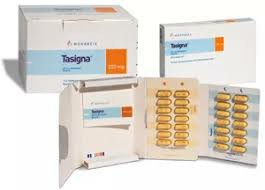
Product name:TASIGNA
All names: Nilotinib, Nilotinib, Tasigna, Nilotinib, AMN107
2. Indications:
1. Adult and pediatric patients newly diagnosed with Ph+CML-CP:
Nilotinib (Nilotinib) is indicated for the treatment of adult and pediatric patients 1 year of age and older with newly diagnosed chronic-phase Philadelphia chromosome-positive chronic myelogenous leukemia (Ph+CML).
2. Adult patients with drug-resistant or intolerant Ph+CML-CP and CML-AP:
Nilotinib is indicated for the treatment of adult patients with chronic-phase and accelerated-phase Philadelphia chromosome-positive chronic myelogenous leukemia (Ph+CML) who are resistant or intolerant to previous treatments, including imatinib (imatinib).
3. Pediatric patients with drug-resistant or intolerant Ph+CML-CP and CML-AP:
Nilotinib is indicated for the treatment of pediatric patients 1 year of age and older with chronic-phase and accelerated-phase Philadelphia chromosome-positive chronic myelogenous leukemia (Ph+CML) who are resistant or intolerant to prior tyrosine kinase inhibitor (TKI) therapy.
3. Usage and dosage:
1. Recommended dosage:
The patient took nilotinib on an empty stomach twice a day, approximately12 hours apart. You should not eat anything for at least 2 hours before taking this medicine and for at least 1 hour after taking this medicine. Patients are advised to swallow the capsule whole with water. For patients who are unable to swallow capsules, the contents of each capsule may be dispersed in 1 teaspoon of applesauce (apple puree). The mixture should be taken immediately (within 15 minutes) and should not be stored for future use. If clinically indicated, nilotinib can be used in combination with hematopoietic growth factors such as erythropoietin or G-CSF; or with hydroxyurea or anagrelide.
(1) Adult initial diagnosisPh+CML-CP patients: The recommended dose of nilotinib is 300 mg, taken orally twice a day.
(2)Tolerant or intolerantAdult patients with Ph+CML-CP and CML-AP: The recommended dose of nilotinib is 400 mg, taken orally twice daily.
(3) Pediatric patients newly diagnosed withPh+CML-CP or drug-resistant or intolerant to Ph+CML-CP and CML-AP: The recommended dose of nilotinib for pediatric patients is 230 mg/m2, taken orally twice daily, rounded to the nearest 50 mg dose (maximum single dose is 400 mg). If necessary, obtain the desired dose by combining nilotinib capsules of different strengths. Treatment was continued as long as clinical benefit was observed or until unacceptable toxicity occurred.
Dose based on body surface area (BSA) ≤ 0.32 m2: 50 mg per dose; total daily dose (TDD) 100 mg; 0.33-0.54 m2: 100 mg per dose, TDD 200 mg; 0.55-0.76 m2: 150 mg per dose, TDD 300 mg; 0.77-0.97 m2 2: 200mg per dose, TDD is 400mg; 0.98-1.19m2: 250mg per dose, TDD is 500mg; 1.2-1.41m2: 300m per dose g, TDD is 600mg; 1.42-1.63m2: 350mg per dose; TDD is 700mg; ≥1.64m2: 400mg per dose, TDD is 800mg.
2. Dose adjustment: If the patient develops abnormalities after taking nilotinib, such asQT interval prolongation, bone marrow suppression, etc., the medication should be adjusted in time under the guidance of a doctor. Avoid concurrent use of strongCYP3A4 inhibitors. If treatment with any of these drugs is necessary, interrupt treatment with nilotinib.
(1)If patients must take a strong CYP3A4 inhibitor concomitantly, reduce the dose to 300 mg once daily in patients with resistant or intolerant Ph+ CML or to 200 mg once daily in patients with newly diagnosed Ph CML-CP. If a strong inhibitor is discontinued, wait a period before increasing the nilotinib dose to the indicated dose. Patients for whom strong CYP3A4 inhibitors cannot be avoided should be closely monitored for QT interval prolongation.
4. Adverse reactions:
Nilotinib has many side effects, including headache, fatigue, gastrointestinal problems such as nausea, vomiting, diarrhea, and constipation, muscle and joint pain, rashes and other skin conditions, flu-like symptoms, and decreased blood cell counts. Less typical side effects are those on the cardiovascular system, such as hypertension, various types of cardiac arrhythmias, andQT interval prolongation. Nilotinib can also affect the body's electrolyte and glucose balance.
5. Storage:
Nilotinib should be stored20°C to 25°C (68°F to 77°F); tolerances allowed are between 15°C and 30°C (59°F and 86°F).
6. Taboo:
Nilotinib is contraindicated in patients with hypokalemia, hypomagnesemia or longQT syndrome, pregnancy, planned pregnancy, lactation and galactose/lactose intolerance.
7. Mechanism of action:
Nilotinib is an inhibitor of BCR-ABL kinase. Nilotinib binds to and stabilizes the inactive conformation of the ABL protein kinase domain. In vitro, nilotinib inhibits BCR-ABL-mediated proliferation of murine leukemia cell lines and human cell lines derived from Ph+ CML patients. Under assay conditions, nilotinib was able to overcome imatinib resistance caused by BCR-ABL kinase mutations in 32 of 33 tested mutations. Nilotinib inhibits autophosphorylation of the following kinases at IC50 values u200bu200bas shown: BCR-ABL (20-60nM), PDGFR (69nM), c-KIT (210nM), CSF-1R (125-250nM), and DDR1 (3.7nM).
The original drug Nilotinib is marketed in China under the name Nilotinib and is covered by medical insurance, but reimbursement is limited to patients who meet the indications. SpecificationsThe price of 150mg*120 tablets per box may be around 9,000 yuan. The Indian version of Nilotinib is available overseas. The price of Nilotinib's original drug, 150mg*28 capsules per box, may be around RMB 1,000 (the price may fluctuate due to exchange rates). The ingredients of the original drug sold domestically and abroad are basically the same. Currently, there is no generic version of Nilotinib produced and launched. For more drug information and specific prices, please consult Yaode Medical Consultants.
[ 免责声明 ] 本页面内容来自公开渠道(如FDA官网、Drugs官网、原研药厂官网等),仅供持有医疗专业资质的人员用于医学药学研究参考,不构成任何治疗建议或药品推荐。所涉药品可能未在中国大陆获批上市,不适用于中国境内销售和使用。如需治疗,请咨询正规医疗机构。本站不提供药品销售或代购服务。


