
.jpeg)
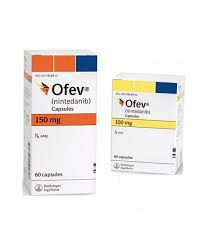
Instructions for Nintedanib
1. All names: Nintedanib , Nintedanib, Vegat, OFEV
2. Indications:
1. Idiopathic pulmonary fibrosis (IPF): Nintedanib is suitable for the treatment of idiopathic pulmonary fibrosis in adults.
2. Chronic fibrosing interstitial lung diseases (ILDs) with a progressive phenotype: Nintedanib is indicated for the treatment of adult patients with chronic fibrosing interstitial lung diseases (ILDs) with a progressive phenotype.
3. Systemic sclerosis-related interstitial lung disease (SSc-ILD): Nintedanib can slow down the decline in lung function in adult patients with systemic sclerosis-related interstitial lung disease.
3. Usage and dosage:
1. Before treatment: Before starting treatment with nintedanib, perform liver function tests on all patients and pregnancy tests on women of reproductive potential.
2. Recommended dose: The recommended dose of nintedanib is150mg, taken orally twice a day, about 12 hours apart; it should be taken with food and swallowed whole with liquid. Do not exceed the recommended maximum daily dose of 300 mg.
3. Dosage adjustment:
In addition to symptomatic treatment, management of adverse effects of nintedanib may require dose reduction or temporary interruption, if applicable, until the specific adverse effect resolves to a level that permits continuation of treatment. Treatment with nintedanib may be resumed at full dose (150 mg twice daily) or at a reduced dose (100 mg twice daily) and may subsequently be increased to full dose. If the patient cannot tolerate a dose of 100 mg twice daily, discontinue treatment
(1) Liver function impairment: The recommended dose for patients with mild hepatic impairment is 100 mg, taken orally twice a day, with food; treatment with nintedanib is not recommended for patients with moderate or severe hepatic impairment.
4. Adverse reactions:
In clinical studies of nintedanib, common side effects included anorexia, nausea, vomiting, diarrhea, abdominal pain, gastrointestinal perforation, weight loss, arterial thromboembolism (including myocardial infarction), bleeding, hypothyroidism, elevated liver enzymes, and headache. Adverse reactions such as drug-induced liver injury, non-serious and severe bleeding events, proteinuria, pancreatitis, thrombocytopenia, rash, and pruritus have been discovered after nintedanib was marketed.
5. Storage:
Nintedanib is normally stored20°C to 25°C (68°F to 77°F); tolerance is 15°C to 30°C (59°F to 86°F). Avoid exposure to high humidity and avoid overheating. If repackaging, use airtight containers.
6. Special groups:
1. Women: Based on the findings of animal studies and the mechanism of action of nintedanib, nintedanib may cause fetal damage when administered to pregnant women and may reduce fertility in women of reproductive potential. Therefore, it is recommended that women of reproductive potential use highly effective contraceptives at the beginning of treatment, during treatment, and for at least 3 months after taking the last dose of nintedanib; women should not breastfeed during treatment with nintedanib.
2. Smokers: Smoking is associated with reduced exposure to nintedanib, which may alter the efficacy characteristics of nintedanib. Advise patients to quit smoking before treatment with nintedanib and to avoid smoking while taking nintedanib.
7. Mechanism of action:
Nintedanib is a small molecule that inhibits multiple receptor tyrosine kinases (RTKs) and non-receptor tyrosine kinases (nRTKs). Nintedanib inhibits the followingRTKs: platelet-derived growth factor receptor (PDGFR) alpha and beta, fibroblast growth factor receptor (FGFR) 1-3, vascular endothelial growth factor receptor (VEGFR) 1-3, colony-stimulating factor 1 receptor (CSF1R), and Fms-like tyrosine kinase-3 (FLT-3). With the exception of FLT-3, these kinases have been implicated in the pathogenesis of interstitial lung disease (ILD).
Nintedanib competitively binds to the adenosine triphosphate (ATP) binding pocket of these kinases and blocks intracellular signaling cascades, which has been shown to be involved in the pathogenesis of fibrotic tissue remodeling in ILD. Nintedanibalso inhibits the followingnRTKs: Lck, Lyn, and Src kinases. The role of FLT-3 and nRTK inhibition on the efficacy of nintedanib in ILD is unclear.
The original drug of nintedanib is marketed in China as nintedanib ethanesulfonate soft capsules and is covered by Class B medical insurance, but reimbursement is limited to patients who meet the indications. SpecificationsThe price of each box of 150mg*30 capsules may be more than 4,000 yuan. Nintedanib Original drug available overseas has Turkish version and Indian version, specificationsThe price of 150mg*60 capsules per box may be more than 5,000 RMB (the price may fluctuate due to the exchange rate). There are also nintedanib generic drugs produced overseas in other countries. For example, the price of 150mg*30 capsules produced by BDR Pharmaceutical Factory in India may be several hundred yuan per box (the price may fluctuate due to exchange rates). Its pharmaceutical ingredients are basically the same as those of the original drugs sold domestically and abroad.
[ 免责声明 ] 本页面内容来自公开渠道(如FDA官网、Drugs官网、原研药厂官网等),仅供持有医疗专业资质的人员用于医学药学研究参考,不构成任何治疗建议或药品推荐。所涉药品可能未在中国大陆获批上市,不适用于中国境内销售和使用。如需治疗,请咨询正规医疗机构。本站不提供药品销售或代购服务。


