
.jpeg)
What are the precautions for taking Neratinib?
During treatment with Neratinib (Neratinib), patients should pay attention to the occurrence of diarrhea, liver toxicity, embryo-fetal toxicity and other events.
1. Diarrhea: During treatment with neratinib, severe diarrhea and sequelae such as dehydration, hypotension and renal failure occurred. In clinical trials, most patients (93%) developed diarrhea during the first month of treatment, with the median time to first onset of grade ≥3 diarrhea being 8 days, and the median cumulative duration of grade ≥3 diarrhea being 5 days. Antidiarrheal prophylaxis has been shown to reduce the incidence and severity of diarrhea. Instruct patients to use loperamide for antidiarrheal prophylaxis while taking the first dose of neratinib and to continue using it for the first 56 days of treatment; after day 56, titrate the dose to achieve 1-2 bowel movements per day, and not to exceed 16 mg of loperamide per day.
Monitor patients for diarrhea and treat with additional antidiarrheal medications as needed. When severe diarrhea with dehydration occurs, administer fluids and electrolytes as needed, interrupt neratinib, and reduce subsequent doses. Perform stool cultures as clinically indicated to exclude infectious causes of grade 3 or 4 diarrhea or any grade of diarrhea with complex features (dehydration, fever, neutropenia).
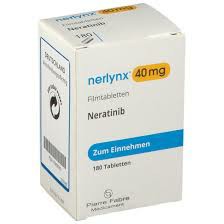
2. Hepatotoxicity: Neratinib is associated with hepatotoxicity, which is characterized by an increase in liver enzymes. In the experiment, 10% of patients had alanine aminotransferase (ALT) elevated ≥2×ULN, 5% of patients had aspartate aminotransferase (AST) elevated ≥2×ULN, and 1.7% of patients had AST or ALT elevated >5×ULN (≥Grade 3). Hepatotoxicity or elevated hepatic transaminases resulted in discontinuation of neratinib in 1.7% of patients receiving neratinib.
Total bilirubin, AST, ALT, and alkaline phosphatase should be measured monthly for 3 months before initiating treatment with neratinib and then every 3 months as clinically indicated during treatment. These tests should also be performed in patients who develop grade 3 diarrhea or any signs or symptoms of hepatotoxicity, such as worsening fatigue, nausea, vomiting, right upper quadrant tenderness, pyrexia, rash, or eosinophilia.
3. Embryonic-Fetal Toxicity: Based on findings from animal studies and its mechanism of action, neratinib can cause fetal damage when administered to pregnant women. In animal reproduction studies, administration of neratinib to pregnant rabbits during organogenesis resulted in abortion, embryonic fetal death, and fetal anomalies in rabbits with a maternal AUC that was approximately 0.2 times the AUC in patients receiving the recommended dose. Advise females of reproductive potential to use effective contraception during treatment and for at least 1 month after the last dose.
NeratinibThe original drug is marketed in China as neratinib maleate tablets and is covered by Class B medical insurance, but reimbursement is limited to patients who meet the indications. SpecificationsThe price of each box of 40mg*180 tablets may be around 7,000 yuan. Generic drugs of Neratinib are also sold overseas. The ingredients are basically the same as those of the original drug. The price of 40mg*180 tablets produced by a Bangladeshi pharmaceutical factory may be around 4,000 yuan per box (the price may fluctuate due to exchange rates).
[ 免责声明 ] 本页面内容来自公开渠道(如FDA官网、Drugs官网、原研药厂官网等),仅供持有医疗专业资质的人员用于医学药学研究参考,不构成任何治疗建议或药品推荐。所涉药品可能未在中国大陆获批上市,不适用于中国境内销售和使用。如需治疗,请咨询正规医疗机构。本站不提供药品销售或代购服务。


