
.jpeg)
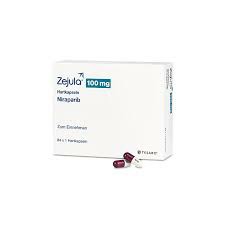
Instructions for Niraparib Capsules
1. Common name: Nirapalli
Product name: Zejula, Zele
全部名称:尼拉帕尼、Niraparib、则乐、Zejula
2. Indications:
1. First-line maintenance treatment for advanced ovarian cancer:
Niraparib (Niraparib) is indicated for the maintenance treatment of adult patients with advanced epithelial ovarian cancer, fallopian tube cancer, or primary peritoneal cancer who have a complete or partial response to first-line platinum-based chemotherapy.
2. Maintenance treatment of recurrent germline BRCA mutated ovarian cancer:
Niraparib is indicated for the maintenance treatment of adult patients with deleterious or suspected deleterious germline BRCA-mutated (gBRCAmut) recurrent epithelial ovarian, fallopian tube, or primary peritoneal cancer who have had a complete or partial response to platinum-based chemotherapy.
3. Usage and dosage:
1. Recommended dosage: Niraparib can be taken with or without food. Bedtime dosing may be a potential method to control nausea, with treatment continued until disease progression or unacceptable toxicity.
(1) First-line maintenance treatment for advanced ovarian cancer:
For patients with body weight<77kg (<170 lbs) or platelet count<150000/mcL, the recommended dose is 200mg (two 100mg capsules), taken orally once daily.
For patients who weigh ≥77kg (≥170 lbs) and whose platelet count ≥150000/mcL, the recommended dose is 300mg (three 100mg capsules ), taken orally once daily.
For maintenance treatment of advanced ovarian cancer, patients should begin treatment with niraparib no later than12 weeks after their most recent platinum-containing regimen.
(2) Recurrent germlineMaintenance treatment of BRCA-mutated ovarian cancer:
The recommended dose of niraparib is 300mg (three 100mg capsules ), taken orally once daily. For maintenance treatment of recurrent ovarian cancer, patients should begin treatment with niraparib no later than 8 weeks after their most recent platinum-containing regimen.
2. Dosage adjustment:
To control adverse effects, discontinuation of niraparib therapy, dose reduction, or discontinuation may be considered. When the starting dose level is 300mg, the first dose is reduced to 200mg/day and the second dose is reduced to 100mg; when the starting dose level is 200mg, the first dose is reduced by 100mg/day. If further reduction of dose to less than 100mg/day is required, discontinue niraparib.
(1) Patients with hepatic impairment: For patients with moderate hepatic impairment, reduce the starting dose of niraparib to 200 mg once daily. Monitor patients for hematologic toxicity and further reduce dose if necessary.
4. Adverse reactions:
In the pooled safety population of patients with advanced ovarian, fallopian tube, or primary peritoneal cancer who received niraparib monotherapy and another clinical trial, the most common adverse reactions 10% were nausea, thrombocytopenia, anemia, fatigue, constipation, musculoskeletal pain, abdominal pain, vomiting, neutropenia. After niraparib was put on the market, adverse events such as pancytopenia, hypersensitivity reactions (including allergic reactions), posterior reversible encephalopathy syndrome (PRES), confusion/disorientation, hallucinations, cognitive impairment (such as memory impairment, attention disorder), non-infectious pneumonia, and hypertensive crisis have occurred.
5. Storage:
Niraparib is normally stored at 20°C to 25°C (68°F to 77°F); excursions allowed between 15°C and 30°C (59°F to 86°F).
6. Special groups:
1. Women: According to its mechanism of action, niraparib can cause harm to the fetus when used by pregnant women, and may cause teratogenesis and/or embryo-fetal death. It is recommended that women of reproductive potential use niraparib during treatment and after the last dose.Use effective contraception for 6 months; lactating women are advised not to breastfeed during treatment with niraparib and for 1 month after the last dose.
7. Mechanism of action:
Niraparib is an inhibitor of PARP enzymes (including PARP-1 and PARP-2), which plays a role in DNA repair. In vitro studies have shown that niraparibinduced cytotoxicity may involve the inhibition of PARP enzyme activity and the increase in the formation of PARP-DNA complexes, leading to DNA damage, apoptosis and cell death. Increased niraparib-induced cytotoxicity was observed in tumor cell lines with or without BRCA1/2 deficiency. Niraparib reduces tumor growth in mouse xenograft models of BRCA1/2-deficient human cancer cell lines and in homologous recombination-deficient (HRD) human patient-derived xenograft tumor models (mutated or wild-type BRCA1/2).
NiraparibThe original drug has been launched in China and is included in medical insurance, but reimbursement is limited to eligible patients. The price of a common specification100mg*30 capsules per box may be more than 5,000 yuan. The original niraparib drug marketed overseas is more expensive than domestically. There are also generic niraparib drugs produced in other countries. Their pharmaceutical ingredients are basically the same as those of the original niraparib drug sold domestically and abroad. The price of 100mg*30 tablets per box produced by a Bangladesh pharmaceutical factory may be more than 1,000 yuan (the price may fluctuate due to exchange rates).
[ 免责声明 ] 本页面内容来自公开渠道(如FDA官网、Drugs官网、原研药厂官网等),仅供持有医疗专业资质的人员用于医学药学研究参考,不构成任何治疗建议或药品推荐。所涉药品可能未在中国大陆获批上市,不适用于中国境内销售和使用。如需治疗,请咨询正规医疗机构。本站不提供药品销售或代购服务。


