
.jpeg)
How long does it take for resistance to Mobocertinib to develop?
Mobocertinib (Mobocertinib) is a targeted drug used to treat EGFR (epidermal growth factor receptor) mutation-positive non-small cell lung cancer (NSCLC). However, as with other targeted therapies, drug resistance is a challenge that may arise. Before discussing the issue of drug resistance, let us first understand the mechanism of action and clinical application of moboxetinib.
Mobosetinib’s mechanism of action:
Mobosetinib is a third-generation EGFR inhibitor designed to treat patients with NSCLC who have developed resistance to first- and second-generation EGFR inhibitors, particularly those with the T790M mutation. Its mechanism of action includes the following aspects:
1.InhibitionEGFRActivity:EGFR is a receptor tyrosine kinase that controls cell growth and division. EGFRGene mutations can lead to abnormal signaling and promote the growth of cancer cells. Mobosetinib slows down or inhibits the proliferation of cancer cells by inhibiting the activity of EGFR, especially the T790M mutation.
2.Selective targeting: Mobosetinib is more selective than otherEGFR inhibitors, so it has less impact on normal cells, thereby mitigating adverse reactions.
3.Supplementary therapy: It is often used as an alternative to first-line treatment or after failure of otherEGFRinhibitor treatments.
The problem of drug resistance:
Although moboxetinib is effective in someEGFRMutation-positiveNSCLC has shown excellent efficacy in patients, but drug resistance may still be a potential problem. The development of drug resistance can be attributed to a variety of factors. Here are some possible scenarios:
1.NewEGFRmutations: Cancer cells may develop newEGFRmutations and no longer be sensitive to moboxetinib. This may be a common mechanism when treatment is continued.
2.Continue to evolve: Cancer cells can continue to evolve and develop resistance to mobosetinib. This may include activation of other growth signaling pathways or other ways of regulating cell growth.
3.Drug metabolism: Some patients may metabolize drugs faster in the body, reducing the concentration of the drug in the body, thereby weakening the therapeutic effect.
4.Treatment interruption: Patients may interrupt during treatment or not take medications as directed, which may lead to treatment failure and the development of drug resistance.
5.Immune escape: Cancer cells may avoid immune system attack by changing their immune escape mechanism, thereby reducing the efficacy of moboxetinib.
Managing drug resistance:
Managing resistance to mobosetinib is an important challenge, but there are strategies that can be adopted to combat this problem:
1.Gene analysis: Regular genetic analysis, especially when treatment fails or the disease progresses, can help doctors understand whether new EGFR mutations or other related changes have emerged.
2.Adjustment of treatment strategy: Based on genetic analysis and condition, doctors may consider adjusting treatment strategy, including switching to other targeted therapies or immunotherapy.
3.Clinical trials: Patients may have the opportunity to participate in clinical trials to explore new treatment options and drug combinations to address drug resistance.
4.Maintenance treatment: Sometimes, doctors may recommend continuing mobosertinib treatment to maintain a stable state of the disease even after the disease has progressed.
5.Lifestyle and support: Maintaining a healthy lifestyle, psychological and emotional support are also important components in managing drug resistance.
In summary, mobosertinib is a drug that has shown potential efficacy in the treatment of EGFRmutation-positiveNSCLC, but drug resistance is a possible challenge. The development of drug resistance may be influenced by multiple factors, including genetic mutations and the evolution of cancer cells. Managing drug resistance often requires genetic analysis, adjustments to treatment strategies, and possibly clinical trials. Most importantly, patients and physicians should work closely together to develop the most appropriate treatment plan to maximize survival and quality of life.
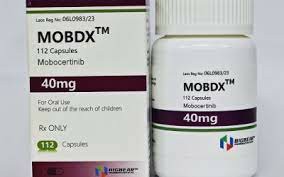
Mobotinib is currently on the market in China, but it is not included in medical insurance. Patients need to pay for it in full, so the price is very high. Please consult the local hospital pharmacy for specific prices. Other versions include the Hong Kong version of the original drug Mobotinib, which costs around 7,000 to 8,000 yuan. The generic drug of Mobotinib is mainly a Laotian generic drug. The price is about three to four thousand yuan, which is nearly half cheaper than the original drug. The ingredients of the original drug and the generic drug are the same.
[ 免责声明 ] 本页面内容来自公开渠道(如FDA官网、Drugs官网、原研药厂官网等),仅供持有医疗专业资质的人员用于医学药学研究参考,不构成任何治疗建议或药品推荐。所涉药品可能未在中国大陆获批上市,不适用于中国境内销售和使用。如需治疗,请咨询正规医疗机构。本站不提供药品销售或代购服务。


