
.jpeg)
How effective is the treatment with Midostaurin?
Midostaurin, as a multi-target tyrosine kinase inhibitor, has shown potential therapeutic effects in clinical trials, especially in the treatment of acute myeloid leukemia (AML) and kinase-positive systemic mast cell disease (SM-AHN), which has attracted widespread attention. This article will analyze the clinical trial data to discuss in detail the therapeutic effect, safety and future prospects of midostaurin.
1. The therapeutic effect of AML:
AMLis a severe hematologic malignancy for which patients require urgent and effective treatment. FLT3gene mutations are relatively common in AML, and midostaurin is an inhibitor against FLT3 and therefore has potential therapeutic effect in AML treatment. Here are some key clinical trial data:
Clinical trial by Ratner et al.: A Phase II trial demonstrating the efficacy of midostaurin in patients with FLT3-ITDmutatedAML. The patient received midostaurin combined with chemotherapy, and the results showed a complete response rate of up to 60%. This result shows that midostaurin has a significant therapeutic effect on this type of AML patients.
STONE-AML1Trial: This is a Phase III trial designed to evaluate the efficacy of midostaurin compared with standardAML treatment (chemotherapy). The study results showed that midostaurin plus chemotherapy significantly prolonged event-free survival (EFS) compared with chemotherapy alone, especially in patients with FLT3-ITD mutations.
These data show that midostaurin has a significant therapeutic effect in the treatment of AML, especially in patients with positive FLT3 gene mutations, which can improve the complete remission rate and event-free survival.
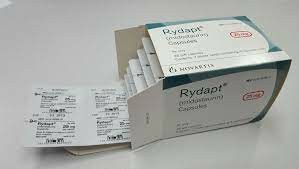
2. The therapeutic effect of SM-AHN:
Kinase-positive systemic mastocytosis (SM-AHN) is a rare blood disorder often associated with the KIT geneD816V mutation. Midostaurin, as a KIT inhibitor, has potential therapeutic effects. Here are some relevant clinical trial data:
A study by Daver et al.: In a Phase II trial, patients received midostaurin, and the results showed that approximately 40% of patients experienced clinical responses after treatment, including spleen shrinkage and symptom improvement.
The study by Kalaycio et al.: This study focused on SM-AHN patients and showed that midostaurin treatment significantly improved the patients' symptoms and quality of life.
These trial results indicate that midostaurin has a certain effect in the treatment of SM-AHN, especially for patients carrying the KIT gene D816V mutation.
3. Safety and side effects:
Although midostaurin shows potential therapeutic benefits, it is also associated with a range of side effects. In clinical trials, common side effects include nausea, vomiting, diarrhea, itchy skin, headache, fatigue, low platelet count, low white blood cell count, abnormal liver function, etc. In addition, cardiac arrhythmias and bleeding are risks that some patients may face. Therefore, when using midostaurin, patients need to strictly abide by the doctor's recommendations and regularly monitor relevant biochemical indicators and electrocardiograms to ensure safety.
4. Future Outlook:
Midostaurin occurs asAML and SM-AHNIt provides new treatment options for diseases such as these, especially for patients who carry specific genetic mutations. Future research may further optimize treatment options and explore the combination of midostaurin with other anticancer drugs to improve treatment efficacy and reduce side effects. Additionally, as more clinical data accumulate, we will gain a deeper understanding of the efficacy and safety of midostaurin in various patient populations.
In summary, midostaurin, as a multi-target tyrosine kinase inhibitor, has shown significant therapeutic effects in the treatment of AML and SM-AHN diseases. However, patients need to closely monitor side effects and follow their doctor's recommendations when using it.
Currently Midostaurin is not available in China, so patients cannot purchase it domestically. Midostaurin abroad is divided into original drugs and generic drugs. The cheaper original version is the Indian version, which costs more than 10,000 yuan. Others include Turkish and European original drugs, which cost tens of thousands to hundreds of thousands, which are relatively expensive. Generic drugs are mainly Indian generic drugs, which cost about several thousand yuan per box. They are much cheaper than the original drug, and the drug ingredients are basically the same as the original drug.
[ 免责声明 ] 本页面内容来自公开渠道(如FDA官网、Drugs官网、原研药厂官网等),仅供持有医疗专业资质的人员用于医学药学研究参考,不构成任何治疗建议或药品推荐。所涉药品可能未在中国大陆获批上市,不适用于中国境内销售和使用。如需治疗,请咨询正规医疗机构。本站不提供药品销售或代购服务。


