
.jpeg)
Instructions for Tisagenlecleucel
1. Name: Silifamin, Tisagenlecleucel, Kymriah, CTL019
2. Indications:
1. B-cell acute lymphoblastic leukemia (ALL): Silifermin (Tisagenlecleucel) is indicated for the treatment of children and young adults under the age of 25 who have refractory or second or subsequent relapse (R/R) of B-cell precursor acute lymphoblastic leukemia.
2. Diffuse largeB-cell lymphoma (DLBCL): silevermin is suitable for adult patients with relapsed or refractory (R/R) largeB-cell lymphoma after two or more series of systemic treatments, including diffuse large B-cell lymphoma, high-grade B-cell lymphoma and DLBCL caused by follicular lymphoma.
Limitations of Use: Selifermin is not indicated for the treatment of patients with primary central nervous system lymphoma.
3. Follicular lymphoma (FL): Silifermin is suitable for adult patients with relapsed or refractory (R/R) follicular lymphoma after two or more systemic treatments.
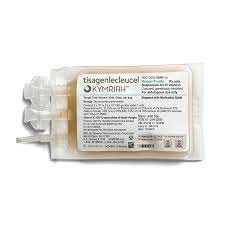
3. Usage and dosage: Srifermin is a kind ofCD19-directed genetically modified autologous T cell immunotherapy, which is only for autologous use and for intravenous injection only.
1. Recommended dosage:
(1) Children and young adults B-cell acute lymphoblastic leukemia (ALL) 25 years of age: Silifermin is available as a single-dose infusion containing Chimeric Antigen Receptor (CAR)-positive live T cell suspension, for patients weighing 50kg or less, 0.2-5.0x10⁶ CAR-positive live T cells per kilogram of body weight are administered; patients weighing more than 50kg are injected with 0.1-2.5x10⁸ CAR-positive live T cells.
(2)Diffuse large B-cell lymphoma (DLBCL), follicular lymphoma (FL): For adult patients, inject 0.6-6.0x10⁸ CAR-positive viable T cells.
4. Adverse reactions:
Based on the recommended body weight-based dose, the most common adverse reactions of silevermin are cytokine release syndrome, infection by unknown pathogens, hypogammaglobulinemia, pyrexia, decreased appetite, viral infectious diseases, headache, febrile neutropenia, bleeding, musculoskeletal pain, vomiting, encephalopathy, bacterial infectious diseases, diarrhea, hypotension, cough, nausea, pain, and hypoxia. About three out of ten patients with diffuse largeB-cell lymphoma develop serious infections.
5. Storage:
Srifermin comes as a frozen suspension of genetically modified autologousT cells in an infusion bag labeled with a specific receptor. Silifermin was shipped directly to the cell laboratory associated with the infusion center in a liquid nitrogen Dewar. Product and patient-specific labels are located inside the dewar. Store infusion bags in a temperature-monitored system below or equal to minus 120°C, such as in the vapor phase of liquid nitrogen. When transporting IV bags within the facility, use airtight, rupture-proof, leak-proof containers. Thaw silevermin before infusion.
6. Mechanism of action:
Selifermin is a type ofCD19-directed genetically modified autologous T cell immunotherapy that involves reprogramming the patient's own T cells with a transgene encoding a chimeric antigen receptor (CAR) to recognize and eliminate CD19-expressing malignant and normal cells. The CAR consists of a murine single-chain antibody fragment that recognizes CD19 and is fused to intracellular signaling domains from 4-1BB (CD137) and CD3. The CD3 component is critical for initiating T cell activation and anti-tumor activity, while 4-1BB enhances the expansion and persistence of srifuramine. When bound to CD19-expressing cells, the CAR delivers a signal that promotes T cell expansion, activation, target cell elimination, and slivermin cell persistence.
[ 免责声明 ] 本页面内容来自公开渠道(如FDA官网、Drugs官网、原研药厂官网等),仅供持有医疗专业资质的人员用于医学药学研究参考,不构成任何治疗建议或药品推荐。所涉药品可能未在中国大陆获批上市,不适用于中国境内销售和使用。如需治疗,请咨询正规医疗机构。本站不提供药品销售或代购服务。


