
.jpeg)
How effective is Blinatumomab in treating leukemia?
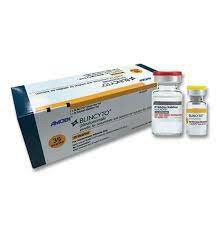
Blinatumomab is an emerging immunotherapy drug for the treatment of acute lymphoblastic leukemia (ALL). It has bispecific antibodies against leukemia cells that link the patient's T cells with the leukemia cells, thereby enhancing the immune system's ability to attack. Belintuzumab offers a new treatment modality compared to traditional treatments such as chemotherapy and stem cell transplantation. In this article, we will explore the efficacy of belintuzumab in the treatment of leukemia based on clinical experimental data.
The mechanism of action of belintuzumab
Belintuzumab is a bispecific antibody with two important affinities: one for the CD19antigen on the surface of leukemia cells and the other for the CD3antigen on the surface of T cells. The mechanism of this bispecific antibody is very precise. It can connect the patient's T cells and leukemia cells, thereby guiding the T cells to attack the leukemia cells. This mechanism mimics the natural immune response but with greater precision to reduce damage to healthy tissue.
Clinical Experimental Data
Belintuzumab has been extensively studied clinically in the treatment of acute lymphoblastic leukemia. The following are some key clinical trial data to evaluate its efficacy:
1.A study of patients with severe refractory B-ALL : An important study on the treatment of patients with severe refractory B-ALL with belintuzumab was published in the New England Journal of Medicine in 2014. The study showed that belintuzumab achieved significant efficacy in this patient population, including 61% of patients achieving complete remission. The study also showed that the median survival after treatment with belintuzumab was 6.1 months, a significant improvement in this patient population.
2.Relapsed/Refractory B-ALL Patients: Another study of patients with relapsed or refractory B-ALLThe patients’ study was published in 2017 in the journal Leukemia. The study results showed that among patients treated with belintuzumab, 47% achieved complete remission, while 21% achieved partial response. The study also showed that the median disease-free survival after belintuzumab treatment was 7.6 months.
3.Children and Adolescents B-ALL Patients: Studies of children and adolescentsB-ALL have also yielded positive results. A multicenter clinical trial investigated the use of belintuzumab in this patient population. The study results showed that after belintuzumab treatment, 76% of patients achieved complete remission, while 11% of patients achieved partial remission. This provides younger patients with more treatment options and hope.
Clinical applications and limitations
The efficacy of belintuzumab has been verified in multiple clinical trials, especially in patients with refractory and relapsedB-ALL, where it has shown significant therapeutic effects. The success of this drug demonstrates the huge potential of immunotherapy in the treatment of leukemia.
However, belintuzumab also has some limitations and challenges. First, it may cause some discomforts such as cytolytic reactions (CRS) and neurotoxicity, which require close monitoring and management. In addition, because belintuzumab is specific for leukemia cells, it may not be effective against certain subtypes of B-ALL. In addition, belintuzumab usually requires an intravenous infusion and requires treatment in a medical facility or hospital.
The success of belintuzumab demonstrates the potential of immunotherapy in the treatment of leukemia and also provides implications for other cancer treatments. Future studies will further refine and tailor belintuzumab treatment regimens to better meet patient needs and reduce side effects. In addition, scientists and doctors will continue to study the scope of immunotherapy to broaden its use in the treatment of multiple leukemias and other tumor types.
In conclusion, belintuzumab has achieved significant efficacy in the treatment of acute lymphoblastic leukemia, especially in patients with refractory and relapsed B-ALL. Although it has some limitations, it represents an important breakthrough in immunotherapy in tumor treatment. Future research and clinical practice will continue to advance this field and provide more effective treatment options for more patients.
[ 免责声明 ] 本页面内容来自公开渠道(如FDA官网、Drugs官网、原研药厂官网等),仅供持有医疗专业资质的人员用于医学药学研究参考,不构成任何治疗建议或药品推荐。所涉药品可能未在中国大陆获批上市,不适用于中国境内销售和使用。如需治疗,请咨询正规医疗机构。本站不提供药品销售或代购服务。


