
.jpeg)
Instructions for Temsirolimus
1. Common name: temsirolimus
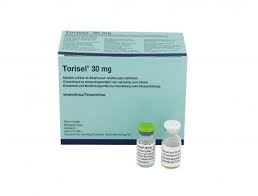
Product name:Torisel
All names: temsirolimus, Temsirolimus, temsirolimus, Turisel, temsirolimus, temsirolimus
2. Indications:
1. Advanced renal cell carcinoma (RCC): Temsirolimus (Temsirolimus) is suitable for the treatment of advanced renal cell carcinoma. Patients may have at least three of the following six risk factors: including distance from the beginning of the disease Renal cell carcinoma was first diagnosed less than one year ago, KPS is between 60-70, hemoglobin is lower than normal, corrected blood calcium exceeds10 mg/dL, lactate dehydrogenase exceeds 1.5 times the upper limit of normal, and there are metastatic lesions in more than one organ.
2. Mantle cell lymphoma (MCL): Temsirolimus is used for adults with mantle cell lymphoma who have failed two chemotherapy prescriptions.
3. Usage and dosage:
1. Recommended dosage:
(1)Advanced renal cell carcinoma(RCC):The recommended dose of temsirolimus is25 mg as an intravenous infusion once a week for 30-60 minutes each time. Treatment should be continued until disease progression or unacceptable toxicity occurs.
(2)Mantle cell lymphoma (MCL): The recommended dose of temsirolimus is 175 mg as an intravenous infusion once a week over 30-60 minutes for 3 weeks, followed by a dose reduction to 75 mg once a week over 30-60 minutes. Treatment should be continued until disease progression or unacceptable toxicity occurs.
2. Preoperative medication: The patient should receive a prophylactic intravenous injection of 25-50 mg of diphenhydramine (or similar antihistamines) approximately 30 minutes before starting each dose of temsirolimus.
3. Dose interruption/adjustment: For adverse reactions with absolute neutrophil count (ANC) <1000/mm3, platelet count <75000/mm3, or NCI CT CAE grade 3 or higher, temsirolimus should be retained. Once toxicity drops to grade 2 or less, temsirolimus can be restarted with a dose reduction of 5 mg/week to no less than 15 mg/week.
(1) Hepatic impairment: If temsirolimus must be administered to patients with mild hepatic impairment (bilirubin 1-1.5 × ULN or AST >ULN, but bilirubin ≤ ULN), reduce the dose to 15 mg/week. Temsirolimus is contraindicated in patients with bilirubin >1.5×ULN.Temsirolimus is contraindicated.
(2) Strong CYP3A4 inhibitors: temsirolimus should be avoided. Concomitant use of strong CYP3A4 inhibitors. Grapefruit juice may also increase the plasma concentration of sirolimus (the main metabolite of temsirolimus) and should be avoided. Based on pharmacokinetic studies, if patients must concurrently take strong CYP3A4 inhibitors, a dose reduction of temsirolimus to 12.5 mg/week should be considered. If the strong inhibitor is discontinued, a washout period of approximately 1 week should be allowed before adjusting the temsirolimus dose back to the dose prior to initiation of the strong CYP3A4 inhibitor.
(3) Strong CYP3A4 inducers: Concomitant use of strong CYP3A4 inducers should be avoided. If patients must take concomitant use, consideration should be given to increasing the temsirolimus dose from 25 mg/week to 50 mg/week. If the strong inducer is discontinued, the temsirolimus dose should be restored to the dose before the strong CYP3A4 inducer was started.
4. Adverse reactions:
In clinical studies, the most common (≥30%) adverse reactions to temsirolimus were rash, fatigue, mucositis, nausea, edema, and anorexia. The most common(≥30%)laboratory abnormalities observed with temsirolimus are anemia, hyperglycemia, hyperlipidemia, hypertriglyceridemia, lymphopenia, elevated alkaline phosphatase, elevated serum creatinine, hypophosphatemia, thrombocytopenia, elevated AST, and leukopenia. After temsirolimus was put on the market, adverse events such as angioedema, rhabdomyolysis, Stevens-Johnson syndrome, complex regional pain syndrome (reflex sympathetic dystrophy), pancreatitis, cholecystitis and gallstones occurred. If temsirolimus extravasates, it may cause swelling, pain, fever and erythema.
5. Storage:
Temsirolimus must be stored refrigerated at 2–8°C (36–46°F) and protected from light.
6. Taboo:
Bilirubin>Temsirolimus is contraindicated in patients with 1.5×ULN.xa0
7. Mechanism of action:
Temsirolimus is an inhibitor of mTOR, the mammalian target of rapamycin. Temsirolimus binds to an intracellular protein (FKBP-12), and the protein-drug complex inhibits the activity of mTOR, which controls cell division. Inhibition of mTOR activity results in G1 growth arrest in treated tumor cells. When mTOR is inhibited, its ability to phosphorylate p70S6k and S6 ribosomal proteins, which are downstream of mTOR in the PI3 kinase/AKT pathway, is blocked. In in vitro studies using renal cell carcinoma cell lines, temsirolimus inhibited mTOR activity and resulted in reduced levels of the hypoxia-inducible factors HIF-1 and HIF-2α and vascular endothelial growth factor.
8. Special groups:
1. Females: Due to the potential for serious adverse reactions in breastfed children from temsirolimus, lactating women are advised not to breastfeed during treatment with temsirolimus and within 3 weeks after the last dose; females of reproductive potential are advised to use effective contraception during treatment with the drug and within 3 months after the last dose.
2. Males: According to the results of animal fertility studies, male and female fertility may be impaired by treatment with temsirolimus. It is recommended that men with partners of reproductive potential use effective contraceptive measures during drug treatment and within 3 months after the last dose of the drug.
The original drug temsirolimus has not yet been marketed in China, and therefore cannot be included in domestic medical insurance. The original temsirolimus drug marketed overseas has a Turkish version and a European version. The ingredients of the two are basically the same. The price of each box of 30mg/1.2mL may be more than 10,000 yuan, and the price of 25mg/mL may be around 3,000 yuan per box (the price may fluctuate due to exchange rates). There is currently no generic version of temsirolimus available on the market. For more drug information and specific prices, please consult a medical consultant.
[ 免责声明 ] 本页面内容来自公开渠道(如FDA官网、Drugs官网、原研药厂官网等),仅供持有医疗专业资质的人员用于医学药学研究参考,不构成任何治疗建议或药品推荐。所涉药品可能未在中国大陆获批上市,不适用于中国境内销售和使用。如需治疗,请咨询正规医疗机构。本站不提供药品销售或代购服务。


