
.jpeg)
What are the precautions for taking Temsirolimus?
In clinical studies with Temsirolimus , allergic/infusion reactions, hepatic impairment, hyperglycemia/glucose intolerance, infection, interstitial pulmonary Warnings and precautions such as disease, hyperlipidemia, intestinal perforation, renal failure, wound healing complications, cerebral hemorrhage, proteinuria and nephrotic syndrome, embryo-fetal toxicity, etc. During treatment with temsirolimus, the use of live vaccines and close contact with people who have received live vaccines should be avoided.
1. Allergic/infusion reactions: including but not limited to flushing, chest pain, difficulty breathing, hypotension, apnea, loss of consciousness, allergies and anaphylaxis. These reactions may occur early in the first infusion but may also occur in subsequent infusions. People with known hypersensitivity to temsirolimus or its metabolites, polysorbate 80, or any other component of temsirolimus (including excipients) should use temsirolimus with caution; patients should be given an H1 antihistamine before starting intravenous temsirolimus. If the patient experiences an allergic reaction during the injection, the injection should be stopped and the patient should be observed for at least 30-60 minutes (depending on the severity of the reaction).
2. Liver function impairment: Be cautious when treating patients with mild liver function impairment. Concentrations of temsirolimus and its metabolite sirolimus are increased in patients with elevated AST or bilirubin levels. If temsirolimus must be administered to patients with mild hepatic impairment (bilirubin >1-1.5 × ULN or AST >ULN but bilirubin ≤ ULN), reduce its dose to 15 mg/week.
3. Hyperglycemia/glucose intolerance: In the Phase 3 trial, 89% of patients receiving temsirolimus experienced at least one increase in blood sugar during treatment, and 26% of patients reported hyperglycemia as an adverse event. This may result in the need to increase the dose of insulin and/or oral antidiabetic drug therapy or to initiate insulin and/or oral antidiabetic drug therapy. Blood glucose should be tested before and during treatment with temsirolimus. Patients should be advised to report excessive thirst or increased urine output or frequency.
4. Infection: The use of temsirolimus may cause immunosuppression. Patients should be carefully observed for the development of infections, including opportunistic infections. Pneumocystis carinii pneumonia (PJP), including fatal cases, has been reported in patients receiving temsirolimus. This may be related to concurrent use of corticosteroids or other immunosuppressants. PJP prophylaxis should be considered when concurrent use of corticosteroids or other immunosuppressants is required.
5. Interstitial lung disease: Some of these result in death, and some patients are asymptomatic or have mild symptoms and infiltrates are found on computed tomography or chest X-ray. Others show symptoms such as difficulty breathing, coughing, hypoxia and fever. Some patients required discontinuation of temsirolimus and/or treatment with corticosteroids and/or antibiotics, whereas some patients continued treatment without additional intervention. It is recommended to follow patients closely for the development of clinical respiratory symptoms. If clinically significant respiratory symptoms occur, consider withholding temsirolimus until symptoms resolve and imaging findings associated with pneumonia improve.
6. Hyperlipidemia: The use of temsirolimus may lead to an increase in serum triglycerides and cholesterol. In the Phase 3 trial, 87% of patients treated with temsirolimus had at least one elevated serum cholesterol value, and 83% of patients had at least one elevated serum triglyceride value. This may require starting or increasing the dose of lipid-lowering medications. Serum cholesterol and triglycerides should be measured before and during treatment with temsirolimus.
7. Intestinal perforation: These patients have symptoms such as fever, abdominal pain, metabolic acidosis, bloody stools, diarrhea, and/or acute abdomen. Patients should be advised to promptly report any new or worsening abdominal pain or bloody stools.
8. Renal failure: Cases of rapidly progressive and sometimes fatal acute renal failure that are not significantly associated with disease progression have occurred in patients treated with toltsirolimus. Some of these cases do not respond to dialysis.
9. Wound healing complications: The use of temsirolimus is associated with abnormal wound healing. Therefore, temsirolimus should be used with caution in the perioperative period.
10. Cerebral hemorrhage: Patients with central nervous system tumors (primary central nervous system tumors or metastases) and/or who are receiving anticoagulant therapy may be at increased risk of intracranial hemorrhage (including fatal consequences) when receiving temsirolimus.
11. Proteinuria and nephrotic syndrome: Proteinuria (including nephrotic syndrome cases) occurs in patients treated with temsirolimus. Monitor urine protein before and periodically after initiating temsirolimus therapy, and temsirolimus should be discontinued in patients who develop nephrotic syndrome.
12. Embryo-fetal toxicity: According to the results of animal studies and its mechanism of action, temsirolimus taken by pregnant women will cause harm to the fetus. In animal reproduction studies, daily oral administration of temsirolimus during organogenesis produced adverse embryo-fetal effects in rats and rabbits that were approximately 0.04 and 0.12 times the patient AUC at recommended human doses, respectively. Advise females of reproductive potential to use effective contraception during treatment and for 3 months after the last dose. Advise men to use effective contraception during treatment and for 3 months after the last dose.
13. Clinical studies of temsirolimus did not include a sufficient number of subjects aged 65 and older to determine whether they responded differently than younger subjects. According to the results of the Phase 3 study, older patients may be more susceptible to certain adverse reactions, including diarrhea, edema, and pneumonia.
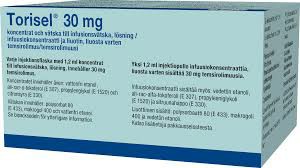
The original drug temsirolimus has not yet been marketed in China, and therefore cannot be included in domestic medical insurance. The original temsirolimus drug marketed overseas has a Turkish version and a European version. The ingredients of the two are basically the same. The price of each box of 30mg/1.2mL may be more than 10,000 yuan, and the price of 25mg/mL may be around 3,000 yuan per box (the price may fluctuate due to exchange rates). There is currently no generic version of temsirolimus available on the market. For more drug information and specific prices, please consult a medical consultant.
[ 免责声明 ] 本页面内容来自公开渠道(如FDA官网、Drugs官网、原研药厂官网等),仅供持有医疗专业资质的人员用于医学药学研究参考,不构成任何治疗建议或药品推荐。所涉药品可能未在中国大陆获批上市,不适用于中国境内销售和使用。如需治疗,请咨询正规医疗机构。本站不提供药品销售或代购服务。


