
.jpeg)
Ruxolitinib cream instructions
1. Generic name: ruxolitinib cream
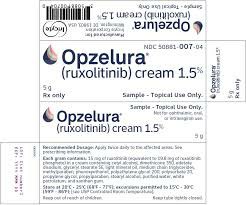
Product name:OPZELURA
All names: Ruxolitinib cream, Ruxolitinib cream, Ruxolitinib ointment
2. Indications:
1. Atopic dermatitis (AD): Ruxolitinib cream is indicated for the topical short-term and discontinuous chronic treatment of mild to moderate atopic dermatitis in non-immune deficient adult and pediatric patients 12 years of age and older whose disease cannot be adequately controlled by topical prescription therapies or where these therapies are not advisable.
2. Non-segmental vitiligo: Ruxolitinib cream is suitable for local treatment of non-segmental vitiligo in adults and children aged 12 years and above.
Limitations of Use: Concomitant use of ruxolitinib cream with therapeutic biologics, otherJAK inhibitors, or strong immunosuppressants such as azathioprine or cyclosporine is not recommended.
3. Usage and dosage:
1. Management: Do not use more than one 60-gram tube per weekUse one 100-gram tube every two weeks Ruxolitinib Cream is for topical use only; Ruxolitinib Cream is not intended for ocular, oral, or intravaginal use.
2. Recommended dosage:
(1) Atopic dermatitis: Instruct patients to apply a thin layer of ruxolitinib cream to the affected area twice a day, up to 20% of the body surface area. Discontinue use when the signs and symptoms of atopic dermatitis (such as itching, rash, and redness) disappear. If symptoms and signs do not improve within 8 weeks, patients should be re-examined by their healthcare provider.
(2) Non-segmental vitiligo: Instruct patients to apply a thin layer of ruxolitinib cream to the affected area twice a day, up to 10% of the body surface area. Satisfactory patient response may require treatment with ruxolitinib cream for more than 24 weeks. If the patient does not notice significant pigmentation within 24 weeks, the patient should be re-evaluated by a healthcare provider.
4. Adverse reactions:
Common adverse reactions in clinical studies of ruxolitinib cream in patients with atopic dermatitis include nasopharyngitis, diarrhea, bronchitis, ear infection, increased eosinophil count, urticaria, folliculitis, tonsillitis, and rhinorrhea. Common adverse reactions in clinical studies of ruxolitinib cream in patients with non-segmental vitiligo include application site acne, application site pruritus, nasopharyngitis, headache, urinary tract infection, application site erythema, and fever.
5. Storage:
Ruxolitinib Cream is a white to off-white cream containing 1.5% ruxolitinib, available in 60g and 100
6. Special groups:
1. Women: Ruxolitinib is present in the milk of lactating rats. Due to serious adverse reactions found in adults, including the risk of serious infection, thrombocytopenia, anemia, and neutropenia, women are advised not to breastfeed during drug treatment and for approximately four weeks after the last dose (approximately 5-6 elimination half-lives).
7. Mechanism of action:
Ruxolitinib Cream Active Substances Ruxolitinib is a Janus kinase (JAK) inhibitor that inhibits JAK1 and JAK2, which mediate the signaling of many cytokines and growth factors important for hematopoiesis and immune function. JAK signaling involves the recruitment of STATs (signal transducers and activators of transcription) to cytokine receptors, activation and subsequent localization of STATs to the nucleus, resulting in the regulation of gene expression. It is unclear how inhibition of specific JAK enzymes correlates with therapeutic efficacy.
[ 免责声明 ] 本页面内容来自公开渠道(如FDA官网、Drugs官网、原研药厂官网等),仅供持有医疗专业资质的人员用于医学药学研究参考,不构成任何治疗建议或药品推荐。所涉药品可能未在中国大陆获批上市,不适用于中国境内销售和使用。如需治疗,请咨询正规医疗机构。本站不提供药品销售或代购服务。


