
.jpeg)
Instructions for Pexidartinib
1. Name: Pexidartinib, Pexidartinib, Turalio
2. Indications:
Pexidartinib is indicated for the treatment of adult patients with symptomatic tenosynovial giant cell tumor (TGCT) who are associated with significant morbidity or functional limitations that cannot be improved by surgery.
3. Usage and dosage:
1. Recommended dose: The recommended dose of pexidartinib is 400 mg twice daily on an empty stomach (at least one hour before or two hours after a meal) until disease progression or unacceptable toxicity occurs.
2. Dose adjustment: If a patient experiences adverse reactions after taking pesidartinib, the doctor will adjust the dose of pexidartinib (reduce, interrupt or stop administration) according to the severity of the adverse reaction. The first dose reduction of pexidartinib is 200 mg in the morning and 400 mg in the evening; the second dose reduction is 200 mg twice daily. Patients who cannot tolerate 200 mg orally twice daily should permanently discontinue pexidartinib.
(1) Drug Interactions: Avoid concomitant use of pexidartinib with moderate or severe CYP3A inhibitors or UGT inhibitors. If unavoidable, reduce to 200 mg for patients taking 400 mg orally twice daily; for patients taking 600 mg orally twice daily, reduce to 200 mg twice daily; for patients taking 200 mg orally twice daily, reduce to 200 mg once daily.
(2) Avoid concurrent use of proton pump inhibitors (PPIs) while taking pexidartinib. As an alternative to a PPI, take pexidartinib 2 hours before or 2 hours after taking a locally acting antacid, or if using a histamine 2 (H2) receptor antagonist, take pexidartinib at least 2 hours before or 10 hours after taking a histamine 2 (H2) receptor antagonist.
(3) Renal impairment: The recommended dose of pexidartinib in patients with mild to severe renal impairment ([CLcr] 15-89 mL/min) is 200 mg in the morning and 400 mg in the evening.
(4) Hepatic impairment: The recommended dose of pexidartinib in patients with moderate hepatic impairment (total bilirubin greater than 1.5, up to 3 times the upper limit of normal (ULN), not due to Gilbert syndrome, and associated with any AST) is 200 mg twice daily.
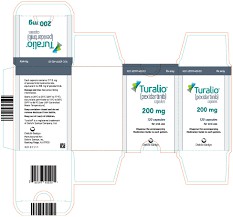
4. Adverse reactions:
The most common (>20%) adverse reactions (including laboratory abnormalities) in patients treated with pesidartinib include increased lactate dehydrogenase (LDH), increased aspartate aminotransferase (AST), hair color change, fatigue, increased alanine aminotransferase (ALT), neutropenia, increased cholesterol, increased serum alkaline phosphatase (ALP), lymphopenia, eye edema, decreased hemoglobin, rash, dysgeusia, and decreased phosphate. After it was put on the market, there was also an increase in blood creatine phosphokinase.
5. Storage:
Pesidartinib is typically stored at 20°C to 25°C (68°F to 77°F); tolerance is 15°C to 30°C (59°F to 86°F). Keep the container closed and do not remove the desiccant from the bottle.
6. Special groups:
1. Women: Based on the findings of animal studies and its mechanism of action, pesidartinib taken by pregnant women may cause harm to the embryo and fetus. Therefore, it is recommended that women of reproductive potential use effective non-hormonal contraceptives during drug treatment and for at least 1 month after the last dose. Pesidartinib may render hormonal contraceptives ineffective; women are advised not to breastfeed during drug treatment and for at least 1 week after the last dose.
2. Males: It is recommended that male patients with female partners of reproductive potential use effective contraceptive measures during treatment with pesidartinib and within 1 week after the last dose.
7. Mechanism of action:
Pexidartinib is a small molecule tyrosine kinase inhibitor that targets colony-stimulating factor 1 receptor (CSF1R), KIT proto-oncogene receptor tyrosine kinase (KIT), and FMS-like tyrosine kinase 3 (FLT3) containing internal tandem repeat (ITD) mutations. Overexpression of CSF1R ligand promotes cell proliferation and accumulation in the synovium. In vitro, pexidartinib inhibits proliferation of cell lines that are dependent on CSF1R and ligand-induced autophosphorylation of CSF1R. Pesidartinib also inhibits the in vivo proliferation of CSF1R-dependent cell lines.
There is less information on the price of pexidartinib after it is launched. For more drug information and specific prices, please consult the medical consultant.
[ 免责声明 ] 本页面内容来自公开渠道(如FDA官网、Drugs官网、原研药厂官网等),仅供持有医疗专业资质的人员用于医学药学研究参考,不构成任何治疗建议或药品推荐。所涉药品可能未在中国大陆获批上市,不适用于中国境内销售和使用。如需治疗,请咨询正规医疗机构。本站不提供药品销售或代购服务。


