
.jpeg)
What are the precautions for Phesgo (Pertuzumab, Trastuzumab, and Hyaluronidase-zzxf)?
In the clinical studies of Phesgo (Pertuzumab, Trastuzumab, and Hyaluronidase-zzxf) , warnings and precautions such as cardiomyopathy, embryo-fetal toxicity, pulmonary toxicity, exacerbation of neutropenia caused by chemotherapy, allergies and administration-related reactions have emerged.
1. Cardiomyopathy: Phesgo may cause hypertension, arrhythmia, left ventricular dysfunction, disabling heart failure, cardiomyopathy and cardiac death, including causing asymptomatic decline in LVEF; discontinuing patients who receive anthracycline therapy after stopping Phesgo may also increase the risk of cardiac dysfunction. Before patients start Phesgo, undergo a comprehensive cardiac evaluation, including history, physical examination, and determination of LVEF via echocardiography or MUGA scan. During treatment, LVEF is assessed periodically. If, upon repeat assessment in approximately 3 weeks, LVEF does not improve, declines further, and/or the patient becomes symptomatic, permanently discontinue Phesgo. After completion of Phesgo, continue to monitor for cardiomyopathy and evaluate LVEF measurements every 6 months for at least 2 years as part of adjuvant therapy.
2. Embryo-Fetotoxicity:Pregnant women takingPhesgo will cause harm to the fetus. In postmarketing reports, intravenous trastuzumab during pregnancy resulted in a series of cases of oligohydramnios and oligohydramnios, manifesting as pulmonary hypoplasia, skeletal abnormalities, and neonatal death. In an animal reproduction study, intravenous administration of pertuzumab to pregnant cynomolgus monkeys during organogenesis resulted in oligohydramnios, delayed fetal kidney development, and embryonic-fetal death, based on Cmax, at exposures 2.5-20 times the recommended human dose.
Verify the pregnancy status of females of reproductive potential before Phesgo is initiated. Inform pregnant women and females of reproductive potential that exposure to Phesgo during pregnancy or within 7 months before conception can cause fetal harm. Advise females of reproductive potential to use an effective method of contraception during treatment and for 7 months after the last dose of Phesgo.
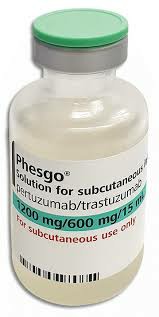
3. Pulmonary toxicity: These adverse reactions have been reported with intravenous trastuzumab. Pulmonary toxicities include dyspnea, interstitial pneumonitis, pulmonary infiltrates, pleural effusion, noncardiogenic pulmonary edema, pulmonary insufficiency and hypoxia, acute respiratory distress syndrome, and pulmonary fibrosis. Patients with symptomatic intrinsic lung disease or extensive tumor involvement of the lung causing dyspnea at rest appear to have more severe toxicity.
4. Chemotherapy-induced exacerbation of neutropenia: In randomized controlled clinical trials of intravenous trastuzumab, patients who received trastuzumab combined with myelosuppressive chemotherapy had higher rates of grade 3-4 neutropenia and febrile neutropenia than patients who received chemotherapy alone. The incidence of infectious death was similar in patients who received trastuzumab and in patients who did not receive trastuzumab.
5. Allergy and administration-related reactions: Serious administration-related reactions (ARRs), including hypersensitivity reactions, anaphylaxis, and fatal events, are associated with intravenous administration of pertuzumab and trastuzumab. Patients with dyspnea at rest due to complications from advanced malignancy and comorbidities may be at increased risk for severe or fatal cardiac arrest.
Monitor patients closely during and for 30 minutes after injection of the initial dose and during and for 15 minutes after subsequent injections of maintenance doses of Phesgo. If significant injection-related reactions occur, slow or pause the injection and administer appropriate medical treatment. Assess and monitor the patient carefully until symptoms and signs completely resolve. Patients who experience an allergic reaction or a serious injection-related reaction should permanently discontinue Phesgo. Medications to treat such reactions, as well as first aid equipment, should be available immediately. For patients who experience a reversible Grade 1 or 2 allergic reaction, consider taking an analgesic, fever reducer, or antihistamine before taking Phesgo again.
[ 免责声明 ] 本页面内容来自公开渠道(如FDA官网、Drugs官网、原研药厂官网等),仅供持有医疗专业资质的人员用于医学药学研究参考,不构成任何治疗建议或药品推荐。所涉药品可能未在中国大陆获批上市,不适用于中国境内销售和使用。如需治疗,请咨询正规医疗机构。本站不提供药品销售或代购服务。


