
.jpeg)
Instructions for Erdafitinib
1. Name: Erdafitinib, Erdafitinib, Balversa, Panle
2. Indications:
Erdafitinib (Erdafitinib) is indicated for the treatment of adult patients with locally advanced or metastatic urothelial carcinoma (mUC) whose tumor is susceptibleFGFR3 or FGFR2 gene alterations, andpatients progressed during or after at least one cycle of prior platinum-containing chemotherapy, including neoadjuvant or adjuvant platinum-containing chemotherapywithin 12 months.
3. Usage and dosage:
1. Before treatment: Doctors will choose to treat patients with locally advanced or metastatic bladder urothelial cancer based on the presence of susceptible FGFR gene changes in tumor specimens detected by FDA-approved companion diagnostics.
2. Recommended dose: The recommended dose of erdafitinib is taken orally once daily 8 mg ( two tablets 4 mg tablets), based on serum phosphate (PO4)
3. Dosage adjustment:
Dose escalation is based on serum phosphate levels, with patients assessed for serum phosphate levels 14 to 21 days after initiation of treatment. If serum phosphate levels are <5.5 mg/dL and there are no eye disorders or grade 2 or higher adverse reactions, increase the dose of erdafitinib to 9 mg once daily and monitor phosphate levels monthly for hyperphosphatemia.
If a patient develops adverse reactions after taking erdafitinib, the doctor will adjust the dose according to the severity of the adverse reactions. For patients who take erdafitinib orally once daily, the first dose is reduced to 6 mg (two 3 mg tablets), and the second dose is The dose is reduced to 5mg (one 5mg tablet), the third dose is reduced to 4mg (one 4mg tablet), patients who cannot tolerate the once-daily oral 4mg dose should discontinue erdafitinib treatment. For patients taking 9 mg orally once daily, the first dose was reduced to 8 mg (two tablets4 mg tablets), the second dose was reduced to 6 mg (two 3 mg tablets), the third dose was reduced to 5 u200bu200bmg (one 5 mg tablet), and the fourth dose was reduced to4 mg (one 4 mg tablet), Patients who cannot tolerate the once-daily oral 4 mg dose should discontinue erdafitinib treatment.
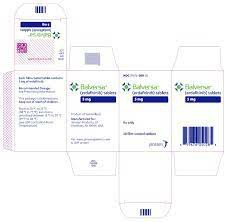
4. Adverse reactions:
In clinical studies of erdafitinib, the most common adverse reactions(ARs) are stomatitis, fatigue, diarrhea, dry mouth, nail abnormalities, decreased appetite, dysgeusia, dry skin, dry eyes, alopecia, and palmar-plantar dysesthesia syndrome , constipation, abdominal pain, nausea, and musculoskeletal pain; laboratory abnormalities include increased phosphate, increased creatinine, increased alanine aminotransferase, increased alkaline phosphatase, decreased sodium, decreased albumin, decreased hemoglobin, increased aspartate aminotransferase, decreased magnesium, decreased phosphate, and increased calcium. The most common grade 3 or higher adverse reactions (>1%) were stomatitis, nail dystrophy, palmar-plantar dysesthesia syndrome, paronychia, nail abnormalities, keratitis, and hyperphosphatemia.
5. Storage:
Erdafitinib is available in tablet form and can be stored20°C–25°C (68°F–77°F); tolerances are between 15°C and 30°C (59°F and 86°F).
6. Special groups:
1. Women: Based on the mechanism of action and findings in animal reproduction studies, erdafitinib can cause fetal damage when administered to pregnant women and may impair the fertility of female animals with reproductive potential. Therefore, it is recommended that women of reproductive potential use effective contraceptive measures during drug treatment and within one month after the last dose; lactating women are advised not to breastfeed during drug treatment and within one month after the last dose.
2. Men: Male patients with female partners of reproductive potential are recommended to use effective contraceptive measures during treatment with erdafitinib and within one month after the last dose.
7. Mechanism of action:
Erdafitinib is a kinase inhibitor that binds to and inhibits the enzymatic activities ofFGFR1, FGFR2, FGFR3, and FGFR4 based on in vitro data. It also binds to RET, CSF1R, PDGFRA, PDGFRB, FLT4, KIT, and VEGFR2. Erdafitinib inhibits FGFR phosphorylation and signaling and reduces cell viability in cell lines expressing FGFR gene alterations, including point mutations, amplifications, and fusions. Erdafitinib has demonstrated antitumor activity in FGFR-expressing cell lines and xenograft models derived from tumor types, including bladder cancer.
[ 免责声明 ] 本页面内容来自公开渠道(如FDA官网、Drugs官网、原研药厂官网等),仅供持有医疗专业资质的人员用于医学药学研究参考,不构成任何治疗建议或药品推荐。所涉药品可能未在中国大陆获批上市,不适用于中国境内销售和使用。如需治疗,请咨询正规医疗机构。本站不提供药品销售或代购服务。


