
.jpeg)
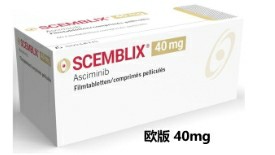
Asciminib instructions
1. Common names: Asciminib, Asciminib, Scemblix, ABL001
2. Indications:
Asciminib (Asciminib) is indicated for the treatment of the following adult patients:
1. Philadelphia chromosome-positive chronic myelogenous leukemia (Ph+CML) chronic phase (CP), previously treated with two or more tyrosine kinase inhibitors (TKIs).
2. Chronic phase (CP) Philadelphia chromosome-positive chronic myelogenous leukemia (Ph+CML) with T315I mutation.
3. Usage and dosage:
1. Recommended dosage:
(1) Ph+CML-CP patients who have received two or more TKI treatments in the past: The recommended dose of aximinib is 80 mg orally once daily at about the same time every day, or 40 mg orally twice a day with an interval of about 12 hours. Continue treatment withaceminib as long as clinical benefit is observed or unacceptable toxicity occurs.
(2) Ph+CML-CP patients with T315I mutation:The recommended dose of aximinib is 200 mg orally twice a day, with an interval of about 12 hours.
2. Medication management: The recommended dose of Asiminib is to be taken orally without eating. Avoid eating at least 2 hours before taking Asiminib and at least 1 hour after taking it. Patients swallow aceminib tablets whole and do not break, crush, or chew the tablets.
3. Dosage adjustment: If a patient experiences adverse reactions when taking aceminib, the doctor may reduce, interrupt, or stop the use of the drug.
(1) Ph+CML-CP patients who have received two or more TKI treatments in the past:The first dose of aceminib is reduced to 40 mg orally once a day or 20 mg twice a day. Patients who cannot tolerate this dose should permanently discontinue aceminib.
(2) Ph+CML-CP patients with T315I mutation: The initial dose of aximinib is reduced to 160 mg orally twice a day. Patients who cannot tolerate this dose should permanently discontinue aximinib.
4. Adverse reactions:
In clinical studies of aceminib in previously treated patients with Ph+CML-CP, the most common (≥20%) adverse reactions were upper respiratory tract infection, musculoskeletal pain, headache, and fatigue. ; Laboratory abnormalities were decreased platelet count, increased triglycerides, decreased neutrophil count, decreased hemoglobin, increased creatine kinase, increased alanine aminotransferase (ALT), increased aspartate aminotransferase (AST), increased uric acid, and decreased lymphocyte count.
In the clinical study of Ph+CML-CP patients with T315I mutation using aceminib, the most common (≥20%) adverse reactions were musculoskeletal pain, fatigue, nausea, rash and diarrhea; Experimental Ventricular abnormalities are increased ALT, increased AST, increased lipase, increased triglycerides, decreased hemoglobin, decreased neutrophil count, decreased lymphocyte count, decreased phosphate, increased amylase, decreased platelet count, and increased bilirubin.
5. Storage:
Acemini Storage temperature 20°C to 25°C (68°F to 77°F); excursions allowed between 15°C and 30°C (59°F and 86°F); portion and store in original container to protect from moisture.
6. Special groups:
1. Women: According to the results of animal studies, aximini may damage the fertility of female animals with reproductive potential. Therefore, it is recommended that women of reproductive potential should take effective contraceptive measures during drug treatment and within 1 week after the last dose. Based on animal studies, it has been found that administration of Asiminib to pregnant women can cause embryonic and fetal damage, so it is recommended that women not breastfeed during treatment with the drug and for 1 week after the last dose.
7. Mechanism of action:
Aximinib is an ABL/BCR-ABL1 tyrosine kinase inhibitor. Aceminib inhibits the ABL1 kinase activity of the BCR-ABL1 fusion protein by binding to the myristoyl pocket of ABL. Aceminib showed activity against wild-type BCR-ABL1 and several mutant forms of the kinase, including the T315I mutation, in studies conducted in vitro or in animal models of chronic myelogenous leukemia.
The original drug of Asiminib has not yet been launched in China, so it cannot be included in medical insurance. The original drug of Asiminib currently sold overseas is very expensive. Generic drugs of Asiminib are also produced and marketed overseas, and their pharmaceutical ingredients are basically the same as those of the original drug, such as the specifications produced by Laos Pharmaceutical FactoryThe price of each box of 40mg*60 tablets may be more than 4,000 RMB (the price may fluctuate due to the exchange rate), which is relatively cheap. For more drug information and specific prices, please consult Yaode Medical Consultant.
[ 免责声明 ] 本页面内容来自公开渠道(如FDA官网、Drugs官网、原研药厂官网等),仅供持有医疗专业资质的人员用于医学药学研究参考,不构成任何治疗建议或药品推荐。所涉药品可能未在中国大陆获批上市,不适用于中国境内销售和使用。如需治疗,请咨询正规医疗机构。本站不提供药品销售或代购服务。


