
.jpeg)
Sotorasib plus panitumumab extends PFS in refractory KRAS G12C+ mCRC
Combined treatment of chemotherapy-refractory metastatic colorectal cancer with multiple dose levels of sotorasib (Sotorasib) and panitumumab(Vectibix) compared with the standard treatment group(SOC) >(mCRC)Patients’ progression-free survival(PFS) improvedKRASG12C mutation, according to 3 stageCodeBreaK 300Trial(NCT05198934)Preliminary analysis results2023yearESMOCongress were simultaneously published in the New England Journal of Medicine.
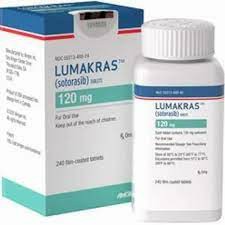
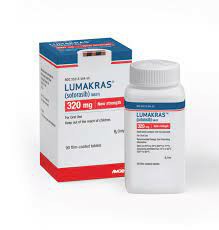
Multicenter, open-label, CodeBreaK 300Trial Randomly Assigns Chemotherapy-Refractory PatientsKRASG12CPositive Metastatic Colorectal Cancer in Patients Not Previously Taking1:1:1KRAS G12Cinhibitors, receiving960 mgofKRAS G12Cinhibitor sotorasib once daily plus EGFRinhibitor panitumumab(n = 53), 240 mgSotorasib once daily plus panitumumab(n = 53), or the investigator's choice of standard trifluridine/tipiracil(TAS-102; n = 37)or regorafenib (n = 14).
At a median follow-up of 7.8 months (range 0.1-13.9), the data deadline is2023year6month19day, 960-mg sotorasib/panitumumab group, 240-mg Patients in the sotorasib/panitumumab and SOC groups achieved 5.6 months (95% CIis4.2-6.3), 3.9months(95% CIis3.7-5.8)and 2.2 months (95% CI is1960-mg The hazard ratio (HR) of disease progression or death in the sotorasib/panitumumab group versus the SOC group was 0.49 (95% CIis0.30-0.80; P = .006).Compared with the SOC group, 240-mg The HR for disease progression or death in the sotorasib/panitumumab group was 0.58 (95% CI 0.36-0.93; P = .03).
Previously,1bperiodCodeBreaK 101Trial(NCT04185883) showed that Sotorasib (Sotorasib ) combined with panitumumab achieved a confirmed 30%ORR (95%) in patients with chemorefractory mCRC CI, 16.6%-46.5%).
CodeBreaK 300includes adult patients who have progressed or relapsed after at least1 prior line of therapy for metastatic disease, which must have included a fluoropyrimidine, oxaliplatin, and irinotecan; however, experienced unacceptable adverse effects(AE)and are eligible to receiveTAS-102Patients for whom or regorafenib is the next step of treatment (if deemed appropriate by the investigator and medical monitor) are also allowed to be enrolled. Patients also need to have a KRASG12C mutation confirmed by prospective central molecular testing, ECOGPerformance status(PS) is 0 to 2, and appropriate organ function.
2022year4month19 day to2023year3month During the 14 days, 219 patients were screened at 76 sites in 12 countries. There are a total of 160eligible patients in Europe(65.6%) and Asia(2 2.5%), North America (10.6%) and other regions (1.2%). Three patients in the SOC group did not receive their assigned treatment and were not included in the safety population.
Sotorasib (Sotorasib) is taken by mouth once daily. Panitumumab was administered intravenously at a dose of 6 mg/kg every 2 weeks. Each treatment cycle lasted 28 days. TAS-102Dosed orally twice daily at a starting dose of 75mg/m22up to 80mg/square meters2, or up to 75mg/cubic meter2For patients in Japan, based on the trifluridine component, on day of the 28 cycle span>1 day to 5 day and 8 day to 12 day. Orally administered once every 28 days from day 1 to day 21.
The trial's primary endpoint was PFS by blinded independent central review(BICR) according to RECIST v1.1 criteria. Key secondary endpoints include perRECIST v1.1Standard overall survival(OS)and overall response rate(ORR), duration of response
Across the entire population, the median age was 62.0 years (range 34-82 years) and 49.4% of patients were male. Overall, 60.0%, 36.9% and 3.1% of patientsECOG PS are 0, 1 and 2 respectively. 15%of patients had previously received 1 courses of treatment, and 85.0%of patients had received at least 2 courses of treatment before. In 960-mg sotorasib/panitumumab, 240-mg sotorasib/panitumumab and SOCIn the same group, 45.3%, 32.1% and 29.6% of patients developed right-sided tumors, respectively.
960mg sotorasib/panitumumab group, 240mg The median treatment durations in the sotorasib/panitumumab group and the SOC group were 5.8 months(range1.0-13.2) and respectively. pan>4.1months(range0.9-10.1)and2.2months(range0.8-10.3). After the data cutoff date, there were 43.4% (n = 23), 35.8% (n = 19), and 9.3% (n = 5) of patients continued treatment.
In the 960-mg sotorasib/panitumumab, 240-mg sotorasib/panitumumab and SOC groups, or was 26.4% (95% CI, 15.3%-40.3%), 5.7% (95% CI, 1.2%-15.7%) and 0.0% (95% CI, 0.0%-6.6%). One (1.9%) patient in the 960 mg sotorasib/panitumumab group achieved complete response. In addition, inIn the 960 mg sotorasib/panitumumab group, 24.5% (n = 13), 45.3% (n = 24) and 22.6% (n = 12) Patients experienced partial response (PR), stable disease (SD), or progressive disease (PD). In the 240mg sotorasib/panitumumab group, 5.7% (n = 3) , 62.3% (n = 33) , 24.5% (n = 13)and3.8% (n = 2) Patients with PR, SD, PD or non-complete response / non-progressive disease. In the SOC group, 46.3% (n = 25), 31.5% (n = 17) and 1.9% (n = 1) Patients with SD, PD or incomplete remission/ non-progressive disease.
In addition, 3.8% (n = 2), 1.9% (n = 1), and 20.4% (n = 11) of patients on 960-mg sotorasib/panitumumab, 240-mg sotorasib/panitumumab and SOC groups were not evaluated, and 960-mg One patient in each of the sotorasib/panitumumab and 240-mg sotorasib/panitumumab arms was free of evaluable disease at baseline.
In960mg sotorasib/panitumumab group, medianDOR was 4.4 months (95% CI, 3.6–not reached) and in other groups could not be assessed due to insufficient response. 960mg sotorasib/panitumumab group and 240mg The median response time in the sotorasib/panitumumab groups was 2.1 months(Range1.9-3.9)and 1.8months(range1.7-1.9). The DCR of the 960-mg sotorasib/panitumumab, 240-mg sotorasib/panitumumab and SOC groups were 71.7%, respectively. (95% CI, 57.7%-83.2%), 67.9% (95% CI, 53.7%-80.1%) and 46.3% (95% CI, 32.6%-60.4%).
At the data cutoff date,OSdata were immature, and 34.4% (n = 55) of the patients had died. However, a trend was observed in favor of the 960-mg sotoracil/panitumumab group (HR, < /span>0.77; 95%The confidence interval is 0.40-1.45) and
Overall, at960-mg sotorasib/panitumumab,240-mg The incidence of treatment-related AE(trae) was 94.3% (n = 50) and 96.2% (n = 50) in the sotorasib/panitumumab and SOC groups, respectively. 51)and 82.4% (n = 42). 960-mgSotoracil/Panitumumab group, 240-mgSotoracil/panitumumab group and SOC group had 35.8%, 30.2% and
In the960mg sotorasib/panitumumab group, sotorasibThe incidence rates of AEs were 60.4% and 92.5% respectively. in240mg In the sotorasib/panitumumab group, sotorasib and panitumumab< The incidence rates of span>related AEs were 64.2% and 94.3% respectively.
at960mg sotorasib/panitumumab,240mg In the sotorasib/panitumumab and SOC groups, there were 3.8%, respectively. 1.9% and 2.0% of patients discontinued treatment due to TRAEs. In addition, dose reductions were required in 18.9%, 17.0%, and 17.6% of patients, respectively. Dose interruptions on any treatment occurred in 35.8%, 30.2%, and 39.2% of patients, respectively.
960mg sotorasib/panitumumab group, 240mg Skin and subcutaneous tissue abnormalities occurred in 83.0%, 84.9% and 21.6% of the sotorasib/panitumumab and SOC groups, respectively.
at960mg In the sotorasib/panitumumab group, the most common AE was anemia (any grade, 1.9%); grade ≥3, 1.9%), diarrhea(20.8%; 3.8%), nausea(11.3%; 1.9%), vomiting(5.7% ;0%), stomatitis(5.7%; 0%)
at240mg In the sotorasib/panitumumab group, the most common AE was anemia (any grade, 7.5%); grade ≥3, (37.7%; 3.8%), dry skin(22.6% span>; 0%), skin-related toxic effects(7.5%; 1.9%), Palm-Plantersal dysesthesia(5.7%; 0%), maculopapular rash(5.7%; 1.9%) , alopecia(1.9%; 0%), and hypertension(1.9%; 0%).
In theSOC group, the most commonAE was anemia(any grade, 19.6% span>; grade≥3, 5.9%), thrombocytopenia(7.8%;< /span>2.0%), leukopenia(7.8%; 2.0%), neutropenia(31.4%; 23.5%), diarrhea(19.6%; 0%) span>, nausea(29.4%; 2.0%), vomiting(7.8%; 0%), stomatitis(9.8%; 0%), fatigue(11. 8%; 0%), mucosal inflammation(3.9%; 0%), fatigue (13.7%; 2.0%), sluggish(5.9%; 0%), fever(5.9%; 0%), weight loss(5.9% ;0%), neutrophil count decreased(7.8%;3.9%), low Magnesemia(2.0%; 0%), decreased appetite(11.8%; < span>2.0%), rash(2.0%; 0%), acneiform dermatitis(2.0% ; 0%), itching(3.9%; 0%), skin Related toxic effects(2.0%; 2.0%), palmoplantar red paresthesia(9.8%; span>3.9%), maculopapular rash(2.0%; 0%), alopecia (5.9%; 0%), hypertension (13.7%; 5.9%).
[ 免责声明 ] 本页面内容来自公开渠道(如FDA官网、Drugs官网、原研药厂官网等),仅供持有医疗专业资质的人员用于医学药学研究参考,不构成任何治疗建议或药品推荐。所涉药品可能未在中国大陆获批上市,不适用于中国境内销售和使用。如需治疗,请咨询正规医疗机构。本站不提供药品销售或代购服务。


