
.jpeg)
The Difference Between Tepotinib and Capmatinib
The U.S. Food and Drug Administration (FDA) approved Capmatinib and Tepotinib on May 6, 2020 and February 3, 2021. Capmatinib is indicated for patients with metastatic non-small cell lung cancer (mNSCLC) whose tumors have a mutation that causes mesenchymal-to-epithelial transition (MET) exon 14 skipping, according to an FDA-approved test. Tepotinibis indicated for the treatment of metastatic non-small cell lung cancer containing MET exon 14 skipping alterations.
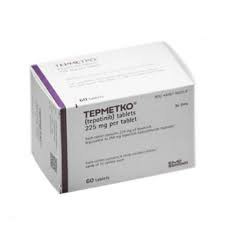
Capmatinib and tepotinib are both kinase inhibitors of MET, including the isoform resulting from exon 14 skipping. Direct comparison of drug efficacy is difficult given the differences in assay formats and clinical pharmacokinetic properties of different drugs taken at different doses. Both drugs inhibit MET with IC50s of less than 2 nmol/L and demonstrated inhibition in vitro and in vivo on MET-dependent cancer cell lines, including cells driven by MET exon 14-associated skipping mutations. Patients should choose medications that suit them for treatment based on their specific conditions and doctor’s recommendations.
The original drug Tepotinib is already on the market in China, but it is not yet eligible for medical insurance. Tepotinib Original drug currently marketed overseas is relatively expensive, and the price of each box of 225mg*30 tablets may be around RMB 80,000 (the price may fluctuate due to exchange rates). There are already generic Tepotinib drugs produced in other countries. The ingredients of these generic drugs are basically the same as those of the original drug, but the price is relatively cheap. For example, the price of 225mg*60 tablets produced by a Laos pharmaceutical factory may be more than 8,000 yuan per box (the price may fluctuate due to exchange rates).
[ 免责声明 ] 本页面内容来自公开渠道(如FDA官网、Drugs官网、原研药厂官网等),仅供持有医疗专业资质的人员用于医学药学研究参考,不构成任何治疗建议或药品推荐。所涉药品可能未在中国大陆获批上市,不适用于中国境内销售和使用。如需治疗,请咨询正规医疗机构。本站不提供药品销售或代购服务。


